



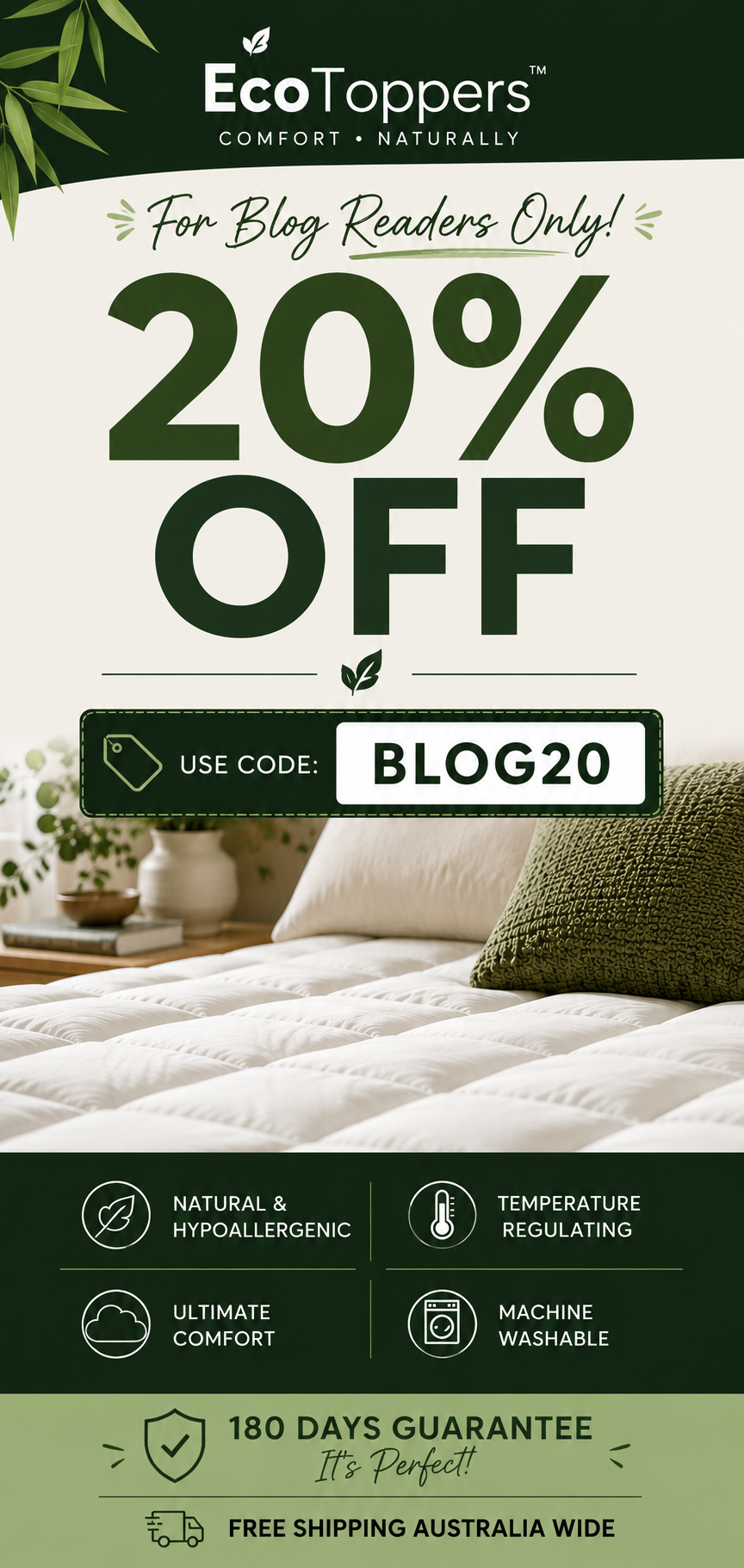

Sleep Better with Sustainable Bamboo Bedding — Eco-friendly comfort that cares for you and the planet.
Bamboo bedding is rising fast in popularity — and it’s easy to see why. At EcoToppers, we’re often asked for bedding that’s both kinder to the planet and better for sleep. This guide walks you through the real benefits of bamboo bedding: what makes it sustainable, how it affects sleep, why it’s good for sensitive skin, and how it compares with other materials. If you want comfortable, eco-conscious bedding that actually performs, read on.
Why sustainable bamboo bedding is a smart pick for eco-conscious Australians
Bamboo bedding is a strong choice for Australians who want comfort without compromise. Bamboo grows quickly, usually needs little in the way of pesticides or fertiliser, and uses less water than many traditional fibres. The result is a soft, long-lasting fabric that feels great on the skin and has a smaller environmental footprint. When sourced and processed responsibly — for example, organic and certified supplies — bamboo bedding is an easy way to make your bedroom more sustainable.
How bamboo fibre supports sustainability and environmental responsibility
Bamboo supports sustainability because it grows fast and needs relatively few resources. Compared with cotton — which can be water- and chemical-intensive — certain bamboo varieties reach harvestable size within a few years and can be managed sustainably. Bamboo fibre is also biodegradable, so when it reaches the end of its life, it won’t linger in landfill like many synthetics. Those qualities make bamboo an attractive option for eco-conscious textile production.
Why choose ethically sourced organic bamboo for your bedding?
Choosing organic, ethically sourced bamboo matters because the environmental and social benefits depend on how the crop is grown and processed. Organic farming avoids synthetic pesticides and fertilisers, helping soils and waterways stay healthy. Certifications like GOTS give you confidence that production standards — from field to finished fabric — meet strict ecological and social criteria. Opting for certified bamboo bedding is a simple way to support better industry practices. By choosing certified bamboo products, you're supporting transparent and responsible manufacturing practices.
How bamboo bedding improves sleep quality and comfort
Bamboo bedding can make sleep more comfortable thanks to a few key properties. It naturally wicks moisture away from the body, helping to regulate temperature so you stay cooler and drier through the night. The fabric also tends to be very soft and breathable, creating a pleasant sleep surface — especially useful in Australia’s varied climates.
What temperature regulation benefits do bamboo mattress toppers provide?
Bamboo mattress toppers are known for helping keep sleepers cool. Their moisture-wicking and breathable construction moves sweat away from the body and allows air to circulate, reducing overheating. The result is a fresher sleeping surface that’s comfortable across seasons, and especially helpful in warmer weather.
How bamboo bedding combines pillow-soft comfort with orthopaedic support
Bamboo bedding delivers a soft, plush feel while still offering supportive structure when used in toppers and mattress layers. The fibre’s natural resilience helps distribute weight evenly, reducing pressure points and supporting spinal alignment — a benefit many customers notice if they have back sensitivity. In short, you can get the cushioning of soft bedding together with the support your body needs.
Is hypoallergenic bamboo bedding a good choice for sensitive skin and allergies?

Bamboo bedding is a solid option for people with sensitive skin or allergies. The fibre’s smooth surface and natural resistance to dust mites can reduce common irritants in the bedroom, helping create a cleaner, less-reactive sleep environment.
What antibacterial and dust-mite resistant properties does bamboo fibre have?
Bamboo fibres have natural properties that can inhibit certain bacteria and discourage dust mites, contributing to a cleaner feel. These traits help maintain freshness and can be a real bonus for a healthier sleep environment.
How can bamboo bedding ease allergies and skin irritation?
Many people with eczema or sensitive skin report improvements after switching to bamboo bedding. The fabric’s silky texture reduces friction, and its hypoallergenic qualities can lower exposure to common allergens, which makes nights more comfortable and skin less irritated.
Can bamboo mattress toppers relieve back pain and improve spinal alignment?
Bamboo mattress toppers can help by evening out support and reducing pressure points. Their construction allows for better weight distribution, which can improve sleeping posture and reduce strain that causes morning aches. For many users, adding a quality topper has eased discomfort and made sleep restorative again.
Which thickness options support orthopaedic benefits and pressure relief?
Thickness matters. Thicker toppers usually provide more cushioning for side sleepers needing extra hip and shoulder relief, while thinner toppers give a firmer feel that can help back sleepers maintain alignment. Choose a thickness based on your usual sleep position and how much contouring or firmness you prefer.
Are bamboo mattress toppers effective for chronic back pain?
While individual experiences vary, many of our customers find that a well-chosen bamboo topper can significantly improve comfort and support, helping to reduce spinal pressure and enhance sleep quality. It's often a worthwhile option to consider for a more restorative night's sleep.
What to know about the composition and care of EcoToppers bamboo bedding
Knowing what’s in your bamboo bedding and how to care for it helps keep it performing and lasting longer. EcoToppers focuses on premium, responsibly sourced bamboo materials and transparent manufacturing so you get a product that’s comfortable and durable. Proper care will protect both feel and finish.
What materials are used in EcoToppers' bamboo mattress toppers, and what certifications matter?
EcoToppers uses bamboo-derived viscose or rayon — sometimes blended with supportive fibres for strength and durability — and we prioritise suppliers who meet recognised standards. Certifications such as GOTS and OEKO-TEX help confirm that fabrics are produced without harmful substances and under ethical conditions. These labels give extra assurance about safety and sustainability.
How do you care for bamboo bedding to keep it durable?
Care is simple but important: wash bamboo bedding in cold water on a gentle cycle, avoid bleach and harsh detergents, and dry on low heat or air dry when possible. These steps keep the fibres soft and extend the life of your bedding so it stays cosy night after night.
How does bamboo bedding compare to other mattress toppers and bedding materials?
Bamboo bedding stands out for its blend of comfort, breathability and environmental advantages. While other materials offer their own strengths, bamboo often provides a balanced mix of coolness, softness and hypoallergenic benefits that many sleepers prefer.
Bamboo vs. memory foam: which mattress topper suits you best?
Memory foam is excellent at contouring and pressure relief, but it can trap heat. Bamboo toppers generally breathe better and wick moisture, making them a good choice if you sleep hot. If you need deep contouring, memory foam may win; if you prioritise temperature control and a natural feel, bamboo is likely a better match.
Bamboo sheets vs. cotton sheets: benefits for Australian climates
Bamboo sheets are a strong choice for Australia’s warmer weather because they wick moisture and promote airflow, helping you stay cool. They also feel wonderfully soft and hold up well over time, offering excellent comfort and breathability in our varied climates.
Frequently Asked Questions
What are the environmental benefits of choosing bamboo bedding over traditional materials?
Bamboo bedding can reduce environmental impact because bamboo grows quickly, often needs less water, and usually requires fewer pesticides than many crops. It’s also biodegradable, unlike many synthetic fibres. Choosing responsibly sourced, certified bamboo helps ensure these benefits are real and not just marketing claims.
How does bamboo bedding contribute to better sleep hygiene?
Bamboo bedding supports cleaner sleep by resisting dust mites and some bacteria and by wicking moisture away from the body. Those properties reduce common irritants and help you sleep in a cooler, drier environment — all of which improve sleep hygiene and comfort.
Can bamboo bedding help with temperature regulation in different climates?
Yes. Bamboo fabrics wick moisture and allow air to circulate, helping to keep you cool in warm weather. They can also trap a gentle layer of warmth in cooler conditions, making them versatile enough for year-round use.
What should I look for when purchasing bamboo bedding?
Look for clear information about the fibre (bamboo viscose/ rayon vs. mechanical bamboo), ethical sourcing, and certifications like GOTS or OEKO-TEX. Also check fabric weight, weave and customer reviews for softness and durability, so you pick bedding that fits your needs.
How does the care of bamboo bedding differ from other materials?
Bamboo bedding needs gentler care than cotton: wash in cold water on a gentle cycle, avoid bleach and strong detergents, and air dry or tumble dry on low. These steps keep fibres soft and help the fabric last longer.
Are there any drawbacks to using bamboo bedding?
While bamboo bedding might be a slightly different investment compared to basic cotton, many find its superior comfort, breathability, and sustainability advantages make it well worth it. We focus on quality and responsible sourcing to ensure you get the best.