



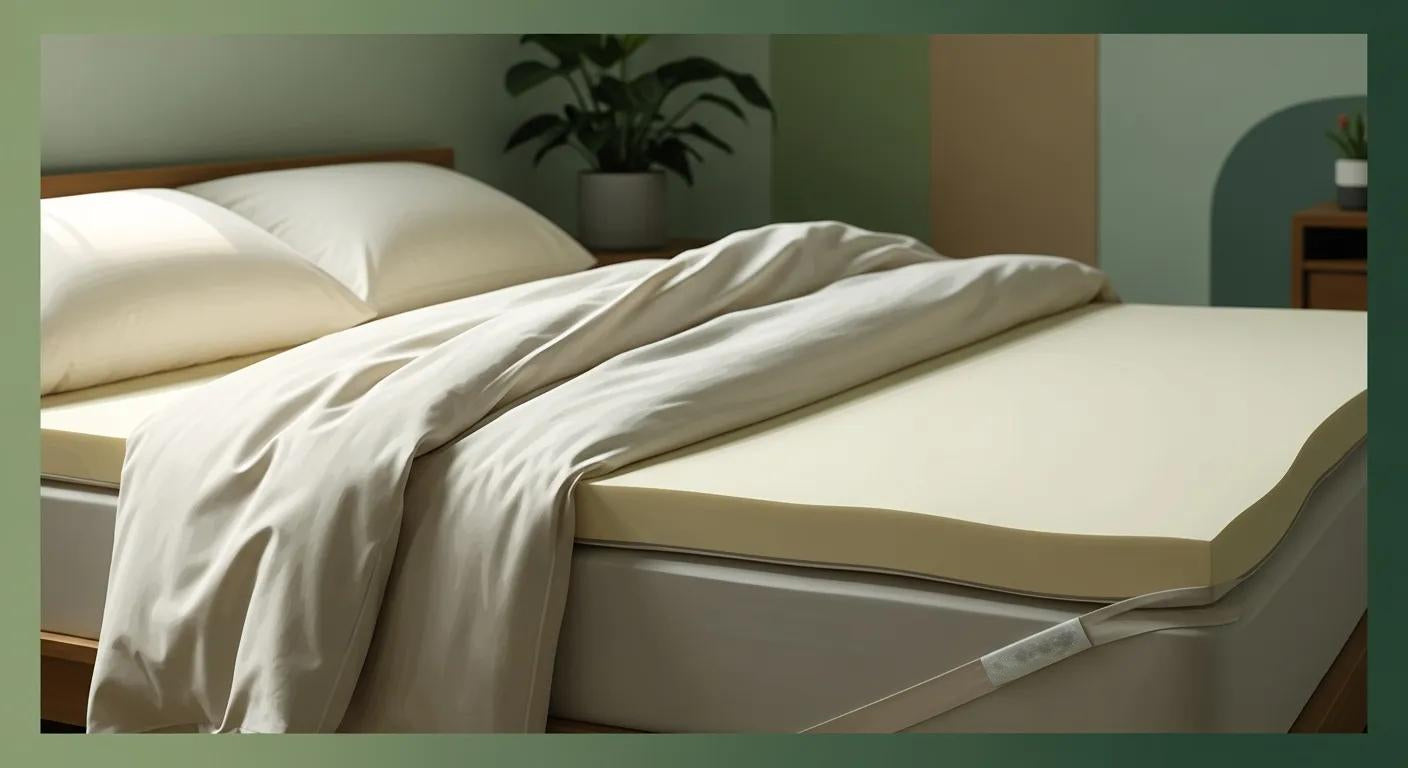
Sleep Better with Eco Bamboo Toppers
Our bamboo mattress toppers are a slim, breathable comfort layer that sits on top of your mattress to improve pressure relief, temperature control and overall sleep for Australians who care about sustainability. Below we explain how bamboo viscose fibres and considered topper construction work together to reduce overheating at night, ease pressure points and support deeper, more restorative sleep—benefits especially useful for hot sleepers, people with allergies and anyone with back or joint discomfort. If you’d like a tailored solution, EcoToppers can help with bespoke enquiries—see the brand section below and the final call-to-action for direct contact. You’ll also find the science behind bamboo fibres, practical guidance for choosing between our 5cm and 10cm plush options, easy-care tips to cut allergens, and how our trial periods and support for relevant schemes can make buying easier.
How Do Bamboo Mattress Toppers Improve Sleep Quality?
Bamboo toppers boost sleep quality by pairing adaptive support with a breathable bamboo viscose cover that wicks moisture and encourages airflow. Together, these features cool the immediate sleep microclimate and reduce night-time disturbances. In short: the bamboo cover pulls moisture away from your skin while the topper’s core spreads pressure—so you’ll likely wake less, sleep longer stretches and turn over less. This section breaks down the key mechanisms, measurable benefits and practical takeaways so you can match features to your sleep needs and judge results during a trial period. Knowing how they work makes it easier to choose styles and thicknesses that support spinal alignment and thermal comfort.
Bamboo topper mechanisms and their sleep impacts:
- Orthopaedic support and pressure redistribution: Targeted cushioning lowers peak pressure at hips and shoulders, cutting pain-driven awakenings.
- Thermal regulation: Bamboo viscose covers wick sweat and improve airflow, keeping the sleep surface cooler for hot sleepers.
- Hygiene and allergen reduction: Lower moisture retention and natural resistance to microbes make the surface less welcoming for dust mites.
These three benefits work together: better temperature control reduces night sweats, which helps maintain pressure relief by stopping small, frequent movements—together this supports longer periods of deep slow-wave sleep and more consistent REM cycles.
The table below shows the main components, what they do and the practical sleep benefits so you can quickly compare how bamboo covers and supportive cores improve rest.
| Component | Functional Attribute | Sleep Impact |
|---|---|---|
| Bamboo viscose cover | Moisture-wicking and breathable | Keeps the surface cooler and drier, cutting down on night sweats |
| Quilted comfort layer | Adaptive cushioning and contouring | Redistributes pressure and reduces joint discomfort |
| Supportive core (plush/firm) | Load-bearing resilience | Maintains spinal alignment and reduces sagging |
| Removable washable casing | Easy hygiene maintenance | Simplifies allergen control and sustains thermal performance |
What Orthopaedic Support and Comfort Do EcoToppers Provide?
EcoToppers are engineered to blend plush comfort with orthopaedic support so you sleep longer without shoulder, hip or lower-back interruptions. The topper’s thickness and internal layers control how body weight is spread: our 5cm option gives gentle contouring for everyday comfort, while the 10cm plush offers deeper immersion and stronger pressure relief for heavier sleepers or people with chronic joint issues. Picking the right firmness and depth helps keep the spine neutral for side, back and combination sleepers by preventing excessive hip sink or shoulder pressure. For the best results, pair your topper with a stable mattress base and a supportive pillow to reinforce alignment and amplify pain-relief benefits.
Orthopaedic selection tips to consider:
- Side sleepers: choose a contouring profile to cushion shoulders and hips.
- Back sleepers: aim for moderate support to keep the lumbar curve steady.
- Heavier sleepers or chronic pain: select thicker plush options for deeper pressure redistribution.
How Do Bamboo Fibres Regulate Temperature for Better Sleep?
Bamboo viscose helps regulate temperature through capillary moisture transfer and tiny airflow channels in the fabric weave, pulling heat and sweat away from the body more effectively than many common fibres. That microclimate control means hot sleepers usually experience fewer awakenings from overheating and can stay in deeper sleep phases for longer—especially in warmer climates. Seasonally, bamboo toppers feel cooler in summer and layer well in cooler months with the right bedding. Simple care—regular airing and following wash instructions for the removable cover—preserves wickability and fibre structure so thermal performance lasts.
Key care steps to keep thermal performance working:
- Air the topper regularly to let trapped moisture escape and restore loft.
- Wash the removable cover as recommended to keep fibres breathable.
- Rotate the topper occasionally to prevent uneven compression and preserve airflow channels.
Why Choose Hypoallergenic and Antibacterial Bamboo Mattress Toppers?
People choose bamboo toppers for hypoallergenic and antibacterial benefits because bamboo viscose tends to retain less moisture and resists microbial growth—both factors that help lower dust mite and bacterial levels on the sleep surface. The fibre’s structure and drier surface reduce opportunities for allergens to thrive. For allergy-prone sleepers or those with sensitive skin, this can mean less congestion, fewer nighttime respiratory interruptions and steadier sleep. Understanding how fibre properties affect bedroom ecology helps when you’re choosing sustainable bedding that supports sleep health.
Before we list practical cleaning tips, here are the core mechanisms that reduce allergens and bacteria so you can plan the right maintenance routine.
- Reduced moisture retention: creates drier surfaces, limiting dust mite growth.
- Natural antibacterial tendencies: lowers bacterial load compared with high-humidity materials.
- Washable covers: make regular allergen removal easy through laundering.
How Do Bamboo Mattress Toppers Reduce Allergens and Bacteria?
Bamboo viscose lowers allergen risk by moving moisture away from the skin and exposing the cover to airflow, which reduces the conditions mould and dust mites need to multiply. Combined with removable, washable covers and routine ventilation, this physical moisture control results in a lower cumulative allergen load over time. Expect less dust build-up and easier upkeep compared with toppers whose covers are fixed or less breathable. Pair good cleaning habits with proper room ventilation for a noticeably calmer allergen environment and fewer symptomatic nights.
Recommended cleaning and maintenance routine:
- Wash the removable cover every 4–8 weeks, depending on perspiration and pet exposure.
- Air the topper in daylight occasionally to reduce moisture and refresh fibres.
- Use hypoallergenic mattress protectors when extra protection is needed.
Are Bamboo Toppers Suitable for Sensitive Skin and Allergy Sufferers?
Generally, bamboo toppers are a good choice for sensitive skin and allergy sufferers because the breathable viscose surface and typically lighter chemical finishing lower the chance of irritation compared with some synthetics. That said, people with severe allergies or specific textile sensitivities should check material breakdowns and consider laundering new covers once before use, since finishes vary by manufacturer. If you have a history of dermatological reactions, consult a clinician and favour toppers with removable, washable casings to reduce exposure to potential irritants. Simple ingredient lists and minimal chemical finishes further reduce the risk of contact dermatitis and help promote calmer skin overnight.
Practical checklist for sensitive users:
- Verify fabric composition and avoid unnecessary chemical finishes.
- Choose removable, washable covers to lower contact with allergens and irritants.
- Patch-test new bedding and speak to a healthcare professional if you have concerns.
What Makes EcoToppers the Best Sustainable Mattress Topper in Australia?
EcoToppers centres its range on sustainability, comfort and service features that make buying easier for Australian shoppers. We offer Bamboo White, Bamboo Print, and Bamboo Charcoal finishes, and two thicknesses—5cm and 10cm plush—so you can match thermal performance and support to your needs. Our covers use ethically sourced organic bamboo viscose where possible, and we highlight bamboo’s hypoallergenic and antibacterial benefits. To reduce purchase friction, we provide a generous trial period and convenient delivery options across Australia, and we can assist with documentation for eligible support schemes on request.
If you’re managing a commercial fit-out, facilities project, or require bulk supply, we welcome enquiries—showcase your brief, and we’ll propose tailored solutions and procurement options.
Quick company facts: the table below summarises EcoToppers’ core product and service features so you can confirm the brand attributes that matter for sustainable purchases.
| EcoToppers Feature | Characteristic | What It Means |
|---|---|---|
| Product styles | Bamboo White, Bamboo Print, Bamboo Charcoal | Choice of looks with the same functional performance |
| Thickness options | 5cm and 10cm plush | Pick light contouring or deeper pressure relief |
| Trial policy | Generous trial period | Try at home to assess sleep improvements with confidence |
| Delivery & support | Convenient delivery in Australia; assistance for eligible buyers | Easier access and administrative support for eligible purchases |
How Is Bamboo Sourced Sustainably for EcoToppers Products?
Sustainable bamboo sourcing usually means choosing fast-regenerating species, limiting chemical inputs, and keeping clear traceability through the supply chain—practices you should look for when comparing brands. Ethical manufacturing also covers responsible water use, lower-impact fibre processing and transparent labour standards. While this page doesn’t assert specific certifications for EcoToppers, shoppers can ask for origin details, processing information and third-party certificates to verify sustainability claims. Requesting this information helps align purchases with your environmental values.
Practical verification tips:
- Ask the supplier for origin and processing details.
- Look for third-party certification information on labels or product pages.
- Prefer brands that openly describe traceability and ethical manufacturing practices.
Which Organic Certifications Ensure Eco-Friendly Bedding Quality?
Certifications provide useful standards to evaluate bedding. Common labels include GOTS for organic textile production and OEKO-TEX for screening harmful substances—each covers different parts of sustainability and safety. GOTS addresses organic fibre content and social/environmental production criteria, while OEKO-TEX checks for harmful chemicals in finished textiles. If a product lacks certification, look for transparent material statements and independent test reports. Certifications are a helpful verification layer, but not the only measure—understand what each one tests so you can interpret claims against your priorities.
Certification primer:
- GOTS: Verifies organic fibre content and social/environmental production standards.
- OEKO-TEX: Screens textiles for harmful substances and residues.
- Traceability reports: Show origin and processing flows to supplement certifications.
How Can Eco Mattress Toppers Help Alleviate Back Pain and Improve Spinal Alignment?
Eco toppers can reduce back pain and support spinal alignment by spreading pressure over a larger surface, easing focal load on lumbar discs and encouraging a more neutral spine while you sleep. Biomechanically, lowering pressure peaks at the hips and shoulders reduces strain on the spine, so you experience fewer painful interruptions and longer pain-free sleep stretches. Toppers are a cost-effective fix when a mattress is still structurally sound but lacks surface comfort; however, if your mattress has severe sag or structural failure, a topper won’t fully correct that, and replacement should be considered. This section outlines pressure-relief mechanics, selection guidance and signs that a topper is an appropriate interim or long-term solution.
Key biomechanical principles that determine how a topper performs:
- Pressure redistribution: Spreads contact forces to reduce localised joint stress.
- Support balance: Helps keep the pelvis and lumbar region aligned with the spine.
- Motion damping: Absorbs movement energy to reduce partner disturbance.
What Pressure Relief Benefits Do Bamboo Mattress Toppers Offer?
Bamboo toppers reduce peak pressures through their comfort layers and selectable thicknesses, allowing the surface to contour to body curves and lower stress at hips and shoulders. For side sleepers, this cuts shoulder and hip pain and reduces tossing and turning; for back sleepers, it supports the lumbar curve to maintain neutral alignment. That leads to less nociceptive input during sleep and can reduce chronic pain flare-ups tied to poor pressure distribution. If you need stronger pressure redistribution—because of body weight or persistent pain—consider the 10cm plush; lighter users or those wanting modest contouring may find the 5cm sufficient.
Pressure-relief selection checklist:
- Assess your body weight and main sleep position.
- Choose thicker plush profiles when you need greater pressure redistribution.
- Pair the topper with a medium-firm mattress to preserve alignment benefits.
How Do Bamboo Toppers Support Proper Spinal Alignment?
Bamboo toppers help keep the spine neutral by providing consistent resistance so the body doesn’t sag or over-arch; the right mix of thickness and core resilience is essential. The balance between contouring at the shoulders and hips and support under the lumbar area keeps vertebrae stacked correctly. To get the most benefit, combine the topper with an appropriate pillow height and make sure the mattress base is stable—alignment gains are limited if the underlying mattress is badly worn. Signs the topper is helping include less morning stiffness, fewer discomfort-driven awakenings and a general feeling of balanced support.
Simple alignment checklist:
- Note your sleep posture and any pressure points.
- Pick a topper thickness that compensates for mattress sinkage.
- Reassess comfort and alignment after two to four weeks to check effectiveness.
Which Bamboo Mattress Topper Styles and Thicknesses Are Best for Your Sleep Needs?
Choosing the right style and thickness depends on sleep position, body weight, mattress condition and your aesthetic preference. EcoToppers offers Bamboo White, Bamboo Print and Bamboo Charcoal in 5cm and 10cm plush so you can match support and thermal control to your situation. The main trade-offs are contouring versus heat management: thicker plush toppers give deeper pressure relief, while style choices are mostly aesthetic with only minor functional differences. Below is a brief comparison of map style and thickness to common use-cases, plus a quick decision flow to help you pick.
Comparison guide for styles and thicknesses:
| Style / Thickness | Firmness / Feel | Best Use-case |
|---|---|---|
| Bamboo White - 5cm | Light contouring | Side sleepers with mild pressure points |
| Bamboo White - 10cm | Deeper plush support | Heavier side sleepers and those needing more pressure relief |
| Bamboo Charcoal - 5cm | Light contouring, low-maintenance look | Hot sleepers who prefer a sleek appearance |
| Bamboo Charcoal - 10cm | Plush with added depth | Chronic back pain or heavier bodies needing deep relief |
| Bamboo Print (any thickness) | Decorative finish, same functional attributes | Those wanting a stylish accent without sacrificing performance |
How to Choose Between 5cm and 10cm Plush Bamboo Mattress Toppers?
Deciding between 5cm and 10cm comes down to BMI, dominant sleep position and how much your mattress compresses under load. A 5cm topper improves surface comfort and offers light contouring for sleepers who already have a supportive mattress. A 10cm plush gives deeper immersion suited to heavier sleepers or people with ongoing pressure-related discomfort. If your mattress has localised sagging over 2–3cm, a thicker topper will help compensate, though a severely failing mattress still needs replacement. Use our trial period to confirm fit and alignment in your own home.
Quick decision flow:
- Check mattress condition: minimal sag = 5cm; moderate sag or pain = 10cm.
- Consider body weight: lighter users often prefer 5cm; heavier users typically need 10cm.
- Factor sleep position: side sleepers usually benefit more from 10cm of shoulder and hip padding.
What Are the Differences Between Bamboo White, Print, and Charcoal Styles?
Our White, Print and Charcoal finishes mainly differ in appearance and minor finishing details—White is a classic neutral, Print adds pattern options for décor, and Charcoal offers a darker, low-maintenance look. All styles use bamboo viscose covers with comparable breathability and hypoallergenic performance; any small functional differences come from finishing rather than colour itself. Care is the same across styles—air regularly and follow wash instructions for removable covers to keep both look and thermal performance at their best. Choose the style that fits your bedroom while prioritising the material and thickness you need.
Style-selection tips:
- Match the topper colour to your bedding and room palette.
- Choose Charcoal for a darker, low-maintenance finish.
- Pick Print if you want a visual accent without sacrificing function.
What Are the Benefits of EcoToppers’ Trial Period and Support for Relevant Schemes?
Our generous trial period and support for relevant invoicing schemes lower the financial and administrative hurdles to trying a new sleep surface—giving you time to judge real improvements in sleep, pressure relief and temperature control. A generous trial period is long enough to test comfort across different conditions and sleep patterns, increasing confidence in your decision. EcoToppers can provide invoices on request to help eligible participants with claims, and convenient delivery options across Australia reduce upfront logistics. Together, these features make it simpler to try a topper without the usual purchase risk.
The trial process is short, practical steps:
- Receive and set up the topper: Place it on your existing mattress and use it under your usual bedding.
- Evaluate over time: Use the full trial period to assess sleep continuity, pain and thermal comfort.
- Decide and act: If it doesn’t meet expectations, follow the return/exchange process in our retail guidance.
If you’re sourcing toppers for shared living spaces, care homes or institutional fit-outs, contact EcoToppers to discuss solutions for commercial enquiries.
How Does the Risk-Free Sleep Trial Work?
Our trial period gives you a generous window to see how a bamboo topper affects your sleep in your own bedroom. Use the topper nightly in your normal bedding setup and note changes in sleep continuity, pain-related awakenings and temperature comfort. If the topper doesn’t meet your needs within the trial, contact the retailer to arrange a return or exchange per their procedures. We recommend keeping a simple sleep log at regular intervals to capture changes that help you decide.
Step-by-step trial checklist:
- Install and sleep on the topper nightly in your usual bedding.
- Track sleep metrics—number of awakenings, pain levels and thermal comfort—over the trial period.
- If unsatisfied, start the return/exchange process with EcoToppers before the trial ends.
Who Is Eligible for Support Scheme Funding on EcoToppers Products?
Eligibility for items like mattress toppers typically falls under categories like Assistive Technology, Home and Living Supports or Daily Living Supports when a sleep surface is linked to functional independence or health outcomes. EcoToppers supports participants by providing invoices on request to help with administrative claims. Eligibility is decided by individual plans and prescribed supports, so check with your plan manager or representative to confirm whether a topper can be funded. We can supply the necessary purchase documentation to streamline the claim process.
Practical next steps for eligible participants:
- Discuss the need for a supportive topper with your healthcare provider or plan manager.
- Request an invoice from EcoToppers that includes product details and purchase information.
- Submit the documentation to your plan administrator for assessment and possible reimbursement.
Frequently Asked Questions
What is the lifespan of a bamboo mattress topper?
With normal use and good care, a bamboo mattress topper typically lasts between 5 and 10 years. Regular maintenance—washing the removable cover, airing the topper and avoiding excessive compression—extends life. The condition of your underlying mattress also matters: a supportive mattress will help the topper perform and last longer. Replace the topper if you notice persistent sagging or loss of support.
Can bamboo mattress toppers be used on any type of mattress?
Yes—bamboo toppers work well on innerspring, foam and hybrid mattresses. Their effectiveness depends on the mattress’s current firmness and condition. For best results, use a topper on a mattress that still provides stable support and isn’t excessively sagging. A sound base will let the topper deliver pressure relief, and alignment benefits more effectively.
How do I clean and maintain my bamboo mattress topper?
Keep your topper fresh by airing it regularly to prevent moisture buildup. Wash the removable cover according to the manufacturer’s instructions—usually every 4–8 weeks—depending on sweat and pet exposure. Spot-clean the topper itself with a mild detergent and a damp cloth as needed, and avoid bleach or harsh chemicals that can damage fibres. Proper care preserves performance and extends lifespan.
Are there any specific weight limits for bamboo mattress toppers?
There aren’t strict weight limits, but effectiveness varies with thickness and firmness. A 5cm topper suits lighter users, or those needing light contouring; a 10cm topper is better for heavier individuals or those needing more support. If you’re unsure about weight distribution, contact the manufacturer for recommendations tailored to your body weight and sleeping position.
What should I do if my bamboo mattress topper is too firm?
If your topper feels too firm, first check it’s paired with a compatible mattress. You can add a softer mattress protector or a thin comfort layer on top for more cushioning. If you still find it uncomfortable, consider exchanging for a softer or thicker model—alternatively, try our trial period to test a different option at home.
Can I use a bamboo mattress topper with an adjustable bed frame?
Yes. Bamboo toppers are flexible enough to work on adjustable bases and conform to different positions without losing comfort. Avoid overly thick toppers that might restrict movement; a 5cm topper often balances comfort with smooth adjustment. Always check the manufacturer’s guidance for compatibility with your specific base.