



Luxury, Eco-Friendly Bamboo Blankets
At EcoToppers, we design bamboo blankets that feel indulgent and help keep you comfortable through warm Australian nights. Made from bamboo viscose fibres, our blankets combine a silky touch with natural temperature regulation, breathability and easy care. This page covers how bamboo delivers cooling performance, hypoallergenic perks and stronger sustainability credentials — and it walks you through the types, seasonal uses and care tips that make choosing the right blanket simple. If you’re tired of overheating, battling allergies or facing confusing product choices, bamboo blankets offer a practical option: moisture-wicking fibres and open weaves reduce clamminess and support cooler sleep. Read on to learn how bamboo stacks up against cotton and synthetics, which styles suit different bedrooms, and how to care for and buy EcoToppers products in Australia. For tailored solutions or bulk/commercial enquiries, contact us to discuss suitability and options. Next, we explain why bamboo merges luxury with eco-responsibility and the real benefits that follow.
Why bamboo blankets are the luxury, eco-friendly choice for Australian homes
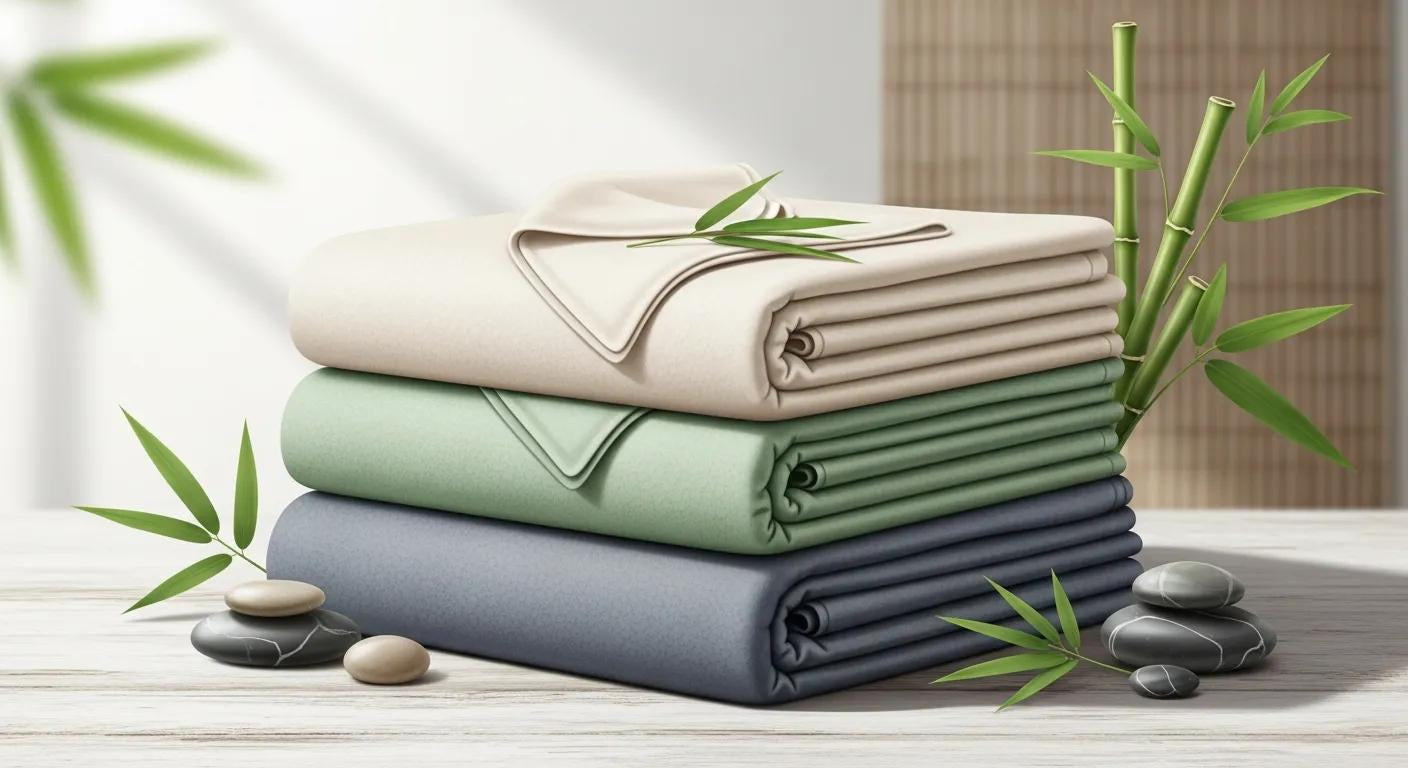
Bamboo blankets feel luxurious because the fibre gives a smooth, drapey finish without heavy weight. Bamboo viscose yields long, fine filaments that sit softly against the skin, while the plant itself grows quickly and usually needs less irrigation than many conventional crops. That combination — sensory quality plus lower resource demand — is what makes bamboo bedding feel premium and responsible. On top of that, bamboo constructions often deliver clear functional benefits: breathability, moisture-wicking and natural antimicrobial tendencies that suit Australia’s varied climates and hotter summers. Put simply, bamboo brings an elevated sleep experience with a smaller environmental footprint.
- Softness and drape: bamboo viscose gives a silk-like texture that layers well with sheets and blankets.
- Climate performance: moisture-wicking fibres and open constructions reduce overnight heat build-up and improve comfort.
- Eco credentials: rapid renewability and generally lower pesticide and water needs make bamboo a more sustainable textile option.
Those advantages make bamboo blankets a practical and stylish choice for modern Australian bedrooms. Next, we look at the fibre and construction details that create that premium feel.
What makes bamboo blankets feel luxurious, soft and sustainable?
The luxurious hand of bamboo comes from the fibre structure and careful finishing that preserve long, smooth strands. Bamboo viscose produces continuous fibres with a low surface roughness, so knits and weaves finish with a soft sheen, good drape and less pilling. Choices in construction — tight knit versus waffle weave, filament count and eco-conscious finishing — influence weight, breathability and the tactile finish, so picking the right build is key to getting both comfort and longevity. Knowing these differences helps you prioritise softness, durability and environmental impact when choosing a blanket.
Which EcoToppers bamboo blankets suit a luxury lifestyle?
Our range is intentionally focused: lightweight throws, all-season quilts and waffle-knit cooling blankets designed for different sleep profiles. Each style uses ethically sourced bamboo viscose and is finished for softness and temperature control. We stand by our products with customer-friendly policies, making it easy to try a new blanket. For anyone weighing luxury options, EcoToppers demonstrates how thoughtful bamboo constructions translate into better sleep night after night.
Cooling bamboo blankets for Australian summers
Cooling bamboo blankets work because the fibre structure and fabric construction move moisture away from the skin while allowing airflow — a combination that helps dissipate heat and keeps skin comfortable on warmer nights.
Below, we compare bamboo to cotton and synthetics and give selection tips to match different summer sleepers.
Different summer bedding suits different needs:
- Lightweight bamboo throws: perfect for hot sleepers who want minimal thermal mass.
- Low-fill bamboo quilts: a little insulation for temperate nights without trapping heat.
- Waffle-knit cooling throws: structured airflow and quick-dry performance for night sweats.
These options show bamboo’s strength for summer use: breathable fibre plus construction choices that prioritise airflow. The quick table below summarises how bamboo compares with cotton and synthetic blankets for cooling performance.
This table compares cooling attributes across common blanket materials.
| Blanket Type | Breathability | Moisture Management | Ideal Seasonality |
|---|---|---|---|
| Bamboo blanket | High — fine filaments and open constructions promote airflow | Excellent — wicks moisture and dries quickly | Summer and transitional seasons |
| Cotton blanket | Moderate — breathability varies by weave | Good — absorbs moisture but dries more slowly | Spring to early autumn |
| Synthetic blanket | Low to moderate — dense fibres can trap heat | Poor to moderate — may hold moisture against the skin | Cooler months or climate-controlled environments |
The table highlights bamboo’s clear edge on breathability and moisture management, which supports cooler sleep through warm Australian nights. Next, we explain the fibre mechanics behind that cooling effect.
How bamboo blankets regulate temperature and promote breathability
Bamboo helps regulate temperature through fibre geometry and capillary action that move moisture away from skin while allowing convective airflow. Viscose fibres from bamboo are smooth and fine, forming porous weaves that let heat escape and encourage evaporative cooling more efficiently than denser fabrics. That moisture transport cuts down on clamminess and helps keep a stable sleep microclimate, especially when paired with breathable base sheets — practical benefits include fewer night sweats and less interrupted sleep.
Are bamboo blankets a good choice for hot sleepers?
Yes — when you choose the right weight and weave. Hot sleepers should aim for lightweight constructions like thin quilts, low-fill doonas or loosely knitted throws to maximise airflow and cut thermal mass. Layering also helps: a breathable sheet, a thin bamboo blanket and an optional lightweight doona let you fine-tune warmth without trapping heat. Use this checklist when choosing:
- Choose low-fill or thin weaves for minimal insulation.
- Prefer waffle or open-knit constructions for better airflow.
- Layer with breathable sheets to allow easy temperature control night to night.
Those choices let hot sleepers take full advantage of bamboo’s cooling traits while adapting to seasonal temperature shifts.
Hypoallergenic and health-focused bamboo blankets
Bamboo blankets are a popular option for allergy-prone sleepers because the fibre’s moisture-wicking and quick-dry qualities reduce the warm, damp conditions dust mites prefer. The smooth surface of bamboo viscose also discourages particle build-up and makes laundering more effective. For sensitive skin, bamboo’s soft hand and reduced need for abrasive finishes can lower irritation risk compared with rougher fibres. The following points break down the key health-related attributes.
Bamboo’s health-related benefits include:
- Reduced dust mite habitat: drier surfaces discourage mite populations.
- Antibacterial tendencies: fibre and fabric properties can limit microbial growth.
- Gentler on skin: smooth filaments reduce friction and irritation for sensitive skin.
Knowing these traits helps you choose bedding that supports better sleep hygiene and comfort. Let's look at how it works.
Why bamboo is naturally hypoallergenic and antibacterial
Bamboo contains natural compounds and, when processed to viscose, tends to create drier fabric surfaces that are less hospitable to microbes and dust mites. Efficient moisture management and a smooth fibre surface reduce microbial retention and mechanical irritation, which lowers potential allergen exposure during sleep. Combined with regular care and laundering, these mechanisms translate into meaningful hygiene benefits for allergy sufferers.
Is bamboo bedding suitable for sensitive skin and allergies?
Generally, yes — provided you choose products made without harsh chemical finishes and follow gentle care routines. Look for plain bamboo viscose constructions, avoid heavily treated items that may carry residual finishes, and wash new bedding before first use to remove manufacturing residues. Selecting smooth weaves and replacing bedding as part of regular hygiene practices will help realise bamboo’s hypoallergenic potential in everyday use.
All-season bamboo quilts, doonas and throws.
All-season bamboo bedding works by mixing product type, fill weight and layering to provide adaptable warmth year-round. Throws, quilts and doonas each play different roles: lightweight throws for summer lounging, low-fill quilts for transitional nights and higher-fill doonas for chillier periods. The right combination and layering let a small set of bamboo pieces cover multiple seasons while keeping your bed breathable and comfortable. The table below summarises common product types and their best uses.
This table helps you match product type to season and purpose.
| Product Type | Fill Weight / Construction | Best Use (season) | Key Benefit |
|---|---|---|---|
| Bamboo throw | Thin knit or woven, no fill | Summer or lounge use | Lightweight layer, portable cooling |
| Bamboo quilt/doona (low-fill) | Light hollowfibre or low-fill construction | Spring/autumn, mild nights | Breathable insulation without overheating |
| Bamboo doona (mid-fill) | Moderate fill weight, enclosed edge finish | Winter in milder climates | Warmth with moisture management |
Choose the right product and layer thoughtfully to keep breathability and that luxurious hand, season after season. The next section explains practical layering strategies for different climates.
Bamboo quilts, doonas and throws: all-season versatility
Throws, quilts and doonas mainly differ in fill weight and intended use, which determines how you layer them. Throws are ideal for warm evenings or extra coverage on the sofa; low-fill quilts give gentle insulation in transitional seasons without trapping heat; mid-fill doonas add thermal mass for cooler months, while bamboo’s moisture-wicking still helps regulate humidity. Understanding these differences lets you build a modular bedding system that adapts through the year.
How to layer bamboo blankets with other bedding for year-round comfort
A simple, flexible system starts with a breathable base sheet, adds an optional thin topper, places a bamboo blanket as the main temperature-regulating layer and keeps a doona handy for cold nights. Use natural, breathable sheets to move moisture away from skin, add a breathable topper only if needed, and adjust layers each night rather than swapping entire bedding sets. This approach prolongs fabric life and makes temperature control straightforward in both hot Australian summers and cooler winter evenings.
Caring for bamboo blankets and buying EcoToppers in Australia
Good care keeps bamboo soft and performing well: gentle washing, careful drying and breathable storage protect fibres and hypoallergenic benefits. The table below gives clear washing, drying and storage recommendations so you can keep your blankets looking and feeling their best. After care guidance, we explain EcoToppers’ Australian shipping, returns and invoicing options.
This table provides practical care actions and recommended settings.
| Care Task | Recommended Action | Recommended Setting / Detail |
|---|---|---|
| Washing | Machine wash on a gentle cycle | Warm water (max 30–40°C), mild detergent |
| Drying | Air dry or low-heat tumble dry | Remove promptly to avoid creases; avoid high heat |
| Storage | Store clean and dry in a breathable bag | Avoid plastic; use cedar or lavender sachets if desired |
Care tips: washing, drying and maintenance
Wash bamboo blankets on a gentle cycle with a mild, phosphate-free detergent and avoid bleach or harsh enzymes that can weaken fibres. Rinse well and reshape the blanket before air-drying flat or using a low-heat tumble dry to keep the fibres soft; remove items promptly to minimise wrinkling. For small stains, blot with a mild detergent solution rather than rubbing to protect the weave. Always store blankets clean and fully dry in breathable storage to prevent mildew. Regular, gentle care preserves both the luxurious feel and the functional benefits like moisture control and hypoallergenic performance.
- Wash on a gentle cycle with mild detergent.
- Dry flat or tumble at low heat; avoid prolonged high heat.
- Store clean, dry and breathable to prevent damp.
Following these steps extends the life of bamboo bedding and retains its cooling, soft-hand properties for many seasons.
Purchasing EcoToppers bamboo blankets in Australia
EcoToppers dispatches from our Sydney warehouse and ships Australia-wide, with usual delivery windows of 2–8 days depending on location. We want you to be happy with your purchase, so we offer a straightforward returns policy if things aren't quite right. If you need NDIS invoicing, we can provide invoices on request for eligible purchases. For bulk or commercial orders and tailored recommendations, get in touch, and we’ll help with product suitability and any necessary documentation. These policies make it straightforward for Australian households and organisations to try premium bamboo bedding.
- Shipping: Australia-wide dispatch from Sydney, 2–8 day delivery window.
- Returns: We offer a straightforward returns policy for your peace of mind.
- Invoicing: NDIS invoices are available on request for eligible buyers.
These details are here to give you confidence when choosing EcoToppers’ bamboo blanket range.
Frequently Asked Questions
1. How do bamboo blankets compare to traditional cotton blankets?
Bamboo blankets are generally more breathable than many cotton blankets and wick moisture away from the skin, which helps keep you cooler at night. Bamboo fibres are also naturally smooth and tend to be kinder to sensitive skin and less hospitable to dust mites. Cotton can absorb moisture well but often dries more slowly and may feel warmer. In short, bamboo offers a luxurious hand plus cooling and hygiene advantages for sleepers who prioritise those features.
2. Can bamboo blankets be used year-round?
Yes. Bamboo blankets are versatile: lightweight throws and low-fill options work well in summer and transitional seasons, while layered systems with a doona cover cooler nights. By mixing weights and using breathable sheets, you can adapt bamboo bedding across the year without overheating.
3. What should I look for when buying bamboo blankets?
Consider weave type, weight and care instructions. For hot conditions, choose open weaves and light weights; for year-round use, consider low-fill quilts that still breathe. Check that the product uses quality bamboo viscose and read care guidance to ensure easy maintenance. Customer reviews can also help you confirm performance claims.
4. How do I maintain the quality of my bamboo blanket?
Wash on a gentle cycle with mild detergent, avoid bleach or harsh chemicals, and air dry or tumble on low heat. Store in a clean, dry, breathable bag and avoid long-term storage in plastic. Regular gentle care will keep the blanket soft and maintain its moisture-wicking and hypoallergenic properties.
5. Are there any environmental benefits to using bamboo blankets?
Yes. Bamboo is a fast-growing, renewable resource that often requires less water and fewer pesticides than conventional crops. When processed responsibly, bamboo textiles can have a lower environmental impact than some alternatives. Choosing bamboo bedding supports more sustainable sourcing and can reduce your textile footprint compared with some conventional options.
6. Can bamboo blankets help with skin sensitivities?
Bamboo’s smooth fibres reduce friction on the skin, and its moisture-wicking properties help create a drier sleeping surface, which can benefit people with eczema or sensitivities. To get the best results, choose untreated bamboo products and follow gentle care instructions to avoid irritating residues.
7. What is the best way to layer bamboo blankets for optimal comfort?
Start with a breathable base sheet, add a lightweight bamboo blanket as the primary temperature-regulating layer, and include a thin topper if you need tiny extra insulation. For colder nights, bring in a lightweight doona or quilt. This flexible layering approach makes it easy to adjust warmth without changing your entire bedding setup.