



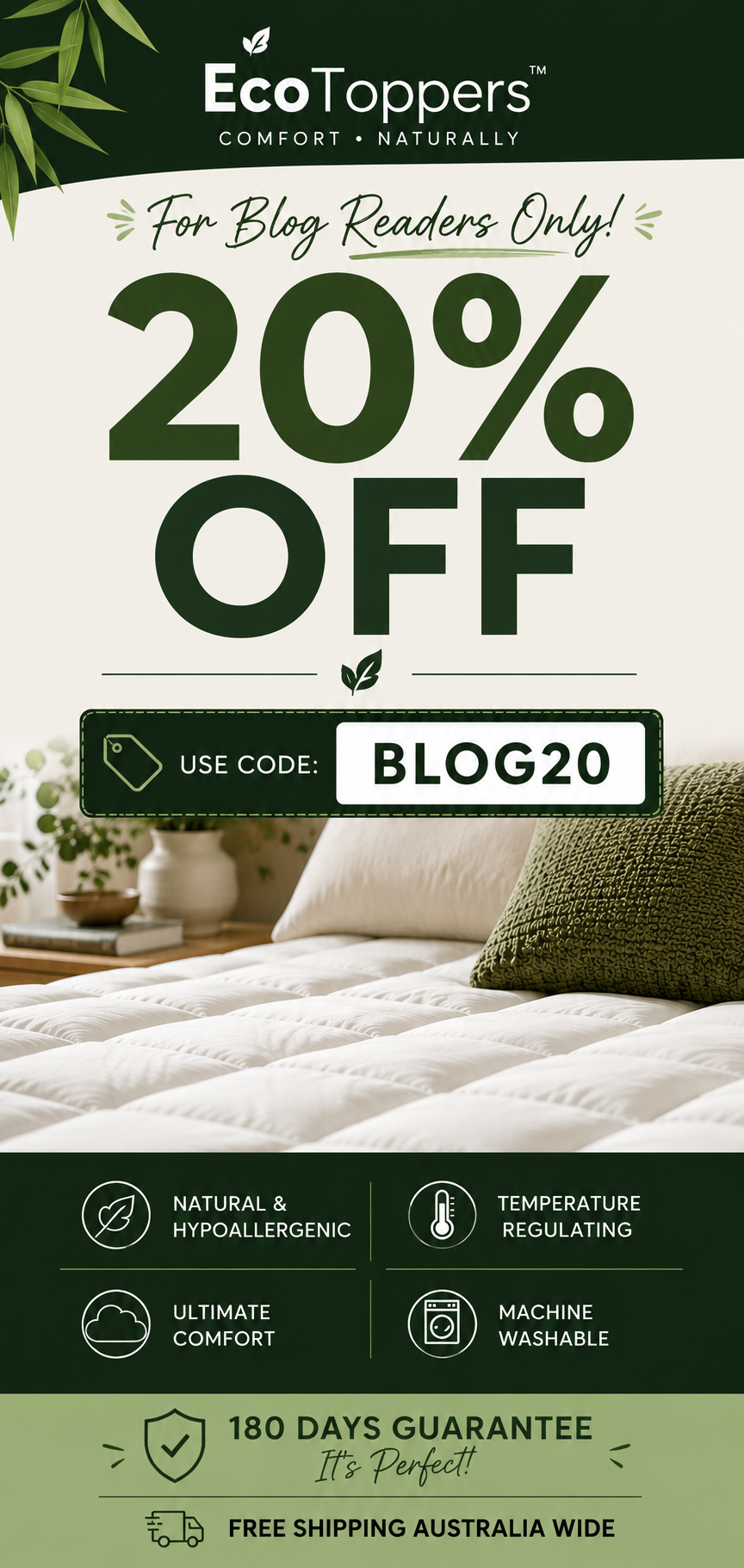

Sleep better — the eco-friendly way
Sustainable bedding blends renewable fibres, low‑toxicity processing and thoughtful sleep design to improve both how you sleep and the planet’s health. This article shows how eco-friendly materials — especially bamboo mattress toppers — affect temperature control, allergen exposure and pressure relief to deliver deeper, less interrupted sleep. You’ll find clear explanations of practical comparisons between bamboo and alternatives like organic cotton and wool, and straightforward buying advice for Australian shoppers. We also map common sleep problems (allergies, eczema, chronic back pain) to material properties and simple maintenance steps that preserve benefits. Finally, practical product notes cover how we support your purchase to help you make a confident decision.
What are the main sleep benefits of sustainable bedding?
Sustainable bedding supports better sleep by combining breathable fibres, reduced VOC exposure and supportive construction. Together, these features lower nighttime wakings and physiological stress. The effect works through improved thermoregulation, lower microbial and allergen loads, and better pressure distribution — changes that can shorten time to sleep and increase restorative deep‑sleep. Knowing these benefits helps you prioritise features like moisture‑wicking, natural antibacterial properties and the right topper thickness for your needs.
Sustainable bedding tends to deliver four sleep‑focused advantages:
- Better temperature control from breathable, moisture‑wicking fibres that help stabilise body temperature.
- Lower allergen and microbial exposure thanks to naturally antimicrobial fibres or well‑designed covers.
- Improved pressure relief and orthopaedic support to reduce tossing and turning.
- Less indoor air pollution and VOCs when products are made with low‑chemical or chemical‑free processes — important for sensitive sleepers.
These benefits work together: improved temperature control reduces sweat and dust‑mite growth, which in turn cuts night‑time breathing disturbances and supports more continuous sleep.
How does bamboo bedding improve comfort and support?
Bamboo bedding brings comfort through fine, porous fibres and considered topper construction that balances cushioning with support. Bamboo’s thin, breathable fibres create a cooler sleeping surface and allow toppers to contour without trapping heat. Topper cores — commonly available in 5cm or 7.5cm options — add targeted pressure redistribution for shoulders and hips. That means a bamboo topper can revive an older mattress by smoothing pressure points and changing perceived firmness. Practically, side sleepers often benefit from thicker, more cushioning toppers, while back sleepers usually prefer moderate thickness that preserves spinal alignment and eases lumbar pressure.
Choosing the right topper thickness is directly tied to pressure distribution and support; the next section explains why temperature control matters equally for sleep‑stage stability.
Why is temperature regulation so important for quality sleep?
Temperature regulation is central to sleep architecture because a drop in core body temperature helps initiate sleep, and stable temperatures support REM and deep‑sleep maintenance. Materials that wick moisture and permit air exchange reduce surface heat and evaporative build‑up, preventing the micro‑awakenings that fragment sleep. Bamboo’s hygroscopic fibres and open structure move moisture away from skin quickly, preserving a drier microclimate that helps sustain sleep. Seasonal strategies — for example, a bamboo cover in summer and extra layering in winter — let you keep thermoregulation benefits year‑round without sacrificing support.
Good thermoregulation helps you fall asleep faster and stay in deeper, uninterrupted sleep, which improves daytime recovery and function.
How do bamboo mattress toppers deliver hypoallergenic and health benefits?
Bamboo mattress toppers combine the natural properties of the fibre with smart construction to resist dust mites, microbes and mould. Key mechanisms are moisture control, antimicrobial tendencies in the fibre (depending on processing) and smooth surfaces that discourage allergen build‑up. For people with sensitive skin or respiratory issues, lowering exposure to common bedroom triggers means fewer nighttime coughs, less nasal congestion and reduced sleep fragmentation. Simple care and regular laundering keep these benefits intact by preventing biological build‑up and preserving fibre performance.
Below is a focused mapping of common health concerns to bamboo properties and the benefits you can expect.
| Health Concern | Bamboo Property | Expected Benefit |
|---|---|---|
| Allergic rhinitis/dust mite sensitivity | Moisture‑wicking, low dust retention | Lower allergen load and fewer night‑time disruptions |
| Eczema / sensitive skin | Smooth, breathable fibres | Less skin irritation and improved comfort |
| Asthma | Natural antibacterial tendencies (processing dependent) | Fewer microbial triggers and easier breathing at night |
What makes bamboo bedding naturally hypoallergenic and antibacterial?
Bamboo fibres have a tight microstructure that makes microbial colonisation less favourable and, when paired with good moisture control, reduces the conditions that dust mites and mould need to thrive. Two mechanisms are at work: fast wicking keeps the surface drier, and the smooth fibre reduces particle adherence so allergens accumulate less readily. Proper construction — tightly woven covers and removable, washable encasings — preserves these advantages over time.
Keeping these benefits requires simple care routines and choosing suitable topper covers and fills, which we outline next.
Can sustainable bedding help reduce allergies and skin irritation?
Yes. Sustainable bedding changes the bedroom microclimate and reduces exposure to synthetic chemicals that can worsen symptoms. For eczema, breathable fabrics that manage moisture help avoid the sweating and occlusion that trigger flare‑ups. For allergic rhinitis, materials that limit dust‑mite populations directly reduce symptom burden. Practical steps include using washable topper covers, laundering at suitable temperatures where the fabric allows, and choosing products with low‑chemical or chemical‑free processing claims to minimise VOC exposure. Taken together, these measures typically reduce nighttime symptom severity and improve sleep continuity for sensitive sleepers.
Regular care and checking of material claims are essential to keep these health benefits long-term.
Why choose eco‑friendly bedding for sleep and the environment?
Picking eco‑friendly bedding matters because the fibre lifecycle, processing emissions and chemical use affect both environmental footprint and indoor sleep health. Fibres grown without heavy pesticides and processed with low‑toxicity methods reduce environmental harm and remove many indoor air pollutants that can disrupt sleep. Buyers who value renewability, biodegradability and transparent sourcing cut long‑term exposure to harmful substances and create healthier bedrooms. Knowing how sustainable materials differ on breathability, allergenicity and durability helps you match choices to sleep needs.
Compare core sleep‑relevant attributes of common sustainable materials below to guide your decision.
| Material | Breathability | Hypoallergenic | Environmental Impact |
|---|---|---|---|
| Bamboo | High moisture‑wicking, highly breathable | Generally good; resists dust mites | Fast‑growing, lower pesticide use (varies by farming and processing) |
| Organic cotton | Good breathability, less wicking than bamboo | Soft and comfortable; allergen profile varies | Higher water use, but no synthetic pesticides |
| Wool | Moderate breathability, excellent humidity buffering | Naturally antimicrobial; can irritate some people | Renewable, but has land‑use considerations |
| Natural latex | Good support; breathability varies by construction | Hypoallergenic when pure; check processing | Durable with higher resource intensity but long lifespan |
How does bamboo compare with organic cotton and wool?
Bamboo stands out for moisture‑wicking and surface cooling thanks to its fine, porous fibres. Organic cotton offers broad breathability and a familiar, soft hand that many sleepers like. Wool is excellent at buffering humidity and regulating temperature seasonally, but it can feel heavier and may bother those sensitive to lanolin. Natural latex provides durable support and contouring, with breathability depending on core design. Each material has different lifecycle trade‑offs — water use, farming practices and biodegradability — so the best choice pairs material properties with your thermoregulatory and allergenic needs.
Understanding these differences helps you focus on the features that will most improve your sleep and long‑term comfort.
Which eco‑certifications should you look for?
Eco‑certifications confirm aspects of fibre origin, processing and chemical safety that affect indoor air quality and consumer confidence. Look for standards that cover organic farming, restricted‑chemical processing and verified fibre content, because these reduce VOCs and clarify sourcing. When checking labels, confirm whether a certification covers both crop production and manufacturing — partial certifications can leave gaps in chemical safety. Asking for certification identifiers or documentation gives practical assurance that a product supports both sustainability and sleep health goals.
Verifying claims this way reduces uncertainty and helps match purchases to health and sustainability priorities.
How does EcoToppers’ bamboo mattress topper improve sleep quality?
EcoToppers makes bamboo mattress toppers that combine temperature control, hypoallergenic fibre benefits and orthopaedic support in one accessory. We focus on sustainably sourced materials and construction that improves pressure redistribution and moisture management for steadier sleep. EcoToppers offers practical options like 5cm and 10cm thicknesses and a deep‑pocket secure fit to suit a range of mattresses, helping you match a topper to mattress depth and sleeping position. We also provide excellent customer support and flexible options to help you try our products and make a confident purchase.
These features show how sustainable design choices translate into measurable sleep gains, such as fewer wakings and better spinal comfort.
Which EcoToppers features support orthopaedic comfort and pressure relief?
EcoToppers’ 5cm and 10cm bamboo toppers offer different orthopaedic results by changing cushioning depth and pressure distribution. The 5cm model adds surface comfort and light contouring for those who want cushioning without a big change to mattress firmness. The 10cm model provides deeper contouring and greater pressure relief for side sleepers and heavier body weights. Topper density and cover fabric also affect how pressure spreads across shoulders and hips, and therefore spinal alignment. Matching thickness to sleep position and bodyweight maximises orthopaedic benefit and can delay replacing a still‑supportive mattress.
Choosing the right topper depends on both your comfort preferences and objective support needs, which the next section expands on.
How does EcoToppers minimise chemicals and support a healthier sleep environment?
EcoToppers sources ethically grown organic bamboo and designs construction to reduce chemical exposure, helping create a healthier bedroom microclimate. Ethically sourced organic bamboo indicates attention to lower pesticide use, which cuts potential VOCs in finished textiles and helps preserve indoor air quality. For institutional buyers and individuals who need invoicing support, we offer flexible payment options, plus ways to try our products at home. We encourage customers to request certification details and verify claims to ensure the product meets their sustainability and low‑chemical expectations.
Clear sourcing and straightforward terms make it easier to turn sustainability claims into real sleep health outcomes.
How can sustainable bedding help with common sleep issues like back pain and allergies?
Sustainable bedding helps ease back pain and allergies by combining biomechanical support with reduced allergen exposure. A topper changes surface firmness and contouring to redistribute pressure away from vulnerable areas like shoulders and hips, while hypoallergenic fibres and moisture control limit dust‑mite growth and other respiratory triggers. For chronic back pain, the right thickness and density can reduce nighttime discomfort by improving lumbar support. For allergy sufferers, lowering allergen load and keeping a dry microclimate reduces nighttime symptoms and supports longer, more restorative sleep.
Integrating support and allergen control in bedding design, therefore, creates two effective pathways to better sleep for many common conditions.
How do bamboo toppers promote spinal alignment and pressure relief?
Bamboo toppers change mattress surface behaviour by adding a conforming layer that cushions high‑pressure areas and supports natural spinal curves. The topper smooths abrupt firmness transitions in older mattresses, letting shoulders and hips sink appropriately while preserving lumbar support — improving spinal alignment for side and back sleepers. Thickness choice matters: thinner toppers give modest contouring, while thicker layers increase sink and cushioning at pressure points. When a topper matches sleep position and bodyweight, many sleepers notice less nocturnal pain and fewer position changes, though severe spinal conditions still require professional assessment.
Trying different mattress‑topper combinations helps decide whether a topper will suffice or a new mattress is needed.
How does hypoallergenic bedding improve sleep for allergy and asthma sufferers?
Hypoallergenic bedding reduces exposure to allergens by limiting dust‑mite habitats and microbial growth through moisture control and smooth fibre surfaces. That directly lowers nightly allergy symptoms and asthma triggers. With fewer allergens, there are fewer awakenings from congestion, coughing or wheeze, improving sleep continuity and daytime function. Simple care — regular washing, using impermeable encasings where appropriate and keeping bedroom humidity low — prolongs these benefits. For persistent or severe respiratory conditions, pair hypoallergenic bedding with medical guidance for the best outcomes.
Maintaining low humidity and following care instructions are small steps with big benefits for allergen reduction over time.
What should Australian shoppers consider when choosing the best eco mattress topper?
Australian shoppers can use a concise checklist linking sleep position, bodyweight, mattress depth and material to pick an effective eco mattress topper. Key decision factors include thickness and firmness for pressure relief, material breathability for temperature control, a secure fit for mattress compatibility, and certifications or processing evidence to reduce VOC exposure. Institutional purchasers and other buyers will value suppliers who offer clear customer support and ways to try products at home. This checklist turns sleep goals into clear product requirements.
Use the practical buyer checklist below when comparing toppers and brands.
- Thickness and firmness: Choose 5cm for surface comfort, 10cm for deeper pressure relief, depending on sleep position and bodyweight.
- Material and breathability: Prioritise bamboo for cooling and wicking; consider wool or cotton for seasonal preferences.
- Fit and compatibility: Make sure deep‑pocket or secure‑fit skirts match the mattress depth to prevent shifting.
- Certifications and processing: Ask for verification of organic sourcing and low‑toxicity processing to limit VOCs.
- Customer support and trying the product: Check how you can try the product, delivery terms and availability of support for various purchasing needs.
Which factors affect topper selection: thickness, firmness and fit?
Thickness, firmness and fit work together to determine how a topper changes mattress performance. Thickness controls how much contouring and pressure redistribution you get; firmness dictates the level of perceived support; and fit keeps the topper in place on deep or pillow‑top mattresses. Side sleepers and lighter mattresses often benefit from thicker toppers for cushioning; back sleepers seeking maintained support usually prefer medium thickness with balanced firmness. Features like deep‑pocket skirts or elastic straps prevent migration and help preserve spinal alignment through the night.
Measure your mattress depth and be honest about sleep position and bodyweight to choose the right combination of thickness, firmness and fit.
How does EcoToppers compare with other Australian sustainable bedding brands?
When comparing EcoToppers to other Australian sustainable bedding brands, focus on objective criteria: material sourcing, thickness options, secure‑fit design, customer support and flexible purchasing options — not just marketing language. EcoToppers offers practical choices like 5cm and 10cm bamboo options and a deep‑pocket secure fit to suit different mattress depths, helping you match product to need. Our support for various buyers, plus ways to try our products at home, are useful differentiators for those who want reassurance or organisational purchasing options. Always prioritise transparent sourcing and verifiable certifications when you compare.
For procurement or bulk enquiries, contact the supplier and verify documentation so the product meets both sleep and administrative requirements; EcoToppers can be reached at [email protected] or +61 401 467 099 to discuss institutional or special requests and trial arrangements.
Frequently asked questions
What are the environmental benefits of choosing bamboo bedding?
Bamboo bedding is often seen as environmentally friendly because bamboo grows fast and typically needs less water and fewer pesticides than many crops. It’s biodegradable and, when processed responsibly, can involve fewer toxic chemicals than conventional textiles. Choosing bamboo bedding can therefore support lower resource use and reduced environmental impact while still giving you a comfortable, eco‑minded sleep surface.
How can I care for my bamboo bedding so it lasts?
Simple, regular care keeps bamboo bedding performing well. Wash in cold water with a gentle detergent to preserve softness and fibre strength. Avoid bleach and fabric softeners, which can damage fibres. Air drying is best to prevent shrinkage and keep shape, and store items in a cool, dry place away from direct sunlight to avoid fading. These steps will help your bamboo bedding last longer.
Which certifications matter when buying eco bedding?
Look for certifications that cover farming and processing to get a full picture of sustainability and chemical safety. GOTS (Global Organic Textile Standard) confirms organic farming and supply‑chain standards; OEKO‑TEX checks for harmful substances in finished textiles. For wood‑derived products, FSC indicates responsible sourcing. These labels help you trust that a product meets environmental and health expectations.
Can eco bedding help regulate temperature while I sleep?
Yes. Eco bedding — especially bamboo — is known for breathability and moisture‑wicking, which helps keep sleepers cool by improving air circulation and reducing heat retention. This is particularly helpful for people who sleep hot or sweat at night. A stable microclimate at the mattress surface supports fewer temperature‑related disturbances and better overall sleep.
What should I look for in a topper to help with back pain?
When choosing a topper for back pain, consider thickness, firmness and material. A thicker topper (around 10cm) can give better pressure relief for side sleepers, while a medium thickness (about 5cm) may suit back sleepers who want to retain more of the mattress’s original support. Materials that contour well, like bamboo‑infused foam or memory foam, can help align the spine and ease pressure points. Make sure the topper fits securely to prevent movement that could disrupt spinal alignment.
How can I tell if bedding is truly hypoallergenic?
Check product specs and certifications that specifically state hypoallergenic properties and low‑chemical processing. Materials with good moisture control and smooth fibres, such as bamboo, are less hospitable to dust mites and mould. Regular cleaning, washing bedding at suitable temperatures and using protective covers also maintain hypoallergenic performance. Always verify claims with reliable labels or supplier documentation.