





Organic Sleep Products Australia: Transform your bedroom with eco-friendly, non‑toxic bedding
Organic sleep products are bedding and mattress accessories made from natural, minimally processed materials that avoid synthetic chemicals and harsh finishes. They give you a healthier place to sleep and a smaller environmental footprint. This guide breaks down what organic bedding is, why it matters for sleep and sustainability, and how Australian households can choose items like bamboo mattress toppers, organic cotton sheets and natural pillows to improve comfort and reduce allergens. You’ll find insights into breathable fabrics and temperature‑regulating fills, practical buying criteria for different sleeper types, and clear care steps to keep products performing longer. We also cover bamboo topper benefits, how to pick the right thickness and materials, orthopaedic advantages, and where to buy and care for organic bedding in Australia — all presented with handy comparisons and checklists so you can upgrade your bedroom with confidence.
What Are Organic Sleep Products and Why Choose Them?
Organic sleep products are textiles and mattress components made from organically grown fibres and natural fills, processed without harmful chemicals. They focus on breathability, lower allergen load and responsible sourcing. These products use breathable fibres such as bamboo and organic cotton that wick moisture and discourage microbial growth, helping keep airways clearer and body temperature more stable through the night. Choosing organic reduces exposure to flame retardants, formaldehyde finishes and synthetic dyes that can irritate sensitive skin — and it supports a smaller environmental impact through renewable, biodegradable materials. Below, we outline the main differences between organic and conventional bedding to help you decide.
Organic bedding differs from conventional options in three key ways: fibre origin, processing chemicals and lifecycle impact. Conventional products often rely on petroleum‑based fibres or chemically treated cotton; organic alternatives use naturally sourced fibres and cleaner processing to limit toxic residues. For sleepers, that usually means fewer irritants, better breathability and a reduced ecological footprint — which is why organic bedding is especially appealing to allergy sufferers, families and eco‑minded buyers. Understanding these basics prepares you to evaluate materials and certifications later on.
How Do Organic Mattresses and Bedding Improve Sleep Quality?
Organic mattresses and bedding can improve sleep by increasing airflow, regulating the sleep surface temperature and cutting exposure to common irritants that fragment rest. Breathable fibres like bamboo and organic cotton move moisture away from skin, helping prevent night sweats and micro‑awakenings linked to overheating — which supports longer stretches of deep sleep. Lower chemical loads and naturally hypoallergenic materials also reduce inflammatory triggers for conditions like asthma and allergic rhinitis, so sensitive sleepers often experience fewer nocturnal symptoms. Together, temperature control and allergen reduction are the main ways organic bedding helps sleep feel more continuous and comfortable.
The immediate sleep environment plays a large role in thermal comfort and overall sleep quality.
Those practical benefits matter most for people who experience night sweats, mild eczema or seasonal allergy flare‑ups. If you sleep hot, choosing moisture‑wicking fabrics plus breathable topper fills can lower skin temperature and reduce tossing. Allergy‑prone households get extra benefit by choosing materials with natural antimicrobial properties and keeping to a regular laundering and ventilation routine. Knowing how these mechanisms work helps when you’re comparing product options in the buying section.
What Makes Bedding Eco-Friendly and Non-Toxic in Australia?
Bedding is eco‑friendly when its raw materials are renewable, farming avoids harmful agrochemicals and processing limits persistent toxins. Non‑toxic bedding avoids added flame retardants, formaldehyde finishes and azo dyes. Look for biodegradable fibres such as bamboo, organic cotton and mulberry silk, clear supply chains and processes that reduce water and chemical use. In Australia, prioritise transparent labelling, fibre origin statements and independent verification when you can — these details help you assess environmental claims. Choosing non‑toxic bedding also lowers indoor chemical exposure and improves household air quality.
Environmental impact also hinges on lifecycle choices: long‑lasting products that are repairable or recyclable typically have a lower overall footprint than disposable alternatives. Natural fibres break down more readily than synthetics — provided they aren’t blended with non‑biodegradable components. Next, we explain why bamboo is a strong option for combining practical sleep benefits with solid eco‑credentials.
What Are the Key Benefits of Bamboo Mattress Toppers?

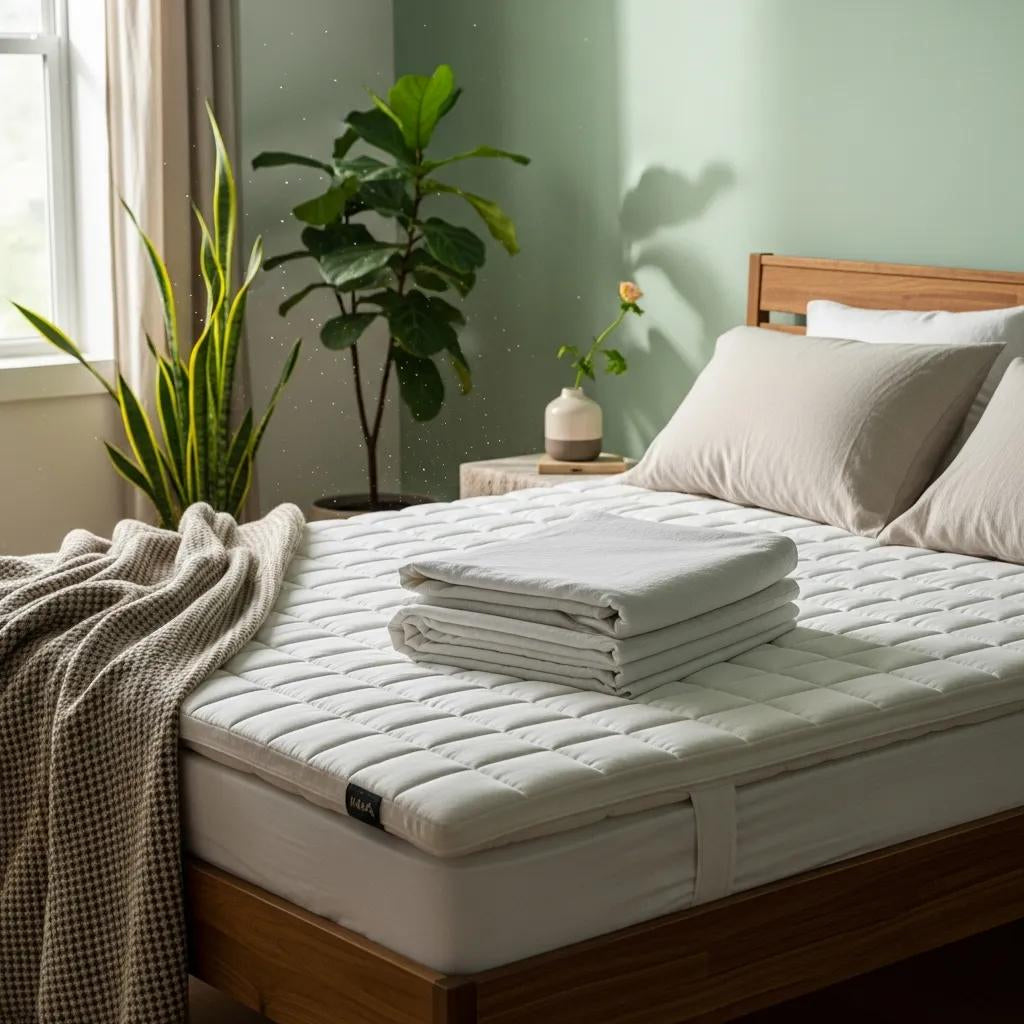
Bamboo mattress toppers deliver a useful mix of hypoallergenic performance, cooling, orthopaedic support and durability — a practical upgrade for many Australian sleepers. Bamboo fibre gives the sleep surface natural breathability and moisture‑wicking, keeping sleepers cooler and making the environment less friendly to dust mites and microbes. When combined with supportive fill layers or foam cores, bamboo toppers also relieve pressure and help keep the spine aligned for back and side sleepers — a cost‑effective way to add orthopaedic comfort to an existing mattress.
This table compares core attributes of bamboo toppers with memory foam and synthetic polyester alternatives.
| Material | Hypoallergenic / Antimicrobial | Cooling / Breathability | Support / Pressure Relief |
|---|---|---|---|
| Bamboo fibre topper (cover + fill) | Naturally hypoallergenic; resists microbial growth | High breathability and moisture‑wicking | Moderate to high when paired with a supportive core |
| Memory foam topper | Lower natural hypoallergenic properties; can trap heat | Often retains heat unless gel‑infused or ventilated | High-pressure relief and contouring support |
| Synthetic polyester topper | Variable allergen profile; can collect dust | Lower breathability; may hold moisture | Low to moderate, depending on fill density |
This comparison highlights bamboo’s balanced performance across allergen control, cooling and support, making it a good fit for mixed needs. Practical care and selection tips follow in the next sections.
Many Australian brands, like EcoToppers, offer premium organic bamboo mattress toppers in a range of sizes and thicknesses to suit different sleepers and beds. These products often highlight sustainability and natural hypoallergenic benefits, providing a valuable upgrade for your bedroom. Look for brands that offer customer-friendly policies, such as flexible trial periods and convenient delivery options, making it easier to try a bamboo topper before committing long-term.
How Do Bamboo Mattress Toppers Provide Hypoallergenic and Antibacterial Support?
Bamboo fibres have a microstructure and natural compounds that discourage microbial growth, which helps reduce odour‑causing bacteria and dust‑mite populations on the sleep surface. Bamboo‑derived viscose or rayon often makes a smooth, tightly woven cover that limits dust penetration and launders cleanly, removing allergens more effectively. When combined with breathable fill layers or antimicrobial finishes, bamboo toppers further lower allergen exposure and create a cleaner sleeping microclimate for people with mild sensitivities. Regular care — spot cleaning, breathable mattress protectors and routine airing — keeps these hypoallergenic benefits working over time.
These properties don’t replace clinical treatment for severe allergies, but they do reduce common household triggers. In rooms prone to mould or heavy moisture, pairing bamboo’s wicking surface with good ventilation strengthens the protective effect. Knowing how these features work helps you choose the right care routine.
In What Ways Do Bamboo Toppers Regulate Temperature for Hot Sleepers?
Bamboo regulates temperature for hot sleepers by wicking moisture from the skin and encouraging airflow across the surface, so evaporative cooling happens more efficiently than with many synthetics. The fibre’s porous structure lowers fabric‑to‑skin thermal resistance, letting body heat dissipate faster. Toppers with ventilated cores or lighter fills amplify that effect, and a bamboo cover paired with organic cotton sheets improves breathability across the whole bed. For year‑round comfort, a medium‑thickness topper and breathable covers usually strike the best balance between cooling and insulation.
Tips for hot sleepers: choose a thin or medium topper, prioritise natural covers and avoid dense, heat‑trapping foam layers unless they’re ventilated or gel‑infused. Those choices together create a cooler microclimate and reduce wakings caused by overheating.
How to Choose the Best Organic Mattress and Bedding in Australia?
Picking the right organic mattress and bedding means matching material traits to your sleep position, body weight and temperature preferences — and checking provenance and trial policies. Start by identifying whether you need pressure relief (side sleepers), firmer support (back sleepers), or a low‑profile option for combination sleepers, then match those needs to topper thickness and fill density. Certifications, fibre origin statements and clear return/trial conditions are essential verification steps before purchase. Also, confirm sizing and sheet depth compatibility. The checklist below gives a simple buying flow to guide your decision.
- Identify sleeper needs: note your primary sleep position, bodyweight range and temperature preferences.
- Match material attributes: pick bamboo for cooling, natural latex for responsive support, and organic cotton for breathable sheets.
- Verify provenance and policies: check fibre origin statements, independent certification claims and trial/return terms.
- Confirm fit and maintenance: make sure topper thickness fits under fitted sheets and review wash‑care instructions.
This checklist helps you compare products more easily. The table below shows practical guidance on thickness and support to match toppers to sleepers.
| Product option | Thickness / Support | Best for |
|---|---|---|
| Thin topper (3–5 cm) | Low profile; light cushioning | Stomach sleepers, children, and those who prefer a firmer feel |
| Medium topper (5–8 cm) | Balanced cushioning and support | Combination sleepers; lighter back sleepers |
| Thick topper (8–10+ cm) | High cushioning and pressure relief | Side sleepers; heavier individuals needing orthopaedic relief |
Use this mapping to choose the right thickness for comfort and spinal alignment. When comparing products, check both cover and fill materials to make sure you get the cooling and support you expect.
When evaluating brands and models, look for a wide range of bamboo mattress toppers in common sizes and thicknesses, along with matching items like organic bamboo pillows, bamboo quilts/doonas, 100% organic cotton sheets, and mulberry silk accessories. Always prioritise independent material verification and flexible trial options to confirm real-world comfort.
What Should You Look for in Natural Latex Mattresses and Bamboo Bedding?
For natural latex mattresses and bamboo bedding, prioritise durability, breathability and transparent manufacturing that affects allergen profile and long‑term performance. Natural latex gives resilient, responsive support and strong pressure relief — ideal for sleepers needing spinal alignment. Bamboo bedding excels at moisture management and surface cooling, and it typically feels soft to the touch. Watch for red flags like unclear fibre origins, unspecified chemical finishes, or poor stitching and seam quality. Where possible, test edge support, responsiveness and cover breathability, and choose products with clear care instructions to extend lifespan.
Practical examples: a side sleeper seeking pressure relief might opt for a thicker latex or a thicker bamboo‑topper‑on‑foam setup; a hot back sleeper may prefer a medium bamboo topper over a firmer core for cooling without losing support. These material decisions help you make an informed purchase.
How Do Certifications Like GOTS and OEKO‑TEX Ensure Product Quality?
Certifications such as GOTS and OEKO‑TEX offer independent assurance about textile production. GOTS verifies organic fibre content plus environmentally and socially responsible processing; OEKO‑TEX focuses on restricted substances and the absence of harmful chemicals in finished textiles. Knowing what each certification covers helps you interpret labels: GOTS means organic farming and processing standards were met; OEKO‑TEX signals limited exposure to restricted substances during manufacturing. When certifications are claimed, check the scope (product‑level vs factory‑level) and any documentation to confirm they apply to specific components like covers or filler materials.
Using certifications as part of your due diligence reduces the risk of misleading claims and helps you prioritise products that meet both health and environmental expectations. If a product lacks certification, ask the seller for fibre origin statements and detailed wash‑care information to evaluate possible chemical exposures.
How Can You Create a Healthy, Non-Toxic Sleep Environment?

Creating a healthy, non‑toxic sleep environment combines smart product choices with simple habits and ergonomic tweaks to improve air quality, cut irritants and support good posture. Start with breathable, non‑toxic bedding and wash covers regularly to reduce allergen build‑up. Pair those choices with daily ventilation, dust‑reducing cleaning and pillows or toppers selected to support spinal alignment. The short action list below shows easy first steps most Australian households can follow.
- Choose breathable, natural‑fibre bedding and mattress toppers to reduce trapped moisture and allergens.
- Wash sheets, pillow covers and removable topper covers regularly to remove dust and skin cells.
- Ventilate the bedroom daily and use a HEPA‑filtered vacuum on soft surfaces to cut airborne particulates.
- Pick pillows and toppers that support neutral spine alignment for your main sleep position.
Those behaviours reduce indoor irritants and let organic bedding materials deliver their full physiological benefits, making sleep healthier and more restorative. The next subsection outlines orthopaedic benefits in more detail.
What Are the Orthopaedic and Ergonomic Benefits of Organic Sleep Products?
Organic toppers and bedding can support orthopaedic and ergonomic health by improving spinal alignment and targeting pressure relief — without adding chemical irritants that can disturb sleep. A correctly chosen topper evens contact firmness and redistributes pressure at shoulders and hips for side sleepers, or supports lumbar curvature for back sleepers to reduce nighttime discomfort. Materials like medium‑density natural latex or a supportive bamboo‑topper core combine responsiveness with pressure relief to help maintain neutral posture. A simple test: on your side, your spine should be straight; on your back, your lower back should feel supported, not overly sunk.
Use a trial period to monitor morning pain reduction and sleep continuity — it’s a practical way to judge orthopaedic performance before committing. If pain continues despite suitable bedding, consult a health professional for tailored advice.
How Does Sustainable Bedding Support Eco‑Conscious Living in Australia?
Sustainable bedding supports eco‑living by cutting resource intensity through renewable fibres, lower chemical use and improved end‑of‑life outcomes like biodegradability or recyclability. Bamboo and organic cotton typically need fewer synthetic chemicals than conventional cotton and break down more readily than petroleum‑based textiles when disposed of responsibly. Ethical sourcing and supply‑chain transparency further reduce social and environmental risks by supporting fair labour and lower environmental externalities. Small choices — buying durable items, repairing rather than replacing and following care instructions — amplify the environmental benefits of sustainable bedding.
Adopting these habits lowers the lifecycle footprint of household textiles and moves you toward a more circular approach to home textiles. The next section offers hands‑on buying and care guidance to protect product performance and sustainability.
Where to Buy and How to Care for Organic Sleep Products in Australia?
When buying organic sleep products in Australia, prioritise retailers that provide clear material information, trial periods and practical shipping and invoicing support so you can buy with less risk. Look for product pages that list fibre content, care instructions and compatible sheet depths; confirm trial and return policies so you can test orthopaedic fit and allergy performance at home. The table below summarises transactional policies and services to check before you buy.
| Service / Policy | Detail | Typical value |
|---|---|---|
| Trial period | Time to test comfort and fit at home | Generous trial period (e.g., several weeks or months) |
| Shipping | Delivery timeframe and cost | Convenient Australia-wide shipping; reasonable delivery times |
| Invoicing support | Documentation for funding or reimbursement | Support for specific invoicing needs (e.g., NDIS) |
Checking these practical items before purchase reduces surprises and makes it easier to confirm orthopaedic fit or invoice needs. Next, follow the care guidance below to extend product life and performance.
What Are the Best Practices for Bamboo Mattress Topper Care and Longevity?
To get the most from a bamboo mattress topper, follow a care routine that emphasises gentle cleaning, regular rotation and protection from excess moisture and direct sunlight. Most bamboo covers are machine‑washable on a gentle cycle — use a mild detergent and low tumble‑dry settings where recommended — and spot‑clean the fill when needed to avoid compression or clumping. Rotate the topper every 2–3 months to even wear and prevent permanent dips, and use a breathable mattress protector beneath the topper to block spills and dust. If you store the topper, keep it rolled or flat in a dry, ventilated space to preserve fill loft and antimicrobial effects.
These steps protect temperature‑regulating and hypoallergenic properties and slow fibre breakdown. Check seams and overall evenness regularly to spot issues early and maintain long‑term comfort.
How Do Brands Support Customers with Flexible Trials and Invoicing?
Many reputable brands offer customer-friendly policies, such as generous trial periods, so you can test bamboo mattress toppers for comfort, cooling, and orthopaedic fit before you decide. During the trial, we recommend tracking support for your sleep position, morning pain levels, and any allergic response – this real-world testing reduces uncertainty. Look for brands that also provide convenient Australia-wide shipping and can assist with specific invoicing needs, such as NDIS, on request. These customer-focused policies make it straightforward to try organic sleep solutions and obtain the documentation you need.
- Start with fit: check the topper thickness works with your sheets and mattress depth.
- Evaluate comfort: note morning stiffness and night wakings during your trial period.
- Assess temperature: record any reduction in night sweats or overheating.
- Document needs: Request any necessary invoicing support if reimbursement is required during your trial.
Following these checks helps you upgrade to organic bedding with minimal risk and transition to a healthier, more sustainable sleep environment.
Frequently Asked Questions
What are the environmental benefits of using organic sleep products?
Organic sleep products help the environment by using renewable materials like bamboo and organic cotton, which typically need fewer synthetic chemicals. These materials are biodegradable when disposed of responsibly, reducing landfill impact. Organic farming practices also support soil health and biodiversity, cutting the ecological cost compared with conventional textile production. Choosing organic bedding supports sustainable agriculture and reduces chemical runoff into ecosystems.
How can I ensure the organic sleep products I buy are genuinely eco‑friendly?
Look for recognised certifications such as GOTS and OEKO‑TEX, which verify organic content and the absence of harmful chemicals. Check clear labelling that states material origins and manufacturing practices. Research the brand’s sustainability commitments and supply‑chain transparency. Brands that publish detailed product information make it easier to make an informed choice.
What should I consider when caring for organic bedding?
Care for organic bedding with mild, eco‑friendly detergents on gentle cycles to protect fibres. Air bedding regularly to prevent moisture build‑up and reduce allergens. Avoid harsh chemicals and bleach, which can weaken organic materials. Always follow the care label for washing and drying to keep your bedding in good condition for years.
Are there specific brands in Australia known for high‑quality organic sleep products?
Yes, several Australian brands are known for high-quality organic sleep products. EcoToppers is one such brand offering bamboo mattress toppers and organic bedding options. Other reputable local brands focus on sustainable materials and ethical production. When choosing a brand, weigh up certifications, customer reviews, and product range to find the best fit for your needs.
How do I know if an organic mattress is suitable for my sleep position?
Match firmness, support and materials to your main sleep position. Side sleepers usually benefit from softer surfaces that relieve shoulder and hip pressure; back sleepers often need firmer support for spinal alignment. Try lying in your usual position for several minutes and, where possible, use a trial period to assess long‑term comfort before you commit.
What are the signs that I need to replace my organic mattress or bedding?
Replace bedding or a mattress if you see sagging, lumps, frayed edges or persistent loss of support. If you experience ongoing discomfort, morning aches or disturbed sleep despite proper care, it may be time to replace the item. Also consider replacement if breathability or odour problems persist after regular cleaning. Regular checks help you maintain a healthy sleep environment.