



Hypoallergenic Bedding for Health‑Minded Australians — Sleep Better, Breathe Easier
If you wake during the night because of sneezing, itchy skin or asthma, your bedding could be part of the problem. Hypoallergenic bedding — from covers and quilts to pillows and mattress toppers — is made to cut exposure to common irritants. That’s achieved with tight weaves, breathable natural fibres like bamboo and materials that resist dust mites and bacteria. This guide explains how bamboo bedding works, why it suits sensitive skin and lungs, and how eco‑friendly mattress toppers can give both sustainable benefits and orthopaedic comfort. You’ll find practical buying tips for Australian climates, easy maintenance routines to keep things hypoallergenic, and how some suppliers provide NDIS invoices on request. We offer straightforward advice and checklists so you can match products to conditions such as asthma and eczema — and buy with confidence.
What Are Hypoallergenic Sleep Products and How Do They Help?
Hypoallergenic sleep products are built to lower the amount of allergens in your bed. They do this through material choice, construction and simple care: tight weaves that stop mites moving through fabric, moisture‑wicking fibres that keep the sleep surface dry, and removable covers you can wash regularly. The result is fewer nasal symptoms at night, less skin irritation for eczema, and fewer asthma triggers, which all help you sleep longer and more soundly. It's widely known that managing humidity and using wash‑friendly bedding can significantly reduce dust‑mite allergens in the bedroom. With that in mind, it’s useful to see how these designs limit dust mites and why bamboo is a top choice.
Quick summary — the main hypoallergenic benefits:
- Less exposure to allergens thanks to tight fabric weaves and barrier layers.
- Reduced microbial growth from naturally antibacterial or treated fibres.
- Better thermal comfort and moisture control, which limits dust‑mite growth.
These principles underpin practical steps — regular washing, mattress protectors and washable toppers — that noticeably cut allergen exposure overnight.
How Do Hypoallergenic Bedding Products Cut Dust Mites and Allergens?
They interrupt the dust‑mite lifecycle and block allergen transfer. Tight‑weave covers stop mites moving from the mattress to the surface, breathable fibres lower the humidity mites need, and washing removes trapped skin cells and faecal particles that feed mite populations. At a microscopic level, a fabric’s weave and fibre cross‑section determine how easily mite particles pass through — denser weaves and impermeable protectors keep allergens where they belong: away from your skin and your breathing zone. Pair these product features with humidity control and routine cleaning, and you get steady, long‑term improvements in symptom control. Next, we explain why bamboo performs well across these mechanisms.
Why Is Bamboo a Strong Choice for Hypoallergenic Bedding?

Bamboo‑derived fibres bring together natural antibacterial traits, high breathability and effective moisture wicking. When processed into viscose or rayon, bamboo has a smooth surface that feels gentle on sensitive skin and doesn’t trap particles as much as rougher fibres. Its capillary action pulls moisture away from the skin, keeping the sleep microclimate drier — and less friendly to dust mites and bacteria. When processed carefully, bamboo can require fewer harsh chemical finishes to achieve antibacterial performance, and its natural softness is welcome for eczema or contact sensitivity. Bamboo’s moisture and temperature management also helps sleepers who overheat, stabilising skin and airway conditions through the night.
How Bamboo Bedding Supports Sensitive Skin and Lungs
Bamboo bedding helps by cutting direct contact with allergens and creating a cooler, drier sleep surface that reduces irritation and airborne triggers. Breathable fibre structure, good moisture wicking and antibacterial qualities work together to lower bacterial load and make the bed less hospitable to dust mites, which helps reduce eczema flares and asthma symptoms.
It's important to both reduce allergen reservoirs and improve bedding hygiene to see real benefits — and bamboo makes both easier because it washes well and manages moisture naturally.
For people with chronic skin or respiratory issues, that often means fewer nighttime disturbances and lower overnight inflammation, which supports better daytime energy and function.
The table below links common conditions to bamboo bedding features and the benefits you can expect, so you can choose with purpose.
| Condition | Bedding feature | Expected benefit |
|---|---|---|
| Asthma (dust‑mite sensitive) | Tight‑weave bamboo cover + washable topper | Lower airborne mite allergens; fewer night‑time asthma triggers |
| Eczema (sensitive skin) | Smooth bamboo viscose fabric | Less friction and irritation; more comfortable skin, fewer flare-ups |
| Night‑time sweating | High moisture‑wicking bamboo fibres | Drier sleep surface and more continuous sleep |
That mapping makes it easier to match product features to health needs and care routines.
How Bamboo Bedding Can Ease Asthma and Eczema
Bamboo helps in three practical ways: it lowers allergen exposure, it reduces skin‑surface irritation, and it stabilises moisture at the skin surface. For asthma, fewer dust‑mite allergens in the bedding mean less airway exposure at night and often fewer cough and wheeze episodes. For eczema, the smooth fibre reduces mechanical rubbing, and moisture control prevents heat‑and‑sweat triggers. Used alongside regular laundering and humidity control, bamboo bedding is a sensible part of a recommended approach to symptom management. Next, we cover how bamboo’s thermal behaviour helps sleep comfort.
How Bamboo Helps Regulate Temperature for Better Sleep
Bamboo fibres are porous and use capillary action to move moisture away from skin and disperse heat. That makes them feel cooler in warm conditions and helps keep a stable microclimate across seasons. Compared with heavier or less breathable materials, bamboo lowers surface humidity and supports evaporative cooling — useful for people who sweat at night. That cooler, drier surface also tends to reduce symptom episodes for people with asthma or eczema. Choosing the right topper loft and cover construction helps balance breathability with the insulation you need year‑round.
Why Choose an Eco‑Friendly Bamboo Mattress Topper?

Eco‑friendly bamboo mattress toppers pair hypoallergenic performance with lower environmental impact and improved comfort. A sustainable topper will typically use bamboo covers and biodegradable fillings or recyclable components, while keeping antibacterial and temperature‑regulating benefits that reduce allergens and support better sleep. Many toppers also offer orthopaedic layers or zoned support for pressure relief and spinal alignment — so they’re useful for allergy control and for comfort. The comparison table below shows how EcoToppers’ bamboo topper stacks up against common conventional options.
There's a growing interest in 'bio home linens' — natural, renewable materials with antimicrobial finishes that can reduce allergens while staying comfortable and durable.
| Product attribute | Eco‑friendly bamboo mattress topper | Conventional materials |
|---|---|---|
| Hypoallergenic/antibacterial | Naturally hypoallergenic and antibacterial | Often needs chemical finishes |
| Temperature regulation | High moisture wicking & breathability | Can trap heat (synthetics or dense foams) |
| Sustainability | Renewable and often biodegradable | Often petroleum‑based or high water footprint |
| Support/comfort | Orthopaedic options and zoned support | Often focused on cushioning only |
This shows why many health‑minded buyers choose bamboo toppers for both allergen control and environmental reasons. Below, we give a short supplier example.
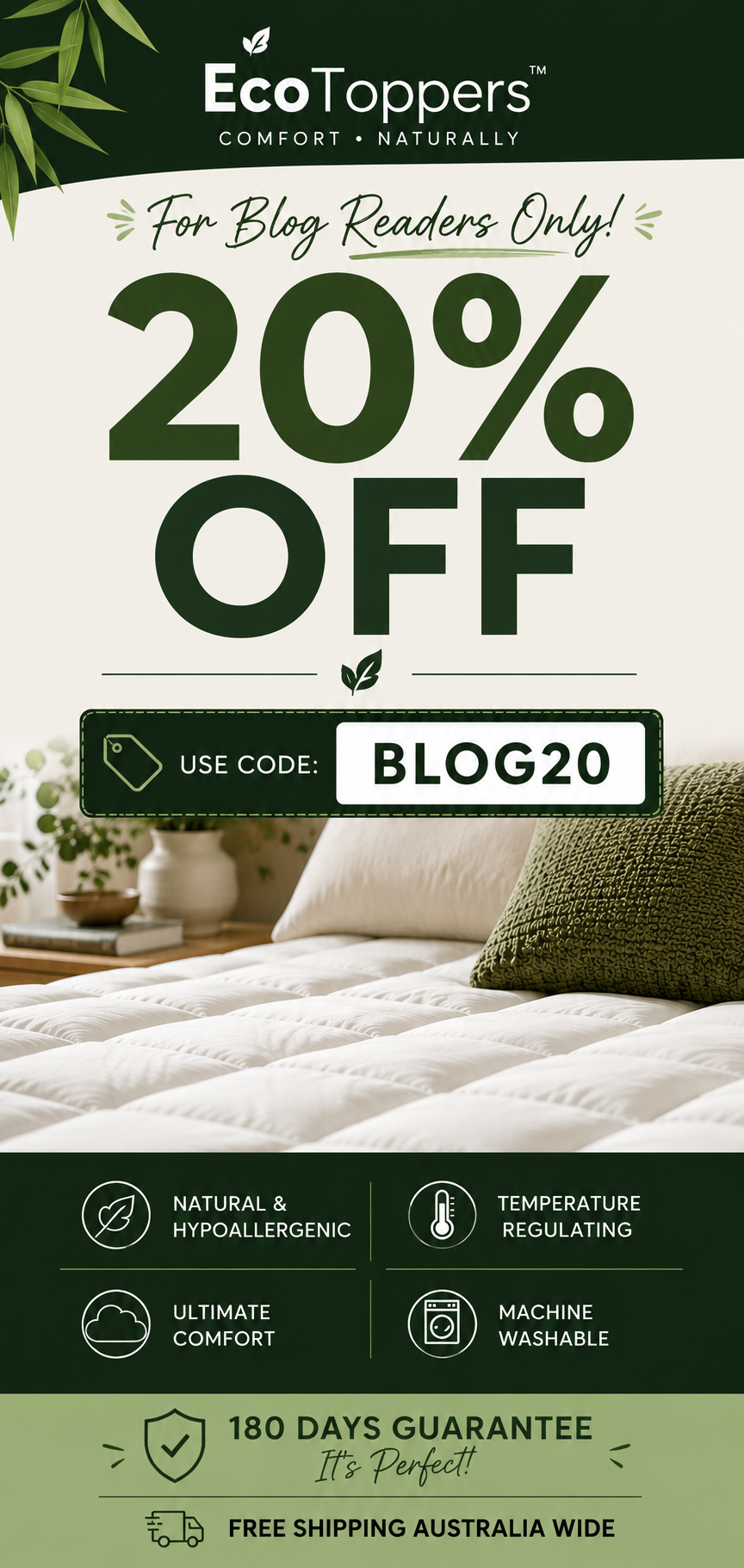
EcoToppers is an Australian brand specialising in eco‑friendly bamboo bedding — mattress toppers, quilts and pillows. Their Bamboo Mattress Topper demonstrates the hypoallergenic and sustainability features described here: natural antibacterial and temperature‑regulating performance combined with orthopaedic support. EcoToppers also offers a generous trial period, Australia‑wide shipping from a Sydney warehouse, and NDIS invoices on request to help reduce purchase friction for customers with funding needs.
How Sustainable Is Bamboo Compared with Other Bedding Materials?
Bamboo grows quickly, often needs less water and fewer pesticides than conventional cotton, and avoids petrochemical feedstocks used in many synthetics — so its raw‑material footprint is usually smaller. Processing matters: mechanically processed bamboo is more eco‑friendly than chemically intensive routes, though viscose production still involves industrial steps. At the end of life, bamboo‑based products are often more biodegradable than synthetics. When judging sustainability, look at the whole lifecycle — cultivation, processing, transport and disposal — and choose products with clear, transparent material information.
What Orthopaedic Support and Comfort Do Bamboo Toppers Offer?
Bamboo toppers can deliver orthopaedic benefits by combining supportive cores with breathable bamboo covers to relieve pressure points and help spinal alignment. Loft, density and quilting affect firmness and contour: higher loft and zoned quilting suit side sleepers seeking cushioning, while firmer cores keep alignment for back sleepers. For people with back pain, a well‑chosen topper can redistribute pressure, ease discomfort and reduce tossing at night. Check fill type, layering and quilting to match support to your sleep position and body weight.
How Can Health‑Conscious Shoppers Choose the Right Hypoallergenic Bedding?
Choosing hypoallergenic bedding is easier with a checklist that links material features to real health benefits and your sustainability priorities. Key things to check are material and processing, weave tightness for allergen barriers, moisture‑wicking and breathability, washability and removable covers, and vendor trust signals like trial periods or invoicing for healthcare funding. The buyer’s checklist below ties each feature to its benefit so you can prioritise what matters most for asthma, eczema or eco‑preferences.
| Feature to check | What to check | Why it matters (Benefit for allergy/sleep) |
|---|---|---|
| Material type | Bamboo viscose or other natural fibre cover | Helps control moisture and reduce bacterial growth |
| Weave and barrier | Tight‑weave protector or removable cover | Blocks dust‑mite migration and allergen transfer |
| Washability | Machine‑washable or removable covers | Makes regular allergen removal practical |
| Support options | Loft, firmness, zoned / orthopaedic layers | Matches pressure relief and spinal alignment needs |
| Vendor policies | Trial period, shipping, NDIS invoice support | Reduces purchase risk and supports funded purchases |
This checklist helps you focus on the features that matter for health and sustainability, and leads naturally to comparing products and suppliers.
Some vendors highlight trial periods and invoicing support to reduce purchase risk. EcoToppers’ Bamboo Mattress Topper meets several checklist items: natural, hypoallergenic and antibacterial properties, temperature regulation, sustainability claims and orthopaedic support. They also offer a generous trial period and Australia‑wide shipping from Sydney — useful trust signals when you’re evaluating fit‑for‑purpose bedding.
What Else Should Australian Buyers Consider?
Think about local climate, how you’ll launder the bedding, size compatibility and shipping logistics. In warm, humid regions, favour high breathability and strong moisture wicking; in drier climates, you’ll want a balance of insulation and airflow. Make sure product dimensions fit Australian mattress sizes and follow wash instructions to preserve performance. Local warranties, trial policies and shipping from nearby warehouses reduce wait times and simplify returns if the product doesn’t work for you.
How Does EcoToppers Help NDIS Participants with Invoices?
EcoToppers can provide NDIS invoices on request, so participants have the documentation needed when claiming Assistive Technology or home‑support items. Prepare product details — model, purchase date and intended use — and request the invoice when buying or via customer service. These invoices can support claims under Assistive Technology, Home & Living or Daily Living categories, subject to individual plan approvals. Requesting invoicing early makes it easier to include the purchase in your claim.
Best Practices for Caring for Hypoallergenic Bamboo Bedding
Keeping bedding hypoallergenic depends on regular cleaning, humidity control and correct laundering to protect fibres and reduce allergen build‑up. The practical steps below preserve bamboo’s performance and keep your sleep environment supportive of respiratory and skin health.
Bamboo bedding care — the essentials:
- Wash removable covers and sheets every 1–2 weeks on a gentle cycle to clear skin cells and dust‑mite allergens.
- Use a mild, enzyme‑free detergent; avoid bleach and fabric softeners that can harm fibres.
- Dry fully on low heat or line‑dry where possible to prevent trapped moisture.
Following these simple habits lowers allergen levels and keeps your bed comfortable and healthy.
How to Clean Bamboo Bedding Without Damaging It
Wash bamboo bedding gently to remove allergens and preserve fibre integrity: use a mild, enzyme‑free detergent on a cool‑to‑warm cycle as the care label recommends. Avoid bleach and harsh fabric softeners; rinse well and dry on low heat or line‑dry to prevent shrinkage and keep moisture‑wicking properties. For mattress toppers, remove and launder covers regularly and follow manufacturer instructions for the core — spot‑clean or seek professional cleaning only if advised. Regular intervals — weekly for sheets and pillowcases, monthly for covers and topper covers — help keep allergens at bay.
Simple Tips to Reduce Indoor Allergens
Reducing allergens is about more than bedding: manage humidity, clean regularly and keep the bedroom uncluttered. Aim for 40–50% relative humidity to slow dust‑mite growth, use a HEPA‑filtered vacuum periodically, limit dusty textiles and keep pets out of sleeping areas when possible. Mattress protectors and washable toppers act as extra barriers, and regular laundering removes built‑up allergens. Together, these measures make hypoallergenic bedding more effective.
- Control humidity: Use dehumidifiers or air conditioning to keep humidity in a moderate range.
- Clean regularly: Launder linens, vacuum and wash covers on a schedule to remove allergen reservoirs.
- Bedroom habits: Keep pets and dusty items out of the bedroom and ventilate daily to lower airborne particles.
These simple routines boost the protective benefits of bamboo bedding and make purchasing decisions easier for buyers, balancing health and sustainability.
| Maintenance action | Recommended frequency | Health impact |
|---|---|---|
| Wash pillowcases and sheets | Weekly | Removes skin cells and allergens |
| Launder removable covers/topper covers | Monthly | Reduces mattress surface allergen load |
| Control humidity | Continuous | Limits dust‑mite proliferation |
Careful product choice, clear vendor policies and straightforward maintenance let health‑minded Australians adopt hypoallergenic, sustainable bedding that reduces allergen exposure, supports sensitive skin and respiratory health, and aligns with eco values.
Frequently Asked Questions
What are the signs that I might need hypoallergenic bedding?
Frequent sneezing, blocked or runny nose, itchy skin, or worsening nighttime asthma can all point to bedding‑related allergens. If your symptoms improve outside the bedroom, switching to hypoallergenic bedding — and following good cleaning routines — may help. People with eczema or sensitive skin often find bamboo and other soft, breathable materials easier on the skin.
How often should I wash hypoallergenic bedding to keep it working?
Wash sheets and pillowcases weekly, and removable covers or topper covers about once a month. Regular washing removes skin cells, dust mites and other irritants. Use a gentle cycle and a mild, enzyme‑free detergent, and dry thoroughly to prevent moisture build‑up.
Can hypoallergenic bedding help with night sweats?
Yes. Bamboo and other moisture‑wicking fabrics draw sweat away from the skin and help the surface dry faster, which can reduce night sweats and improve comfort. Combined with breathable mattress construction, this can give you a cooler, more restful night.
Are there certifications I should look for when buying hypoallergenic bedding?
Useful certifications include OEKO‑TEX Standard 100 and GOTS (Global Organic Textile Standard), which test for harmful substances and responsible production. Look for clear labelling about antimicrobial or anti‑mite finishes and transparent material sourcing to back up eco or hypoallergenic claims.
How do I know if a bamboo mattress topper is truly eco‑friendly?
Check for certifications and clear product information. FSC, GOTS and other recognised standards can indicate sustainable sourcing and processing. Ask whether the bamboo was mechanically processed or chemically treated, and look for details on biodegradability and recyclability. Manufacturer transparency is a good sign.
What should I consider when choosing hypoallergenic bedding for children?
Pick soft, breathable, chemical‑free materials and make sure covers are easy to wash. Bamboo is often a good choice for kids because it’s gentle on the skin and wicks moisture well. Also check sizing, safety standards and how easy the bedding is to clean after spills or accidents.
Can hypoallergenic bedding improve sleep for people without allergies?
Yes. Better breathability and moisture control help regulate temperature, and a cleaner sleep surface means fewer nighttime disturbances. Many people without diagnosed allergies still sleep better on breathable, low‑irritant fabrics like bamboo.