





How to Care for Bamboo Bedding — Washing, Drying, Stain Removal & Longevity
We love bamboo bedding for its silky, breathable feel and how kind it is to the planet. To keep it feeling soft and lasting for ages, you just need a few simple habits. This guide walks you through practical, easy-to-follow steps for washing, drying, treating stains and extending the life of your bamboo sheets, duvet covers and mattress toppers. Lots of people accidentally shorten their bedding's life with the wrong care – but don't worry! Follow these tips to protect your bedding and keep it feeling fresh night after night.
Best Washing Practices for Bamboo Sheets & Bedding
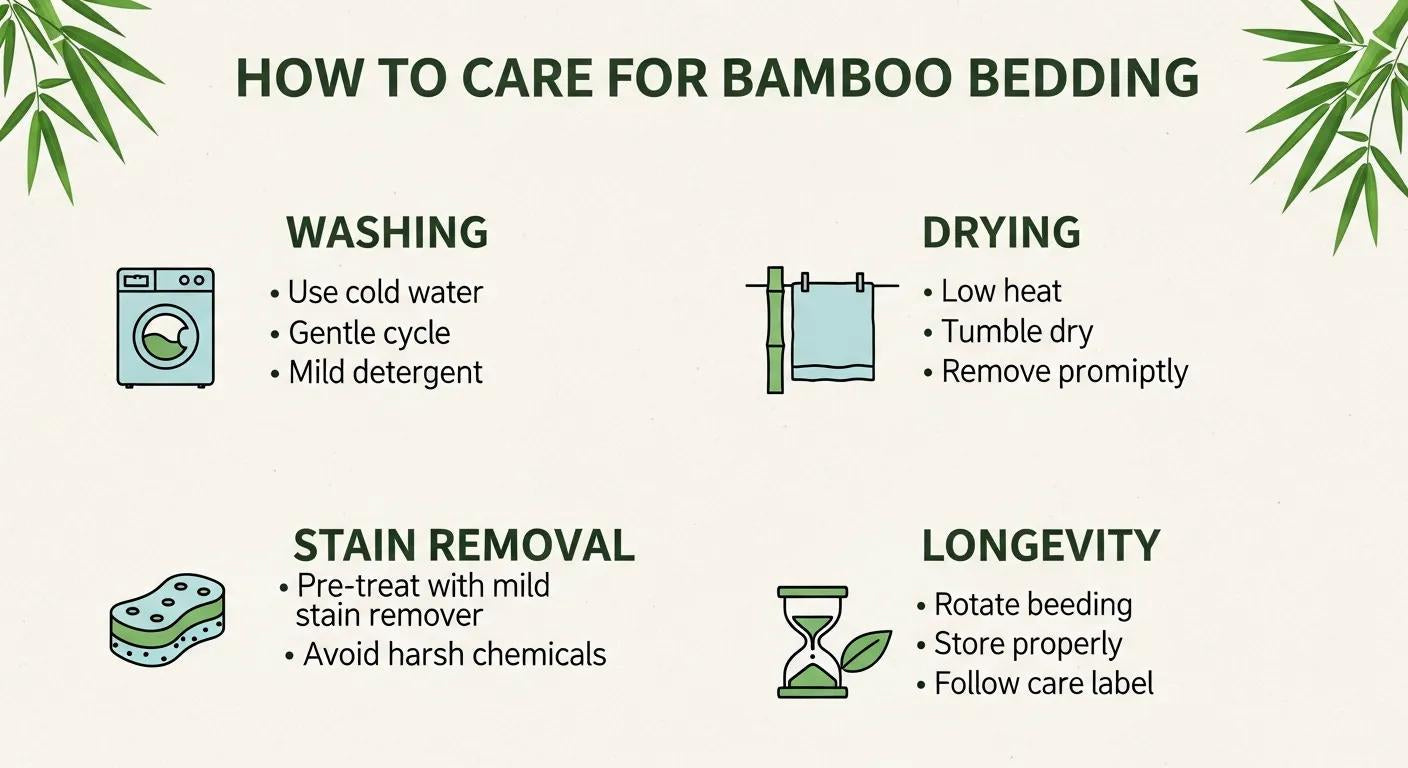
Washing your bamboo bedding correctly helps keep it wonderfully soft and durable. Bamboo fibres are a bit more delicate than some other fabrics, so always go for cold or warm water, a gentle cycle, and a mild detergent. These simple steps reduce stress on the fibres, helping the fabric keep its natural feel and top performance.
How to Wash Bamboo Sheets — Cold Water & Gentle Cycles
To wash bamboo sheets effectively, follow these steps:
- Set the Washing Machine: Pick cold or warm water to stop shrinkage and protect those lovely fibres.
- Select a Gentle Cycle: Always use a delicate or gentle cycle to keep agitation low and reduce wear and tear.
- Avoid Overloading: Give your sheets plenty of room to move so they can rinse and spin evenly without too much friction.
Stick to these basics, and your bamboo bedding will stay wonderfully soft and look newer for ages.
Choosing Mild, Eco-Friendly Detergents for Bamboo Bedding
Choose a gentle, planet-friendly detergent to keep your bamboo fabric performing beautifully. Look for these traits:
- Biodegradable Ingredients: Detergents that break down naturally are much kinder to our environment.
- No Harsh Chemicals: Steer clear of bleach and heavy-duty stain removers – they can really weaken the fibres.
- Natural or No Fragrance: Essential-oil scents or fragrance-free formulas are great for reducing irritation and chemical load.
Using the right detergent helps your bedding stay soft while keeping your care routine eco-conscious. Our bamboo bedding is designed with easy care in mind, so it holds up wonderfully to regular washing.
How to Dry and Store Bamboo Bedding to Preserve Softness
Drying and storage are just as important as washing. Air drying is perfect for long-term softness, but a low-heat tumble dry works a treat when you need that convenience.
Why Air Drying Bamboo Sheets & Duvet Covers Works Best
Air drying has clear benefits:
- Preserves Fabric Quality: No high heat means less stress on the fibres and a much softer finish.
- Lower Energy Use: Line drying is definitely the greener option and super gentle on the fabric.
- Reduces Shrinkage Risk: Air drying helps keep dimensions stable, especially compared to a hot tumble dry.
When you can, hang your sheets out or lay them flat to dry – they'll keep that luxurious feel for ages.
Tumble Drying on Low Heat — Tips to Avoid Wrinkles
If you're using a dryer, follow these tips to protect the fabric and keep those creases at bay:
- Use Low Heat Settings: Always pick a low or no-heat setting to minimise any fibre damage.
- Remove Promptly: Get your bedding out as soon as the cycle finishes to stop those deep-set wrinkles.
- Fold or Hang Immediately: Smooth, fold or hang it straight away to keep the surface neat and soft.
Understanding how heat, moisture, and movement create wrinkles helps you pick the best drying method. Follow these guidelines, and you can enjoy the convenience of a dryer without compromising your lovely bamboo bedding.
Removing Stains from Bamboo Sheets — Natural Methods That Work
Natural stain-removal methods are gentle on bamboo fibres and work a treat for most common marks. Knowing which agents to use and how to treat spots will keep your bedding looking its absolute best.
Best Natural Stain Removers for Bamboo Bedding
Give these gentle, eco-friendly options a go:
- White Vinegar: Great for cutting odours and lifting light stains without any harsh chemicals.
- Baking Soda: A mild, non-abrasive cleaner that helps lift stains and neutralise smells beautifully.
- Mild Dish Soap: Works well for spot cleaning oils and food marks when used sparingly.
These agents are safe for your fabric and much kinder to the environment than strong chemical cleaners.
How to Spot Clean and Pre-Treat Bamboo Fabric Safely
For effective spot treatment, just follow these steps:
- Blot the Stain: Gently blot with a clean cloth to soak up the excess – whatever you do, don't rub, as that can spread the stain.
- Apply the Cleaning Agent: Mix a small amount of your chosen natural cleaner with water and dab it onto the stained area.
- Rinse Thoroughly: Rinse with cold water to remove any residue and gently press the area dry.
Always test any treatment on a hidden seam first to make sure it's colourfast. These steps will help keep your bamboo bedding looking fresh without harming those precious fibres.
Tips to Extend the Life of Your Bamboo Bedding
Just a few simple routines will really extend the life and comfort of your bamboo bedding. Regular, gentle care stops common issues and keeps the fabric performing beautifully.
How Often to Wash Bamboo Bedding
Wash your bamboo sheets every 1–2 weeks, depending on how much they're used. Regular washing gets rid of body oils, sweat, and allergens, so the fabric stays clean and comfy for longer.
Preventing Pilling and Shrinkage
To avoid pilling and shrinkage, just follow these simple guidelines:
- Use Gentle Washing Techniques: Cold or warm water on a delicate cycle really reduces stress on the fibres.
- Avoid Fabric Softeners: Softeners can coat fibres and actually encourage pilling – try a splash of vinegar in the rinse for a naturally soft feel instead.
- Store Properly: Keep your bedding clean, dry, and neatly folded in a cool place to prevent any moisture damage.
With these simple habits, you can keep your bamboo bedding comfy and looking great for years to come.
Why Caring for Bamboo Bedding Matters for Comfort & Sustainability
Proper care isn't just about how your bedding looks – it protects its performance and helps reduce its environmental impact. Looking after your bedding helps it last longer, so you replace items less often and create less waste. It's a win-win!
How Proper Care Extends Lifespan & Reduces Environmental Impact
Well-cared-for bedding resists premature wear, meaning you won't need to replace it as often. This helps lower the resource and waste costs tied to making new products. Those small changes in care really add up to a big difference for our planet.
Hypoallergenic & Temperature-Regulating Benefits of Well-Maintained Bamboo Bedding
Keep your bamboo bedding in tip-top condition, and you'll continue to enjoy all its natural benefits:
- Hypoallergenic Properties: Bamboo naturally resists dust mites and common allergens, making it a fantastic choice for sensitive sleepers.
- Temperature Regulation: Bamboo fibres are wonderfully breathable and wick moisture away, helping you stay comfy all through the night.
Proper care helps preserve these amazing qualities while supporting an eco-friendly lifestyle.
| Care Practice | Benefit | Impact Level |
|---|---|---|
| Washing in cold water | Preserves fabric integrity | High |
| Air drying | Maintains softness and reduces energy use | High |
| Using natural stain removers | Safe for fabric and the environment | Medium |
Thoughtful care keeps your bamboo sheets, duvet covers, and toppers performing beautifully for years. Our premium, eco-friendly bamboo bedding is designed for comfort and durability, so adopting these simple care steps is a breeze.
Frequently Asked Questions
Can bamboo bedding be machine-washed?
Absolutely! Most bamboo bedding can be machine-washed, but it really benefits from a gentle touch. Use a delicate cycle with cold or warm water and a mild, eco-friendly detergent. Skip the bleach and fabric softeners, and always follow the care label for any product-specific instructions.
Is bamboo bedding suitable for sensitive skin?
Yes, it's fantastic for sensitive skin! Bamboo bedding is naturally hypoallergenic and resists dust mites and common irritants. Its breathability and moisture-wicking properties also help keep your skin comfortable, making it a top choice for people with sensitivities.
How should I store bamboo bedding when not in use?
Store your clean, fully dry bedding in a cool, dry place away from direct sunlight. Fold it neatly or pop it into a breathable cotton bag to protect it from dust and moisture. Try to avoid sealed plastic containers, as they can trap humidity and encourage mildew.
What should I do if my bamboo bedding shrinks after washing?
Shrinkage usually happens if it's exposed to high heat. To prevent it, always wash in cold or warm water and use a gentle cycle. If it does shrink a little, you can dampen the fabric and gently stretch it back to shape while it dries. If it keeps shrinking, it might mean the fabric wasn't pre-shrunk during manufacturing.
Can I use fabric softeners on bamboo bedding?
We don't really recommend conventional fabric softeners. They can leave a residue that reduces breathability and might even encourage pilling. Instead, just add a splash of white vinegar to the rinse cycle to soften the fibres naturally without coating them.
How do I remove tough stains from bamboo bedding?
For those stubborn stains, give white vinegar, baking soda, or a small amount of mild dish soap a go. Blot any excess liquid first, apply your chosen solution diluted with water, let it sit briefly, then rinse with cold water. Always spot-test in a hidden area first to check for colourfastness.
What are the environmental benefits of using bamboo bedding?
Bamboo grows super quickly and usually needs less water and fewer pesticides than conventional cotton. Plus, bamboo fabrics are often biodegradable, which helps reduce long-term waste. Choosing bamboo bedding supports a more sustainable use of resources and a lower environmental footprint – good for you, good for the planet!