



Sleep Cooler with Bamboo Blankets
Cooling bamboo blankets are lightweight bed layers made from bamboo-derived viscose. They pair natural breathability with moisture-wicking fibres to help hot sleepers stay cooler and drier all night. Bamboo viscose fibres have a unique cross-section and tiny capillary channels that boost airflow and pull moisture away from skin, stopping heat build-up and that clingy feeling that leads to restless tossing. This guide shows how bamboo blankets can improve sleep for hot sleepers, how to choose the right option in Australia, the health and comfort benefits, sustainability considerations, and simple care tips to keep their cooling performance. You’ll find the technical specs that matter, clear comparisons between blankets, quilts and toppers, plus practical laundering and storage advice to extend product life. Use the checklists and comparisons here to pick breathable bamboo bedding suited to Australian conditions and sensitive skin. Read on to see why bamboo often outperforms conventional cotton for summer — and for comfortable year‑round sleep.
Cooling performance comes down to both the fibre and how the fabric is made. The practical lists and comparison tables make buying and upkeep straightforward. By the end, you’ll have clear next steps to choose a cooling bamboo blanket that suits your climate, mattress and personal comfort needs.
How do cooling bamboo blankets transform sleep for hot sleepers?
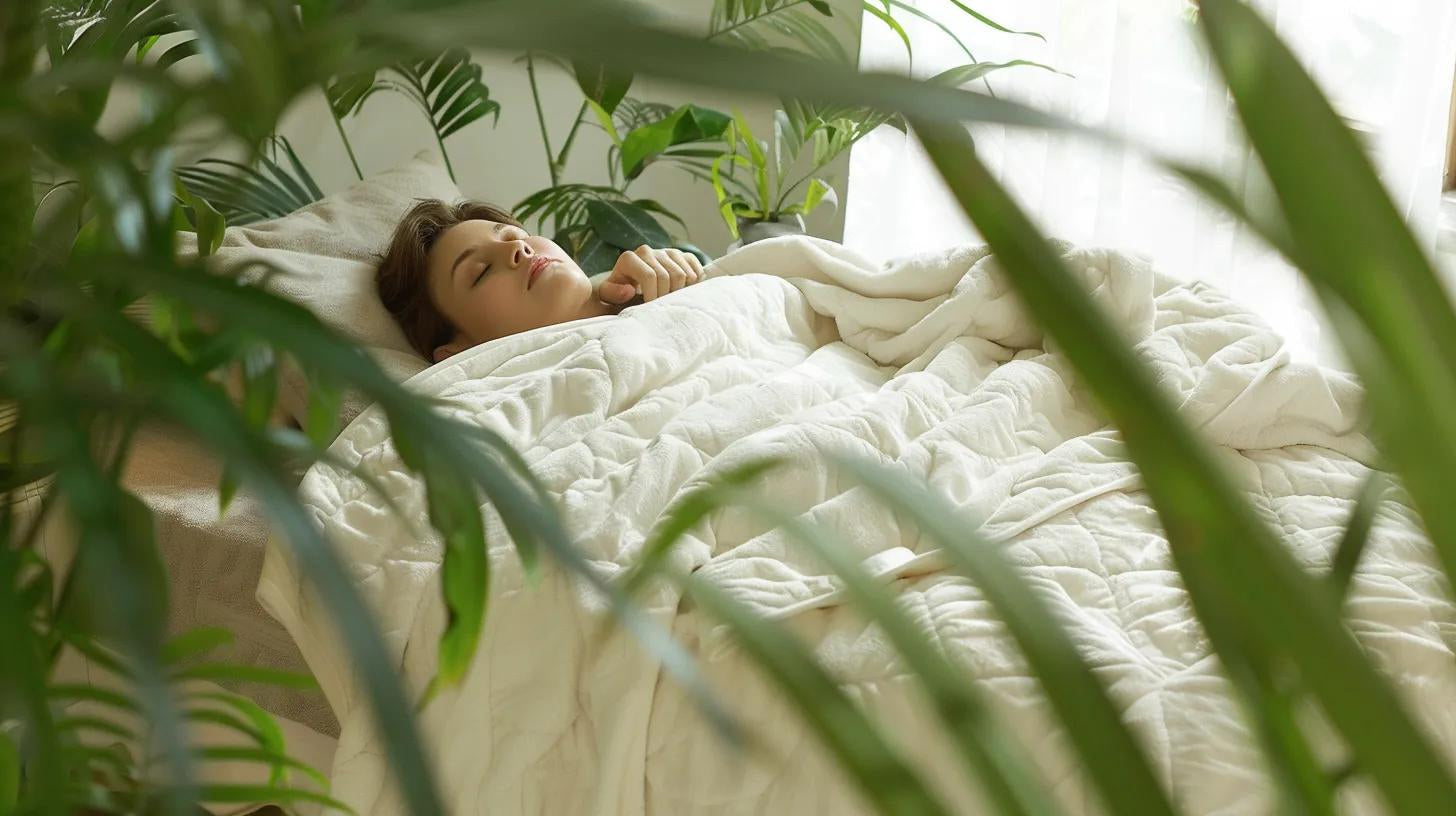
Cooling bamboo blankets work by combining breathable viscose fibres with a construction that promotes airflow and quick moisture transfer, which lowers skin-surface humidity and reduces perceived heat. Bamboo fibres have micro-gaps and capillary-like channels that move sweat from the skin into the fabric, where it can evaporate more quickly than on cotton. That reduces heat held between skin and mattress, helping your body stay in its ideal temperature range for sleep. For hot sleepers and people with night sweats, this usually means fewer awakenings, less tossing and shorter return-to-sleep times.
- Improved airflow: The structure of bamboo viscose increases breathability and cuts down trapped heat overnight.
- Moisture-wicking: Capillary action pulls sweat away from skin toward the fabric exterior for faster evaporation.
- Thermal comfort: Smaller skin-temperature swings help preserve uninterrupted sleep cycles.
These effects add up to noticeable comfort gains. Understanding how the fibres work helps you choose the perfect blanket for your cooling needs.
What makes bamboo fabric naturally cooling and breathable?
Bamboo viscose is produced by converting bamboo into regenerated cellulose fibres. The filaments have a unique structure with tiny gaps along their length, which increases surface area and wicking ability. This unique structure helps moisture move quickly from skin into the yarn and across the blanket surface, where it can evaporate, creating a cooling effect unlike thick, insulating materials. Compared with cotton, bamboo viscose typically dries faster and has a silkier feel, which reduces cling and improves perceived coolness. In practice, a bamboo blanket disperses small amounts of sweat over a wider surface, so the fabric stays drier to the touch and the sleeper senses less heat accumulation. These material traits are key when choosing the right weave and GSM for your climate.
Understanding how the fibres work helps explain how better temperature control actually improves your sleep.
How does temperature regulation improve sleep quality and comfort?
Keeping body temperature stable during the night supports faster sleep onset and longer time spent in restorative stages like REM and slow-wave sleep. When skin temperature is steady, and the body can shed heat efficiently, things that wake you up are reduced. Bamboo blankets that wick moisture and allow airflow lower local humidity and surface heat near the skin, which cuts the number of awakenings caused by overheating or clamminess. Practically, that means fewer position changes, less bedding disruption and a sensation of cooler, more comfortable rest. Sustaining this balance overnight helps you wake feeling more refreshed.
Understanding these benefits helps you make the best choice for a cooler night's sleep.
How to choose the best cooling bamboo blanket in Australia?
Choosing the right bamboo blanket in Australia means balancing GSM, weave, product type and climate suitability so you get effective cooling without excess insulation. Start by defining your main need: summer-only cooling, all-season breathability, or a light topper to add surface cooling to a heavy duvet. Pick lower GSM and open weaves for humid coastal summers, and a slightly higher GSM with breathable construction for cooler inland nights, where a bit more warmth helps. Look for clear fibre content and do a feel test — a cool-to-touch, silky hand often indicates higher viscose content rather than heavy blends.
- Assess climate and seasonality: Choose lower GSM and open weaves for humid areas, higher GSM for cooler nights.
- Select product type: Decide on single-layer bamboo blankets for summer, quilts for insulation, or toppers to cool a mattress surface.
- Verify construction and labels: Check fibre content, weave type and recognised certifications to confirm material authenticity.
- Consider care and durability: Prefer machine-washable items with low-heat drying guidance and reinforced stitching for longer life.
This checklist narrows your options. The table below compares common product types so you can match use cases to construction.
Different bamboo sleep layers suit distinct needs; the table summarises typical specifications to guide your choice.
| Product Type | Key Attribute | Typical Value |
|---|---|---|
| Bamboo blanket | GSM and weave | 150–300 GSM; open jersey or lightweight weave |
| Bamboo quilt | Fill and loft | Quilted fill with light synthetic or natural batting; higher warmth rating |
| Mattress topper | Surface contact | Thin viscose layer or blended topper that enhances surface cooling |
The table shows blankets are usually lighter and more breathable, quilts add loft for warmth, and toppers focus on surface-temperature control. With that clarified, here’s a direct comparison for summer use.
Bamboo blanket vs bamboo quilt: which is best for summer and hot climates?
A bamboo blanket is typically a single layer of viscose fabric or a lightweight knit that prioritises breathability and minimal loft — ideal for hot Australian summers and hot sleepers. A bamboo quilt includes fill and stitching that increase loft and insulation; quilts can be made summer-friendly with low-loft fill and breathable quilting, but they usually remain warmer than plain blankets. In humid coastal areas, a single-layer bamboo blanket or low-GSM jersey is best because it reduces trapped air and speeds evaporation. On drier inland nights where a little insulation helps, a light quilt with breathable fill can be more comfortable while still offering wickability.
Choose by climate and personal heat sensitivity: single-layer bamboo blankets for maximum cooling, quilts when you want a modest balance of warmth and breathability.
What specifications matter for cooling performance?
The key specs are GSM (grams per square metre), weave type, fibre content percentage and finishing treatments that affect wicking and hand feel. GSM measures fabric mass: lower GSM usually means lighter, more breathable coverage, while higher GSM gives more warmth. Weave choices such as jersey or percale change how air flows—open knits and percale promote airflow, while sateen feels smoother but can trap more heat. Finishes that keep fibre porosity and avoid heavy coatings support wickability; higher viscose-purity percentages typically deliver better cooling. Check labels for explicit bamboo viscose content and prefer clear material breakdowns over vague blends that reduce breathability.
These details make it easier to compare options and pick bamboo bedding that matches both your local climate and personal cooling needs.
What are the health and comfort benefits of bamboo blankets?
Bamboo blankets offer several health and comfort benefits: natural softness, effective moisture-wicking and lower allergen support — all of which help create a cooler, less irritating sleep environment. Moisture management reduces skin humidity that can aggravate eczema or discomfort, and the smooth viscose surface lowers friction against sensitive skin. Kept dry, bamboo viscose is also less hospitable to dust mites, which can reduce allergen load; for allergy- or asthma-prone sleepers, this may mean fewer night-time symptoms and easier breathing. Together, the cooling, softness and reduced allergen exposure support more restful sleep and fresher mornings.
| Material Attribute | Functional Property | Benefit |
|---|---|---|
| Bamboo viscose | Moisture-wicking | Reduces night sweats and surface clamminess |
| Bamboo fibre structure | Antibacterial tendencies | Lowers bacterial load and odour build-up |
| Smooth viscose hand | Low-friction surface | Gentle on sensitive or eczema-prone skin |
This mapping shows how specific fibre traits turn into real comfort and health improvements for people who sleep hot or have sensitive skin. Below are the most relevant benefits at a glance.
- Hypoallergenic performance: Fewer irritants and reduced dust-mite support when bedding stays dry and is well cared for.
- Rapid moisture dispersion: Lowers skin humidity and the chance of sleep disruption from sweating.
- Silky softness: Reduces friction and irritation for sensitive or inflamed skin.
These advantages make bamboo bedding a good choice for people with allergies, hot flashes or general overheating at night. If you're looking for bulk supply or custom specifications, we're here to help with your project needs.
Our brand offers premium eco-friendly bamboo bedding and can discuss commercial supply and custom specifications for larger orders. We focus on temperature regulation, hypoallergenic properties, and responsible sourcing, with a customer-focused approach. If you're a procurement team or managing a fit-out project and prioritise cooling performance and eco-credentials, you'll find value in our range and supply capabilities.
Sustainability and eco-friendly sleep with bamboo bedding
Buying bamboo bedding often reflects sustainability priorities. Bamboo is a fast-growing, renewable grass that typically needs less water and fewer pesticides than many conventional fibres, which can mean a smaller agricultural footprint when sourced responsibly. The environmental upside comes from rapid regrowth and lower irrigation needs in many systems, reducing water pressure compared with water-hungry crops. That said, viscose processing varies in environmental impact depending on chemical recovery and wastewater treatment, so check traceability and certification. Robust verification and transparent sourcing help ensure the raw material’s sustainability carries through to the finished bedding.
| Aspect | Attribute | What to look for |
|---|---|---|
| Raw material | Water & pesticide use | Low irrigation and minimal agrochemical inputs |
| Processing | Chemical recovery | Closed-loop or solvent recovery systems |
| Certification | Standard | OEKO-TEX or GOTS labelling indicating independent verification |
This breakdown makes clear that responsible sourcing and certified processing are where sustainability is actually earned, not simply claimed. We highlight our sourcing commitments consistent with sustainable bamboo bedding and can discuss traceability and specifications for larger procurements.
Our brand supplies and promotes premium eco-friendly bamboo bedding and welcomes conversations about commercial project specifications and traceability. If you're a procurement team or managing a fit-out, you can request details on our sourcing commitments and product ranges that prioritise temperature regulation and sustainability.
Organic bamboo sourcing and environmental impact
Organic bamboo sourcing focuses on cultivation without synthetic pesticides and with practices that help soil health and biodiversity, further lowering the environmental cost of fibre production versus conventionally grown crops. Bamboo’s quick regrowth and high biomass per hectare let you produce more fibre on less land, reducing land-use pressure and increasing carbon-sequestration potential when managed well. The environmental benefits still depend on avoiding deforestation for new plantations and ensuring processing recovers solvents and minimises effluent. Brand transparency and supply-chain traceability are the best signs that bamboo’s theoretical sustainability becomes a real-world advantage.
Certifications to look for in bamboo bedding and our commitments
Certifications such as OEKO-TEX check finished textiles for harmful substances, while standards like GOTS cover organic raw-material cultivation and processing rules, including chemical management and social compliance. When you review certificates, confirm they apply to the viscose process or the finished product and that independent auditors validate the claims. We are committed to sustainable sourcing, temperature regulation and hypoallergenic performance — which align with the main benefits buyers look for in eco-friendly bedding. Asking for certificates and supply-chain documentation helps ensure purchases deliver real environmental and health outcomes.
These certification checks complete the sustainability assessment and lead naturally to practical care guidance to preserve performance and environmental value.
Care, maintenance, and longevity of cooling bamboo blankets
Proper care keeps bamboo blankets cooling and extends their service life by preserving fibre structure and wickability while avoiding damage from high heat or harsh chemicals. Wash settings, detergents and drying methods all matter: gentle cycles and mild, low-residue detergents protect fibre porosity, while very hot washing or prolonged tumble drying can change fibre shape and reduce capillary action. Regular airing and rotation reduce local wear and help bedding dry between washes, which limits dust‑mite and bacterial growth. With the right care, bamboo blankets keep their cooling feel and functional benefits longer, improving both comfort and value.
- Wash on a gentle cycle with cool to warm water: Protects fibre integrity and avoids shrinkage.
- Use mild, phosphate-free detergent: Prevents residue that can clog capillary grooves and reduce wickability.
- Air-dry or tumble-dry low and remove promptly: Minimises prolonged heat exposure and keeps softness.
Follow these basic washing practices to preserve moisture-wicking performance and delay the need for replacement. The next section gives more detailed washing and drying tips.
Washing and drying tips to preserve cooling properties
Wash bamboo blankets on a gentle cycle at low-to-moderate temperatures to protect the viscose fibre structure and wicking channels. Avoid bleach and fabric softeners — they can leave residues that reduce absorbency. Choose a mild detergent that rinses clean and use a short spin to limit mechanical stress. For drying, line-dry in the shade to preserve fibre strength and avoid thermal stress; if you must tumble-dry, use a low-heat setting and remove the blanket while slightly damp to finish air-drying. Treat stains quickly with gentle spot-cleaning rather than aggressive scrubbing, which can fray fibres and weaken cooling performance over time.
Extending the life of bamboo blankets with proper care
To prolong a bamboo blanket’s life, rotate bedding regularly, air it between uses and store it in breathable, moisture-controlled conditions to prevent mustiness that damages fibres and reduces wickability. Small repairs — re-stitching loose seams or trimming pulled threads — stop minor issues from becoming larger tears and keep the blanket structurally sound. Avoid long exposure to direct sunlight in storage because UV can degrade fibres, and consider replacing a blanket when persistent odour, poor wickability or thinning fabric appear despite correct care. Thoughtful maintenance preserves cooling performance and supports the sustainability benefits of choosing bamboo in the first place.
Good care habits complete the practical toolkit for buyers and sleepers who want durable, cooling bamboo bedding. If you have larger supply needs or bespoke specifications, we're happy to discuss your project requirements and provide references. Organisations and procurement teams looking for verified sustainability credentials and reliable temperature-regulating bedding are invited to request documentation and specification guidance to support fit-outs and large-scale purchases.
Frequently Asked Questions
1. How do I know if a bamboo blanket is genuine bamboo viscose?
Check the product label for specific fibre content — look for terms like "100% bamboo viscose" or "bamboo rayon" rather than vague wording. Certifications such as OEKO-TEX or GOTS are useful indicators of quality and safety. The fabric should feel soft and silky; that cool-to-touch hand often signals genuine viscose. If you need more certainty, ask the retailer for sourcing and manufacturing details to confirm authenticity.
2. Can bamboo blankets be used year-round?
Yes. Bamboo blankets are versatile thanks to strong moisture-wicking and temperature-regulating properties. In summer, they let air flow and move moisture away from skin; in cooler months, choosing a slightly higher GSM bamboo blanket gives extra warmth without trapping too much heat. That flexibility makes them a solid year‑round choice across different climates.
3. Are bamboo blankets safe for sensitive skin?
Generally, yes. Bamboo blankets are known for a smooth, low-friction surface and moisture control that can help reduce irritation. When kept dry, they’re also less friendly to dust mites, which helps allergy-prone sleepers. To be safe, opt for products free of harsh chemicals and dyes — certified organic or eco-friendly options are the best bet for sensitive skin.
4. How should I store my bamboo blanket when not in use?
Make sure the blanket is clean and completely dry before storing to prevent mildew. Fold it neatly and keep it in a breathable storage bag or a cotton pillowcase to guard against dust while letting moisture escape. Avoid plastic bags, which can trap humidity and cause odour or mould. Store in a cool, dry place away from direct sunlight to prevent UV damage.
5. What is the environmental impact of bamboo bedding compared to cotton?
Bamboo bedding often has a lower environmental impact than conventional cotton because bamboo typically grows fast with less water and fewer pesticides. That said, turning bamboo into viscose can vary in environmental footprint depending on processing methods. For the best outcome, choose brands that prioritise eco-friendly processing and supply-chain transparency — certifications help confirm responsible sourcing and manufacturing.
6. How often should I wash my bamboo blanket?
Every 1–2 weeks is a good rule of thumb, depending on use and personal preference. Regular washing keeps the blanket fresh and maintains moisture-wicking performance while removing allergens like dust mites. Always use a gentle cycle, mild detergent and avoid bleach or fabric softeners to protect the fibres.
7. Can I use fabric softeners on bamboo blankets?
Not recommended. Fabric softeners can leave a residue that clogs fibres and reduces moisture-wicking ability. Stick to a mild, phosphate-free detergent that rinses clean. If you want a softer feel, air-drying is a simple way to preserve the blanket’s natural texture without additives.