





Weighted blankets: benefits, how they work and buying tips
This article was put together by the EcoToppers team, drawing on our expertise in sleep health and therapeutic bedding to help you improve your well-being.
Weighted blankets are duvet-like covers filled to deliver gentle, evenly distributed pressure across the body. Many people are discovering them as a natural way to help with sleep and anxiety. If you’re wondering whether a weighted blanket can help with insomnia, stress or sensory needs, this article offers practical advice. We'll explore how weighted blankets can help with anxiety relief and sleep, what materials and weights are popular, and how to pick the right blanket for you. Each section offers clear explanations and actionable steps so you can make smart choices.
How weighted blankets help with anxiety and stress
Weighted blankets work by delivering deep pressure stimulation (DPS) — a firm but comfortable sensory input that helps calm your nervous system and encourages relaxation. Many people find this gentle pressure helps them feel more settled and at ease. You might reach for a weighted blanket while winding down at night, for short naps, or during sudden anxiety spikes to feel more grounded. Many describe a quick sense of calm and better control of breathing, with longer-term improvements when the blanket becomes part of a nightly routine. Here are some of the anxiety-related effects people often mention.
- A quick sense of grounding and lower physiological arousal within minutes of use.
- Fewer panic sensations and calmer, more controlled breathing at bedtime or during stressful moments.
- Gradual reductions in baseline stress when used consistently as part of a nightly routine.
What highlights anxiety reduction?
Weighted blankets are often described as a simple, non-medicated way to feel calmer in high‑anxiety moments — you might hear phrases like “felt less frantic” and “breathing slowed” after the first use. People with situational anxiety or ADHD often find faster relief, while those with longer‑term anxiety may notice the biggest gains after several weeks of nightly use. For example, a parent might use a child‑sized blanket to ease bedtime transitions, or an adult might use one to stay steady during stressful calls; both can experience less fidgeting and steadier breathing. Many find weighted blankets a helpful tool for managing anxiety and stress.
How deep pressure stimulation calms anxiety
Deep pressure stimulation works by applying steady, evenly distributed pressure that helps your body relax and feel more grounded. This gentle input can support mood regulation and reduce feelings of being overwhelmed, creating a calming sensation. To get the best results, it's important to choose the right weight, ensure even distribution through internal compartments, and use the blanket for a sustained period; many people report benefits after 15–30 minutes of steady contact. Understanding how DPS works helps explain why weight, fabric, and fit matter when choosing a blanket.
Key sleep benefits reported for weighted blankets
Weighted blankets can support sleep by helping people fall asleep faster, wake up less during the night, and feel that their sleep is deeper. Many people say they fall asleep sooner and stay asleep longer, attributing this to the blanket’s steady pressure that reduces limb movement and restlessness. You might find yourself feeling more rested and refreshed. Here are the main sleep-related benefits people commonly mention.
- Faster sleep onset and fewer minutes spent awake at the start of the night.
- Less tossing and turning, which can lead to longer, more consolidated sleep periods.
- Higher perceived sleep quality — people often say they “slept through” or felt they had “deeper sleep.”
How people describe improved sleep quality
You'll often hear people use similar language: “fell asleep faster,” “slept through the night,” and “woke less.” If you have situational sleep problems, you might notice changes within a week, while those with longer-term sleep challenges may see improvements over several weeks. People who also experience anxiety often find the biggest gains in sleep continuity.
Which blanket features do people value most?
When choosing a weighted blanket, you'll likely prioritise three things: the right weight and even internal compartments, breathable hypoallergenic cover materials, and easy-care features like removable, washable covers. Weight selection is a balance between firmness and comfort, while material — bamboo, cotton or cooling fabrics — affects temperature regulation and feel. Stitching quality, glass bead filling and multiple weight options are often signs of durability and consistent pressure. The table below summarises common feature choices and the benefits people find, helping you with practical selection criteria.
| Feature | Attribute | Benefit |
|---|---|---|
| Cover material | Bamboo vs cotton vs fleece | Bamboo: cooling and soft; cotton: breathable and familiar; fleece: warm and cosy |
| Fill type | Glass beads vs poly pellets | Glass beads: even weight distribution and quieter; poly pellets: lighter feel and more budget‑friendly |
| Weight options | Multiple selectable weights | Allows personalised pressure and reduces the need to return or exchange |
That comparison helps show how features connect to outcomes. Here are three practical points to consider when comparing options:
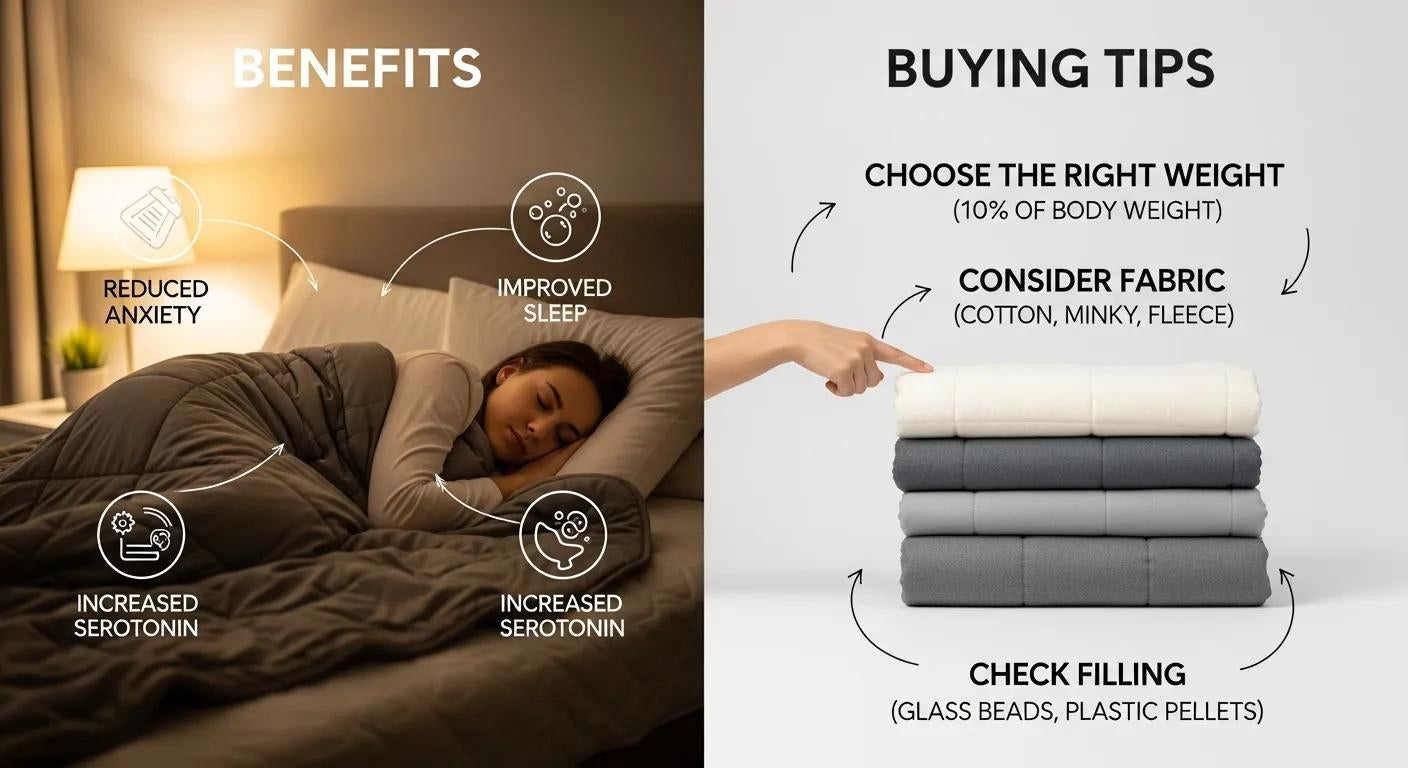
- Start with a weight near ~10% of body weight and adjust for personal comfort.
- Choose breathable covers and compartmentalised fills to prevent shifting and minimise overheating.
- Prefer removable, washable covers to simplify care and keep the blanket hypoallergenic.
The next section looks at how weight, material and size affect comfort and includes a quick guide.
How weight, material and size affect comfort
Weight, material and size together determine how a blanket feels. Weight controls pressure intensity, material affects temperature, and size changes coverage and partner comfort. People commonly recommend 8–12% of body weight as a starting point — lower for heat‑sensitive sleepers or children, higher for those who want firmer pressure. Couples often choose a larger size with moderate total weight so both sleepers stay comfortable. Bamboo and cotton covers are praised for breathability; fleece is better for cold climates. Internal stitching and glass bead fills help keep pressure even and avoid hot spots. These guidelines can help reduce trial-and-error when choosing a blanket.
Advantages of eco-friendly bamboo covers
Bamboo covers are often praised for cooling, softness and a perceived hypoallergenic feel. Bamboo fibres wick moisture and feel smoother than standard cotton to many, which can help you stay cooler without losing the calming pressure. Environmentally minded shoppers also appreciate bamboo’s sustainable profile. For care, gentle washing and air drying will help keep the fabric looking and feeling its best over time.
With those features in mind, the next section covers the common pros and cons reported by people and the ways they work around drawbacks.
Common pros and cons reported by people
You'll usually find consistent strengths and manageable drawbacks. The pros often centre on comfort and improved sleep or anxiety symptoms; cons most often involve overheating, picking the right weight and laundering. Many praise the calming effect and better sleep continuity, while also recommending you think about breathability and washing before you buy. The table below outlines common issues, likely causes and the solutions people find helpful.
| Issue | Likely cause | Solutions |
|---|---|---|
| Overheating | Non‑breathable cover or heavyweight | Often mentioned, people switch to bamboo covers, choose lighter weights, or use the blanket seasonally. |
| Difficult cleaning | Non‑removable cover or delicate fill | Frequently noted, people prefer removable machine‑washable covers or spot cleaning when needed. |
| Incorrect weight selection | No guideline followed, or one-size-fits-all marketing | Commonly, people recommend choosing by body weight and using initial trial periods. |
This view helps you weigh trade‑offs and try practical fixes. Below are the positive themes people report and the most common tips for managing challenges.
What positive feedback do people share?
Pos? itive feedback often highlights quick comfort, better sleep continuity, less nighttime movement and lower perceived stress — many call the blanket “transformative” for their bedtime routine. People who often find the best outcomes include anxious adults, those with mild insomnia and caregivers using child‑size blankets for calmer bedtimes. Many see improvements within the first week for situational issues and over several weeks for longer‑term patterns, reflecting both immediate sensory effects and developing habits.
Challenges mentioned and practical fixes
The top challenges are overheating, uncertainty about ideal weight, and laundering. Practical fixes include: choosing bamboo covers for cooling, trying a slightly lighter weight, or opting for blankets with removable covers to make washing easy. Some helpful tips include: (1) test a lighter weight or smaller size to gauge tolerance, (2) use layering — a light sheet plus the weighted blanket — to adjust warmth, and (3) pick blankets with secure internal compartments and washable covers to protect the fill. If discomfort continues, you might consider combining the blanket with other sleep strategies.
EcoToppers note — At EcoToppers, we focus on eco‑friendly bamboo covers, breathable materials and removable covers to address overheating and washing concerns. We're confident you'll love our products.
How to choose the right weighted blanket using insights
Choosing a blanket comes down to three things: the right weight, a breathable material for your temperature needs, and the right size and care features for your situation. We usually recommend a starting point of 8–12% of body weight, prioritising removable washable covers and breathable fabrics. The quick checklist below offers simple steps, followed by an easy reference table matching user types to recommended weight and materials.
- Choose weight: Start near ~10% of body weight and adjust for comfort and heat sensitivity.
- Select material: Prioritise bamboo or cotton for breathability; choose fleece for cold bedrooms.
- Consider size and sharing: For couples, pick a larger size with moderate weight per sleeper to balance pressure.
- Confirm care features: Look for removable, washable covers and secure internal compartments to keep the fill in place.
Use these steps as a straightforward way to test options.
| User type | Recommended weight/size/material | Value (rationale) |
|---|---|---|
| Solo adult, average weight | ~10% body weight; single/queen; bamboo cover | Offers calming pressure with good temperature control for most sleepers |
| Hot sleeper | 8% or lighter; breathable bamboo | Reduces overheating while still providing calming pressure |
| Couple | Shared large size; moderate weight per sleeper | Balances coverage and partner comfort to avoid excess pressure |
| Child (bedtime transitions) | Child‑sized, lighter-weight, soft, removable cover | Makes bedtime smoother and simplifies laundering for parents |
What weight and size do people recommend?
A good rule of thumb is to start at about 8–12% of body weight, favouring the lower end for heat‑sensitive sleepers or children and the higher end for those who prefer firmer pressure. Single sleepers usually choose single or queen sizes with matching weights; couples often go for larger dimensions with moderate total weight so neither partner feels over‑pressed. Remember that small adjustments can make a big difference to comfort.
How important are material and temperature regulation?
Material matters. Bamboo covers are frequently singled out for moisture-wicking and cooling; cotton offers familiar breathability; fleece is cosy but can trap heat. For warm or humid climates, bamboo is often preferred because it helps with temperature regulation without losing the blanket’s calming effect. Hot sleepers often pair a lighter weight with bamboo or cotton and avoid thick synthetic covers. Practical workarounds include seasonal use or layering with lighter sheets. Choosing materials that match your climate and sleep habits is one of the most reliable ways to get a successful result.
Vendor note — EcoToppers is an Australian e‑commerce company specialising in eco‑friendly bedding: bamboo mattress toppers, quilts, pillows and weighted blankets. Our key values are eco‑friendly materials (bamboo), comfort, support, hypoallergenic options, temperature regulation, and we're dedicated to helping you buy with confidence.
Frequently Asked Questions
1. Can weighted blankets be used by children?
Yes — when chosen carefully. Weighted blankets can help some children, especially those with anxiety, ADHD or sensory processing differences. Use an appropriate weight (often around 10% of the child’s body weight) and a child‑sized blanket to ensure comfort and safety. Many parents find them useful for bedtime transitions. If you have specific concerns, it's always a good idea to chat with a healthcare professional.
2. How do I clean and maintain my weighted blanket?
Care depends on the blanket’s design. We recommend looking for blankets with removable, machine‑washable covers for easy care. If the inner blanket isn’t machine washable, spot clean or follow the manufacturer’s instructions. Regular airing and checking seams or compartments can extend the lifespan and keep the blanket hygienic.
3. Are there any risks associated with using weighted blankets?
Weighted blankets are generally safe for most people, but there are exceptions. If you have certain health conditions, it's best to consult with a healthcare professional before using one. Choosing the wrong weight can also cause discomfort or restricted movement, so pick an appropriate weight and see how you feel during initial use.
4. How long does it take to feel the benefits of a weighted blanket?
Many people notice immediate calming effects within minutes, especially during anxiety spikes. For longer‑term sleep improvements, consistent nightly use over several weeks is often needed. Individual results vary, so give the blanket time while maintaining good sleep habits.
5. Can weighted blankets help with conditions other than anxiety and sleep?
Yes — many people find they can help with sensory processing disorders, autism spectrum conditions and ADHD by providing calming deep pressure stimulation. Some people also report reduced chronic pain and improved relaxation. It's wonderful to hear how they're making a difference for so many!
6. What should I consider when choosing a weighted blanket?
Think about weight, material, size and care. A common starting point is roughly 10% of body weight. Choose breathable fabrics like bamboo or cotton if you run hot, or fleece if you need extra warmth. Make sure the size fits your bed and, if you share, that the weight is comfortable for both sleepers. Removable, washable covers make maintenance much easier.
7. Are there any specific brands recommended for weighted blankets?
There are many reputable brands out there. At EcoToppers, we're proud of our eco‑friendly bamboo covers and hypoallergenic options. When choosing, it's always a good idea to compare features like fill type, compartment stitching and cover materials to find the best fit for your needs.