




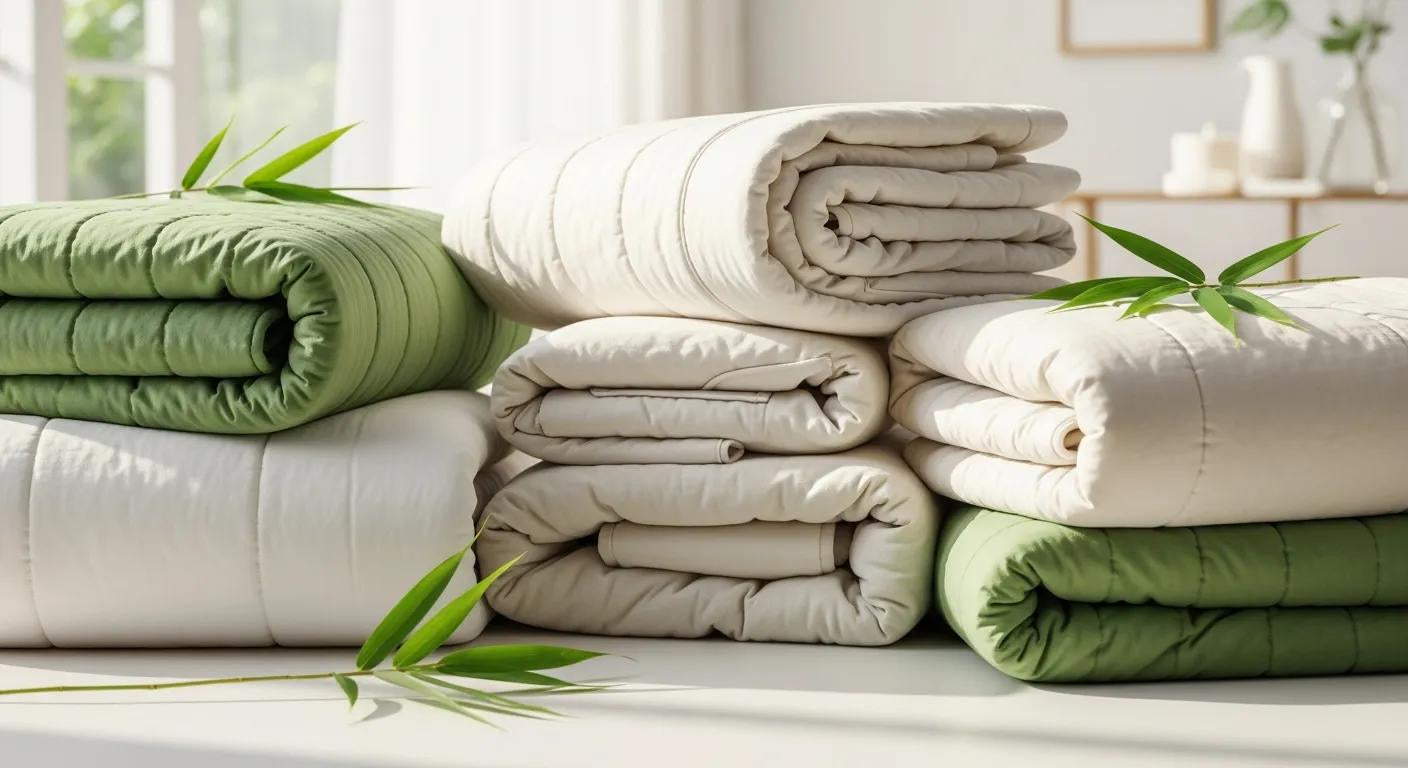
Bamboo Quilts — Gentle, Hypoallergenic Comfort
Our bamboo quilts use viscose made from bamboo fibres to deliver a lightweight, breathable doona that’s soft to the touch and naturally kinder for sensitive skin. The fibre structure and moisture-managing behaviour help reduce surface humidity and friction — two common triggers for night-time irritation, chafing and flare-ups of eczema or dermatitis. We'll explore how bamboo fibre helps reduce allergens and bacterial build-up, and why its softness and temperature control are so important for easily irritated skin. You'll also get practical buying tips, simple care steps to maintain its hypoallergenic properties, and a look at how it compares to alternatives like cotton and silk. Throughout, we highlight the product features most likely to benefit sensitive-skin sleepers and what to look for in an all-season bamboo quilt.
Why bamboo quilts are naturally hypoallergenic for sensitive skin
Bamboo quilts earn a hypoallergenic reputation because viscose from bamboo produces fine, smooth filaments with strong moisture-wicking ability. Better airflow and faster evaporation create a drier fabric surface — an environment less attractive to dust mites and many bacteria. For sensitive-skin sleepers, this means less contact irritation, fewer allergen particles near the skin and a lower risk of triggering eczema or dermatitis. Realistic expectations and routine care are essential to keep these benefits over time.
| Fibre Attribute | How It Works | Benefit for Sensitive Skin |
|---|---|---|
| Fine, smooth viscose strands | Lower surface roughness and reduced friction against skin | Less mechanical irritation and fewer micro‑abrasions while you sleep |
| High moisture‑wicking capacity | Draws sweat away from skin and dries quickly | Limits skin maceration and itching that can aggravate dermatitis |
| Open fibre microstructure | Improves airflow across the sleep surface | Lower humidity reduces dust‑mite suitability and odour risk |
What makes bamboo fibre naturally hypoallergenic?
The hypoallergenic profile comes from both physical and chemical characteristics. Viscose from bamboo yields long, smooth filaments with a soft surface and internal capillaries that transport moisture away from skin quickly. That smoother surface reduces friction — helpful for eczema‑prone sleepers who are sensitive to rubbing — and lower surface moisture decreases the microclimate that supports dust mites and microbial growth. Together, texture, moisture control and reduced habitat suitability help limit common triggers for sensitive skin.
That leads to the practical question: how effective are bamboo quilts at resisting dust mites and bacteria in everyday use?
Do bamboo quilts resist dust mites and bacteria?
Bamboo quilts reduce the conditions that dust mites and many bacteria prefer by promoting faster evaporation and drier surfaces, but no household textile is sterile or entirely mite‑proof. Compared with denser, higher‑moisture fabrics, bamboo covers typically have lower relative humidity at the fabric interface and make the surface less hospitable to mite reproduction. While no textile is entirely sterile, bamboo quilts help create an environment less appealing to dust mites and many bacteria. They work best as part of a good hygiene routine, helping to lower allergen load and microbial growth when combined with regular washing and bedroom humidity control.
Simple maintenance — washing according to manufacturer guidance and managing indoor humidity — helps preserve these resistance benefits and supports long‑term skin comfort.
How bamboo quilts regulate temperature for sensitive sleep
Bamboo quilts manage temperature through breathability in the fibre microstructure and moisture wicking that pulls sweat away from skin so it can evaporate. Breathable fibres allow convective airflow, while moisture transport prevents trapped humidity that makes you feel hotter and can cause night sweats. Together, these behaviours help keep the microclimate around the sleeper steady, reducing flushing, itch and sleep interruptions for people with sensitive skin. Knowing how these thermal properties work helps you pick the right weight and loft for your climate and sensitivity, because a stable sleep temperature often means fewer flare‑ups.
- Choose lighter lofts in warm seasons: Lighter fills increase airflow and speed evaporation, reducing sweat‑related irritation.
- Layer for cooler months: Use a breathable sheet and a light topper with your bamboo quilt rather than one heavy cover to trap less moisture.
- Monitor bedroom humidity: Aim for roughly 40–50% relative humidity to limit dust mites and keep fabric performance consistent.
Breathability and moisture management explained.
Breathability comes from fibre spacing and weave that allow air exchange, while moisture management relies on capillary action inside the viscose filaments. This combination moves liquid away from skin and exposes it to air for faster evaporation, preventing maceration and sudden cooldowns — both common triggers for sensitive skin. The outcome is a sleep surface that feels drier and cooler without over‑insulating, which helps reduce itching and bacterial growth. For people prone to night sweats or heat‑triggered eczema, these properties often translate to fewer awakenings and calmer skin through the night.
These material behaviours should inform your choice of quilt weight and supporting bedding.
Temperature comfort in warm vs cool seasons
In warm weather, a low‑loft bamboo quilt gives the best balance of airflow and moisture transport, lowering skin‑surface temperature and cutting sweat‑related irritation. In cooler months, a medium‑loft bamboo quilt layered with breathable sheets provides warmth without trapping moisture — preventing the chill/warm cycle that can aggravate sensitive skin. Choosing a quilt by its stated tog or weight (or opting for an all‑season option) helps keep a consistent microclimate. Personal factors like room ventilation and mattress type also matter, so seasonal layering is the most reliable way to stay comfortable year‑round.
Layering keeps you both warm and dry, which together protects sensitive skin from temperature‑related flares.
Softness and comfort — the gentle touch of bamboo quilts
Softness matters for sensitive skin because low‑friction surfaces reduce mechanical irritation when you move during sleep, lowering the chance of micro‑tears and scratching. Bamboo sateen and high‑thread‑count bamboo blends often feel smoother than standard cotton weaves, and that silky hand can reduce nighttime scratching for people with eczema. Construction choices — baffle‑box stitching, microfibre fill or hollow‑fill fibres — affect softness, drape and pressure distribution. Look for fabrics and constructions that prioritise an even loft and a silky hand to minimise friction‑related skin issues.
| Material | Key Attribute | Practical Impact for Sensitive Skin |
|---|---|---|
| Bamboo (viscose) | Smooth surface, strong moisture wicking | Lower friction, drier feel and fewer irritations |
| Cotton | Breathable with variable weave textures | Comfortable but denser weaves can hold more moisture |
| Silk | Very low friction, delicate | Luxurious feel, but needs careful care and has durability trade‑offs |
Texture, softness and reduced skin friction
Smoother filaments and tighter, cleaner surfaces reduce the coefficient of friction against skin. Viscose from bamboo produces filaments that feel naturally silky and glide across skin rather than abrading it. That lower friction matters for people with a compromised skin barrier, because each movement causes fewer micro‑abrasions. Softer quilts also reduce sensory triggers that lead to scratching, helping break the itch‑scratch cycle common in eczema. Combined with breathable bedding and controlled humidity, a soft bamboo quilt supports longer, undisturbed sleep for sensitive‑skin sleepers.
Next, learn how to care for that softness so it lasts.
Care for lasting softness
To keep bamboo’s soft hand and hypoallergenic benefits, use gentle detergents and wash on cool or warm settings rather than hot. Avoid bleach and fabric softeners — they can coat fibres and reduce moisture transfer. Line‑drying or tumble‑drying on low heat preserves loft without damaging fibres; excessive heat and rough drying can stiffen fabric and increase friction. Store quilts in a cool, dry place to prevent mildew and protect the fill. With correct, regular care, the softness and functional benefits of bamboo quilts will last, maintaining skin‑friendly performance over time.
Gentle, consistent maintenance is essential to hold on to both feel and function for sensitive skin.
EcoToppers bamboo quilts — trusted by sensitive‑skin sleepers
At EcoToppers, we offer eco‑friendly bedding, including bamboo quilts designed for all‑season comfort and a soft sleep surface. Our ranges — like the Bamboo Quilt Doona and Soft Bamboo Quilts Australia — focus on the features sensitive‑skin buyers care about: natural hypoallergenic and antibacterial claims, temperature regulation and sustainable materials. We aim to make your purchase experience smooth and confident, focusing on customer satisfaction and easy access to our products. We believe in making it easy for you to find the right bedding for your needs.
| Product | Feature | Benefit |
|---|---|---|
| Bamboo Quilt Doona | Naturally hypoallergenic and antibacterial | Reduces allergen exposure and surface microbes for calmer skin |
| Soft Bamboo Quilts Australia | Temperature‑regulating fibres | Helps maintain a stable sleep microclimate to reduce irritation |
| Our Commitment | We focus on customer satisfaction and easy access to our products | We're here to help you find the right bedding for your needs |
Sustainable bamboo sourcing and certifications
Sustainable sourcing matters because responsibly grown bamboo and lower‑impact processing reduce chemical residues and environmental harm that can indirectly affect product purity and skin outcomes. When specific certifications aren’t shown, look for third‑party labels or transparent supply‑chain statements that confirm responsible practices and low‑impact processing. Traceability, limited pesticide use and closed‑loop manufacturing are good signs. If certification details are absent, focus on clear product specs and customer-friendly approaches to reduce risk.
Real customer experiences with sensitive skin
Hearing from our customers helps us understand how our quilts make a difference. Many sensitive-skin sleepers share stories of reduced night-time itching, better sleep, and a cooler, more comfortable sleep surface. While everyone's experience is unique, these common themes suggest our products are making a positive impact.
These common themes point toward product features that consistently help sensitive sleepers.
Choosing, caring for and using bamboo quilts for sensitive skin
Picking the right bamboo quilt comes down to weight, construction and fabric finish so the quilt matches your climate and sensitivity. Check for clear loft or tog ratings, even baffle or stitch patterns to stop fill migration, and a smooth cover weave such as bamboo sateen for low friction. Prefer quilting that gives consistent contact without creating pressure points, and choose easy‑care labels that allow low‑heat tumble drying or gentle machine cycles. These criteria help ensure a quilt performs reliably for sensitive skin across seasons and over time.
- Select the right loft: Match quilt weight to your local climate and personal heat sensitivity.
- Choose smooth cover fabrics: Bamboo sateen or similar finishes reduce friction on delicate skin.
- Prefer stable construction: Baffle‑box stitching or evenly dispersed fill avoids pressure points.
- Follow gentle care: Wash on manufacturer cycles with mild detergent and dry on low heat.
After choosing a quilt, routine gentle care preserves its hypoallergenic and temperature‑regulating benefits.
| Care Step | Recommended Action | Why It Matters |
|---|---|---|
| Washing frequency | Wash the quilt exterior every 6–12 weeks; spot‑clean as needed | Removes skin flakes, oils and potential allergens |
| Detergent | Use a mild, fragrance‑free detergent | Avoids residues that can irritate sensitive skin |
| Drying & storage | Low‑heat tumble or line dry; store dry in a breathable bag | Preserves loft and prevents mildew or dust‑mite harbourage |
Care instructions to preserve hypoallergenic properties
To keep antibacterial and hypoallergenic performance, launder quilts according to the manufacturer’s guidance using cool to warm cycles and mild, fragrance‑free detergents; avoid bleach and fabric softeners that coat fibres and reduce moisture transfer. Dry thoroughly at low heat or line‑dry in a well‑ventilated area to prevent dampness that encourages dust mites and mildew. Regular airing and occasional professional cleaning for heavily soiled items maintain performance without harming fibres. Store quilts somewhere dry and ventilated when not in use to preserve cover and fill integrity.
Consistent, gentle care preserves the features that make bamboo quilts a good choice for sensitive skin.
Common questions about eczema, allergies and bamboo quilts
Is bamboo good for eczema? Bamboo quilts can help by reducing friction and keeping skin drier, which may reduce eczema triggers; individual responses vary, and severe cases should follow medical advice.
Can bamboo fabrics cause allergic reactions? True allergies to the fibre are rare; reactions are more commonly due to chemical residues, finishes or laundry products. Choosing untreated items and mild detergents lowers risk.
How often should I replace a quilt? Replace when loft and fill integrity are lost or if persistent odours and stains don’t come out after cleaning — doing so restores comfort and improves allergen control.
At EcoToppers, we want you to feel confident in your choice. We aim to make it easy for you to explore our quilts and find the perfect fit for your skin at home. These practical approaches complement the selection and care advice above as you assess your personal skin responses.
Frequently Asked Questions
1. How do I know if a bamboo quilt is suitable for my sensitive skin?
Look for quilts that emphasise hypoallergenic traits, moisture‑wicking performance and a smooth fabric finish. Consider customer feedback and look for any certifications or transparent supply‑chain info that indicate low‑impact processing. These signals, along with our commitment to helping you find the right product, can help you decide.
2. Can bamboo quilts help with night sweats?
Yes. Bamboo’s breathable filaments and moisture‑wicking action move sweat away from the skin so it can evaporate, helping to keep your microclimate cooler. For higher‑temperature sleepers, a low‑loft bamboo quilt is often the best choice.
3. What is the best way to clean a bamboo quilt?
Use a mild, fragrance‑free detergent and wash on a cool or warm cycle — avoid hot water. Skip bleach and fabric softeners, as they can coat fibres and reduce moisture transfer. Dry on low heat or line dry in a ventilated area to keep loft and prevent mildew.
4. How often should I wash my bamboo quilt?
Every 6–12 weeks is a good general rule, depending on use. Spot‑clean spills as needed. Regular washing removes skin flakes, oils and allergens and helps maintain the quilt’s hypoallergenic performance.
5. Are there any specific certifications to look for when buying bamboo quilts?
Look for third‑party labels such as OEKO‑TEX or GOTS where available, plus clear supply‑chain information that confirms responsible sourcing and low‑impact processing. These certifications and disclosures reduce the likelihood of irritating chemical residues.
6. Can I use a bamboo quilt year‑round?
Yes. Bamboo quilts are versatile: they provide warmth in cooler months while remaining breathable in summer. Choose an appropriate loft or tog for your climate and layer with breathable sheets for the best year‑round results.
7. What should I do if I experience irritation while using a bamboo quilt?
First, check laundry products and other bedding for potential irritants. Ensure you’re following care instructions to remove residues. If irritation continues, seek advice from a healthcare professional and consider trying a different cover or quilt to identify the trigger.