



Why Bamboo Bedding Needs Gentle Care — Your Practical Guide
Bamboo sheets and covers feel luxuriously soft and breathe brilliantly — but the viscose and lyocell fibres that give them those benefits are more delicate than heavy cotton or many synthetics. Treating them with lower heat, gentler cycles and kinder products keeps their moisture-wicking, naturally hypoallergenic and antibacterial qualities intact and helps the fabric stay soft for longer. This guide explains why bamboo bedding needs different care and gives clear, step‑by‑step advice on washing, drying, preventing pilling and shrinkage, removing stains and storing your linens so they last. You’ll find temperature ranges, detergent recommendations, best drying practices, simple stain fixes and storage tips for sheets, duvet covers, pillowcases and mattress toppers — everything you need to protect your bedding and get the most sustainable life out of it.
EcoToppers brings hands‑on experience with sustainable bedding and product care. As an Australian direct‑to‑consumer company supplying bamboo mattress toppers, quilts, mattress protectors and pillows, our product designs and service commitments shape the practical advice we give here. The next section lays out straightforward washing guidance tailored to the sensitivities of bamboo fibres.
How Should You Wash Bamboo Bedding to Preserve Its Quality?

Start with cool or lukewarm water and the gentlest mechanical action your machine offers. Bamboo, viscose and lyocell fibres are vulnerable to heat and friction, which can cause shrinkage and weaken the yarns. Use a cold or up to 30°C wash on a delicate or gentle cycle to protect the fabric and keep sheets, fitted sheets and pillowcases softer for longer. Skip bleach, strong enzymes (unless used carefully for targeted stain removal), and fabric softeners — these can damage fibres and strip the fabric’s natural antibacterial properties. Pre‑treat spots with mild solutions and rinse well to remove detergent residues that can make fibres stiff and attract dirt later on.
The table below gives quick, practical settings for common items and load types, plus separation tips to reduce pilling and wear.
Here's a handy guide to washing your bamboo items, with tips for different types and common laundry situations.
| Item / Load | Recommended Water Temperature | Recommended Cycle | Recommended Parameter |
|---|---|---|---|
| Bamboo sheets (full set) | Cold to 30°C | Gentle / Delicate | Wash separately from towels and denim; use a mild, plant‑based detergent |
| Bamboo pillowcases | Cold to 30°C | Gentle | Turn it inside out and use a reduced spin speed to limit friction |
| Bamboo duvet cover/quilt | Cold to 30°C | Gentle or hand wash | If machine washing, secure zips and choose a gentle programme; consider professional cleaning for heavily filled items. |
| Mixed loads caution | Avoid warm or heavy loads | Do not combine with rough fabrics | Separate by texture to prevent abrasion and pilling |
These settings strike a balance between hygiene and fibre protection — an easy checklist to set your machine before washing bamboo bedding. Next, we explain why temperature matters and what to choose.
What Water Temperature Is Best for Bamboo Sheets?
Use cold or lukewarm water (up to about 30°C). Lower temperatures reduce thermal stress that can make viscose and lyocell fibres swell, relax and shrink over time. Heat accelerates chemical and mechanical wear, dulling softness and potentially altering the fit of fitted sheets. Reserve warmer water only for specific sanitising needs and follow the care label; if you must use higher temperatures, shorten the wash and choose the gentlest agitation. A “cold” or “hand wash” setting is usually the safest option and pairs well with the low‑heat drying advice later on.
Which Detergents Are Safe for Bamboo Bedding?
Pick mild, eco‑friendly detergents with neutral pH and gentle surfactants — plant‑based or biodegradable formulas are ideal because they leave less residue and preserve the fabric’s natural benefits. Avoid bleach, optical brighteners and fabric softeners: these reduce fibre strength, impair moisture‑wicking and can leave films that trap smells. Use measured doses for your load and water hardness, and if possible, run an extra rinse to remove leftover detergent. Enzyme cleaners are useful for protein stains, but only at the temperatures and concentrations recommended by the maker and never mixed with harsh chemicals.
What Are the Best Drying Methods for Bamboo Bedding?
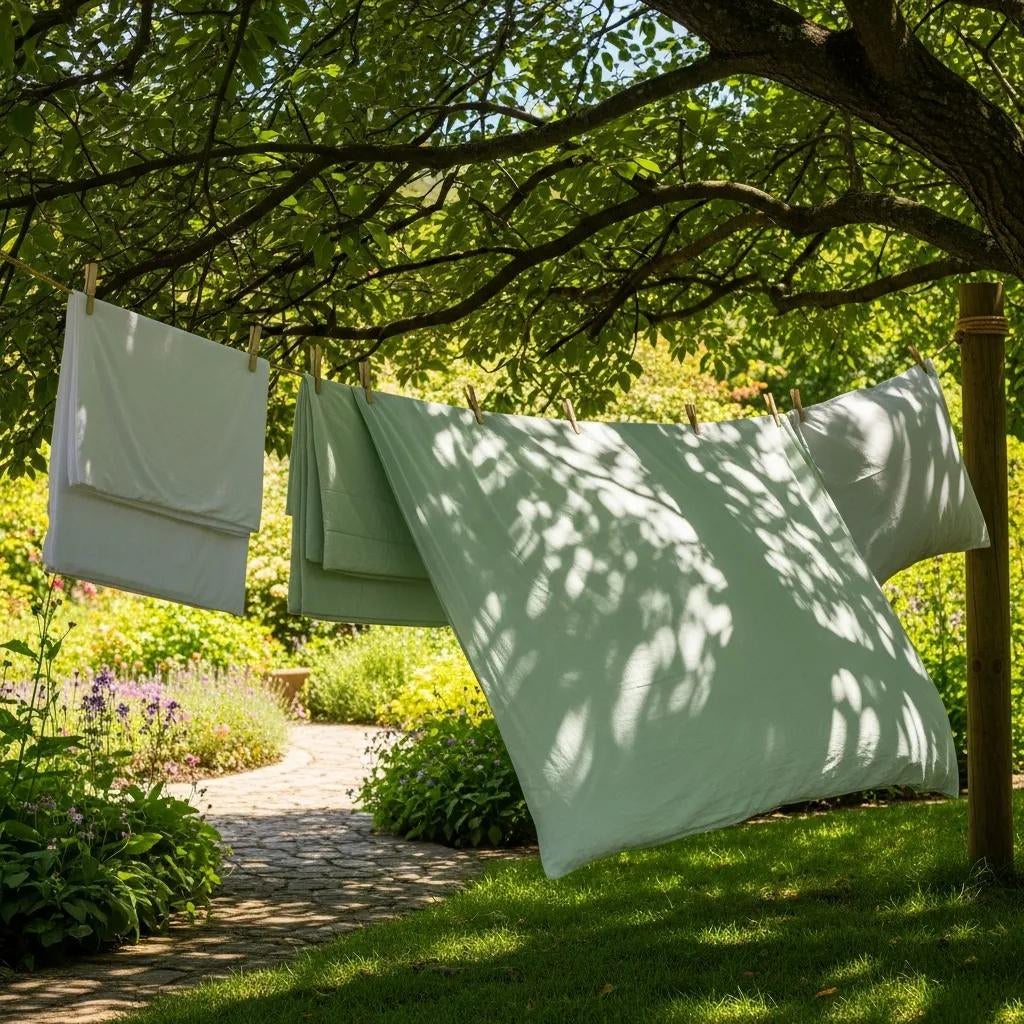
Air drying in the shade is the preferred method because it avoids the heat and tumbling that can shrink or stiffen delicate fibres. Lay items flat or hang fitted sheets by the corners to keep their shape and reduce creasing; keep good airflow and avoid direct sun, which can fade colours and weaken fibres over time. If you need the convenience of a tumble dryer, use the lowest heat or an “air” setting for a short cycle and remove items while slightly damp, then reshape flat to finish drying. This table compares common drying options, helping you choose the gentlest method for your bamboo bedding.
| Drying Method | Heat Level | Typical Time | Shrinkage Risk | Fibre Softness Outcome |
|---|---|---|---|---|
| Air drying (shade) | None | Moderate (hours) | Very low | Preserves natural softness |
| Tumble dry (low) | Low | Short (20–30 mins) | Low to moderate | Acceptable if removed while damp |
| Tumble dry (normal/high) | High | Short | High | Can cause shrinkage and stiffness |
Air drying minimises shrinkage and keeps the fabric feeling its best. If you regularly use a dryer, stick to low heat and short cycles to reduce risk. Below is a concise recommendation and practical steps for each method.
Is Air Drying or Tumble Drying Better for Bamboo Bedding?
Air drying wins for preserving the fine structure of bamboo viscose and lyocell — it keeps softness, shape and shrinkage risk to a minimum. Shade and gentle reshaping (lay flat or hang by corners) to avoid stress on seams and elastics. When you must tumble dry, choose the coolest setting, limit time and remove items slightly damp so you can finish drying flat — this reduces mechanical wear and prevents overdrying.
How to Avoid Shrinkage and Damage During Drying?
Control heat and mechanical action, and reshape pieces while damp. After washing, give sheets a gentle shake and stretch to their intended size, fasten duvet‑cover closures and smooth elastic on fitted sheets before drying. Remove items promptly once dry or slightly damp to avoid wrinkles and compressing fibres. If an item has shrunk a little, re‑wet it evenly and gently stretch it back to shape while it dries — do this slowly to avoid stressing seams.
How Can You Prevent Common Issues Like Pilling and Shrinkage in Bamboo Bedding?
Pilling and shrinkage mainly come from abrasion, heat and harsh chemicals. Reduce friction by using gentle cycles, separating bamboo from abrasive textiles, using laundry bags for smaller items and skipping fabric softeners. Construction matters too: longer staple fibres and tighter weaves pill less, so treat blended or loosely woven items with extra care and check seams and edges where wear concentrates.
Here’s a simple prevention checklist you can use at home.
- Wash bamboo bedding on gentle cycles with cold or lukewarm water to limit mechanical stress.
- Separate by texture — don’t wash sheets with towels, denim or anything that sheds aggressively.
- Use a mild, plant‑based detergent and avoid bleach and fabric softeners to protect fibre integrity.
These steps cut the risk of early wear and help your bedding last longer. Next, we cover what causes pilling and how to fix small issues safely.
What Causes Pilling on Bamboo Sheets and How to Avoid It?
Pilling happens when short or broken fibres tangle on the surface after repeated friction. Rough washing, tumbling with abrasive items, and high spin speeds speed this up. To prevent pilling, wash bamboo separately from high‑abrasion textiles, choose gentle cycles and lower spin speeds, and turn pillowcases inside out. If pills appear, carefully remove them with a fabric shaver or a gentle lint remover following the tool’s instructions — avoid pulling, which can damage the weave. If pilling is widespread, replacement is often the better option.
How to Minimise Shrinkage and Maintain Bamboo Bedding Shape?
Keep washes cold or lukewarm, use short, gentle cycles and favour low‑heat or air drying to reduce thermal contraction. Reshape fitted sheets, and duvet covers while damp — smooth seams, realign elastic and air‑dry flat where possible to preserve pocket depth and fit. Don’t overdry in the tumble dryer; if slight shrinkage occurs, evenly re‑wet and gently stretch the fabric back into shape as it dries.
What Are Effective Stain Removal Techniques for Bamboo Bedding?
Act quickly and keep treatments cool. Heat and harsh chemicals can set stains and weaken fibres, so start by blotting fresh spills with cold water and a clean cloth. Use mild spot treatments based on the stain — oil, protein, pigment or makeup — and use low‑temperature soaks where recommended. Enzyme cleaners can help with protein stains, but use them as directed and rinse thoroughly. Avoid abrasive scrubbing and strong bleaches.
This table lists common stains and safe, at-home treatments, including basic soak and temperature tips.
| Stain Type | Treatment | Recommended Treatment |
|---|---|---|
| Oil / Grease | Absorb the mild detergent | Blot, sprinkle baking soda or cornflour to absorb, brush off, treat with mild detergent and cold rinse. |
| Blood | Cold water + enzyme | Rinse with cold water, apply a diluted enzyme cleaner at cool temperatures, soak briefly and rinse thoroughly. |
| Red wine | Blot + mild soap | Blot immediately, apply cold water and mild detergent, and avoid heat until the stain is gone. |
| Sweat / Body oils | Baking soda paste | Soak in cool water with mild detergent, use a baking soda paste on stubborn marks, then rinse well. |
| Makeup | Pre‑treat + gentle wash | Blot, pre‑treat with mild detergent or dish soap, wash on a gentle cycle and avoid hot water. |
These low‑impact approaches respect bamboo’s fibre sensitivity and reduce the need for harsh chemicals. Below are a few natural remedies and per‑stain steps you can use at home.
Which Natural Remedies Work Best for Removing Stains?
Baking soda is great for soaking up grease, diluted white vinegar can help brighten and neutralise odours, and mild enzyme cleaners work on protein stains when used cold. A baking soda paste can sit for 15–30 minutes before gently brushing off and washing on a delicate cycle. A vinegar solution (one part vinegar to three parts water) can lift light stains and freshen fabrics if you test it on a hidden area first. Don’t use strong acids or undiluted vinegar on coloured bedding without testing, and always rinse thoroughly after treatment to avoid residue that can stiffen fibres.
How to Treat Different Types of Stains on Bamboo Bedding?
Match the treatment to the stain: for blood, always use cold water first to avoid setting the protein; for oil, absorb with powder, then treat with mild detergent and cold water. For red wine and pigments, blot quickly and use a mild soap solution — avoid heat until the stain is removed. For sweat or deodorant marks, soak in cool water with a gentle detergent and use a baking soda paste on stubborn areas, then rinse and air dry. Low‑temperature, gentle methods protect the fibres while lifting the most common spots.
How Should You Store Bamboo Bedding to Maintain Its Longevity?
Store only when items are completely clean and dry — trapped moisture causes mildew and weakens fibres. Choose cool, dry, well‑ventilated spaces and breathable storage like cotton bags or acid‑free tissue paper rather than sealed plastic, which can trap condensation. Don’t compress quilts and toppers tightly — roll or fold lightly and air them occasionally to refresh fillings and fibres. Below is a short checklist and simple storage recommendations.
A short pre-storage checklist helps you prepare items to remain fresh and structurally sound.
- Ensure items are laundered and fully dry before storing to prevent mildew.
- Use breathable cotton bags or linen-lined boxes; avoid airtight plastic for long‑term storage.
- Store in a cool, dry place away from direct sunlight and air bedding periodically to refresh fibres.
Following these practices reduces biological and mechanical risks to stored textiles and keeps your bedding ready for use longer.
What Are the Ideal Storage Conditions for Bamboo Bedding?
Keep stored bedding in cool, low‑humidity, well‑ventilated areas — avoid damp basements and hot attics. Use cotton or linen bags or loosely folded stacks on open shelving; place acid‑free tissue between folds for long‑term storage to reduce creases. Keep items out of direct sunlight and away from pests, and check stored bedding occasionally for any signs of damp or odour so you can air and launder if needed. These steps help preserve the hypoallergenic and antibacterial qualities of bamboo fibres while keeping hands and fit intact.
How Does Proper Storage Prevent Mildew and Fibre Damage?
Good storage removes the moisture and stagnant conditions that mildew needs to grow — dry, ventilated storage prevents fungal activity. Avoid tight compression to protect loft and fibre structure, especially in quilts and mattress toppers where fill loft matters for comfort. Regularly airing and inspecting stored items lets you spot and remedy issues early before damage becomes permanent. Control humidity, avoid heavy compression and refresh items occasionally to keep them performing as designed.
Why Does Bamboo Bedding Require Special Care Compared to Other Fabrics?
Bamboo viscose and lyocell are softer and more breathable than many conventional linens, but that fine structure is also more sensitive to heat, strong chemicals and abrasion. The fibres’ microstructure gives excellent moisture management and a smooth hand, yet it can relax or deform under high temperatures or aggressive detergents. Care routines that favour low heat and mild products preserve antibacterial and hypoallergenic benefits and extend usable life, which supports sustainability by reducing replacements.
EcoToppers is an Australian direct‑to‑consumer company specialising in eco‑friendly bamboo bedding — mattress toppers, quilts, mattress protectors and pillows. The section below summarises the fibre features that drive our recommended care steps.
What Unique Properties of Bamboo Fibres Affect Care Needs?
Bamboo fibres are breathable and pull moisture away from skin thanks to a smooth surface and tiny micro‑gaps that aid transfer. Their production methods (viscose or lyocell) make them chemically and thermally more sensitive than some other textiles, so strong bleaches, high heat and prolonged alkaline exposure can cause damage. Natural antibacterial qualities are best preserved when fibres aren’t coated with heavy residues from softeners or harsh detergents, so mild, eco‑friendly cleaners are the best choice.
How Does Proper Care Support Sustainability and Product Longevity?
Looking after your bamboo bedding so it lasts longer reduces the need to replace items and cuts textile waste — spreading the environmental cost of production over more years. Well‑cared‑for sheets and covers can stay in service multiple years longer than poorly maintained alternatives, increasing the positive sustainability impact. Proper care also preserves support and comfort in mattress toppers, keeping users satisfied and reducing disposal. By following low‑heat, low‑impact washing and drying routines, you protect your bedding and help lower resource use and landfill waste.
As an Australian direct‑to‑consumer brand focused on eco‑friendly bamboo bedding (toppers, quilts, protectors and pillows), EcoToppers bases care advice on real product design and customer experience. Follow the guidance above to preserve performance, comfort and the environmental benefits of long‑lived linens. Below is a short summary of the most important takeaways.
- Key takeaways: Cold or lukewarm gentle washes, mild detergents, air drying in shade and careful storage protect bamboo fibres and keep them soft.
- Practical routine: Pretreat stains quickly, separate loads by texture and reshape items while damp to preserve fit and appearance.
- Sustainability: Proper care extends product life and reduces textile waste, aligning everyday maintenance with environmental goals.
These steps combine the science of bamboo fibres with simple, practical laundry and storage routines so you can confidently care for bamboo sheets, duvet covers, pillowcases and mattress toppers for long‑term comfort and performance.
Frequently Asked Questions
Can bamboo bedding be washed with other fabrics?
We recommend washing bamboo bedding separately from rough items like towels and denim. Abrasive fabrics increase friction and can cause pilling and wear. If you must mix loads, only pair bamboo with items of similar texture and weight, and always use a gentle cycle with cold or lukewarm water.
How often should bamboo bedding be washed?
Wash bamboo bedding every one to two weeks as a general rule, depending on use and personal preference. If you sweat heavily or have allergies, you might wash more often. Regular laundering maintains hygiene and the fabric’s natural properties — just follow the care tips to avoid unnecessary wear.
What should I do if my bamboo bedding shrinks?
If your bedding has shrunk slightly, dampen it evenly and gently stretch it back to shape, then lay it flat to dry. Avoid heat in future washes and drying cycles. For significant shrinkage, you may try a gentle fabric conditioner in the next wash to relax fibres, but always stick to the recommended care guidelines.
Are there any specific storage tips for bamboo bedding?
Store only completely clean, dry items in breathable cotton or linen bags and avoid airtight plastics. Keep bedding in a cool, dry place out of direct sunlight and air items periodically to refresh the fibres. Don’t compress quilts and toppers tightly — light rolling or loose folding helps preserve loft and comfort.
Can I use fabric softeners on bamboo bedding?
It’s best to avoid fabric softeners because they can leave residues that reduce moisture‑wicking and softening properties. Use a mild, eco‑friendly detergent instead. If you want extra softness, try a small amount of white vinegar in the rinse — it softens without the harmful buildup.
What are the benefits of using bamboo bedding?
Bamboo bedding is exceptionally soft, breathable and moisture‑wicking. It’s naturally hypoallergenic and antibacterial, which is helpful for sensitive skin and allergies. Bamboo is also an eco‑friendly crop that grows quickly with fewer resources than conventional cotton. With the right care, bamboo bedding keeps performing well for longer, improving comfort and sustainability.