



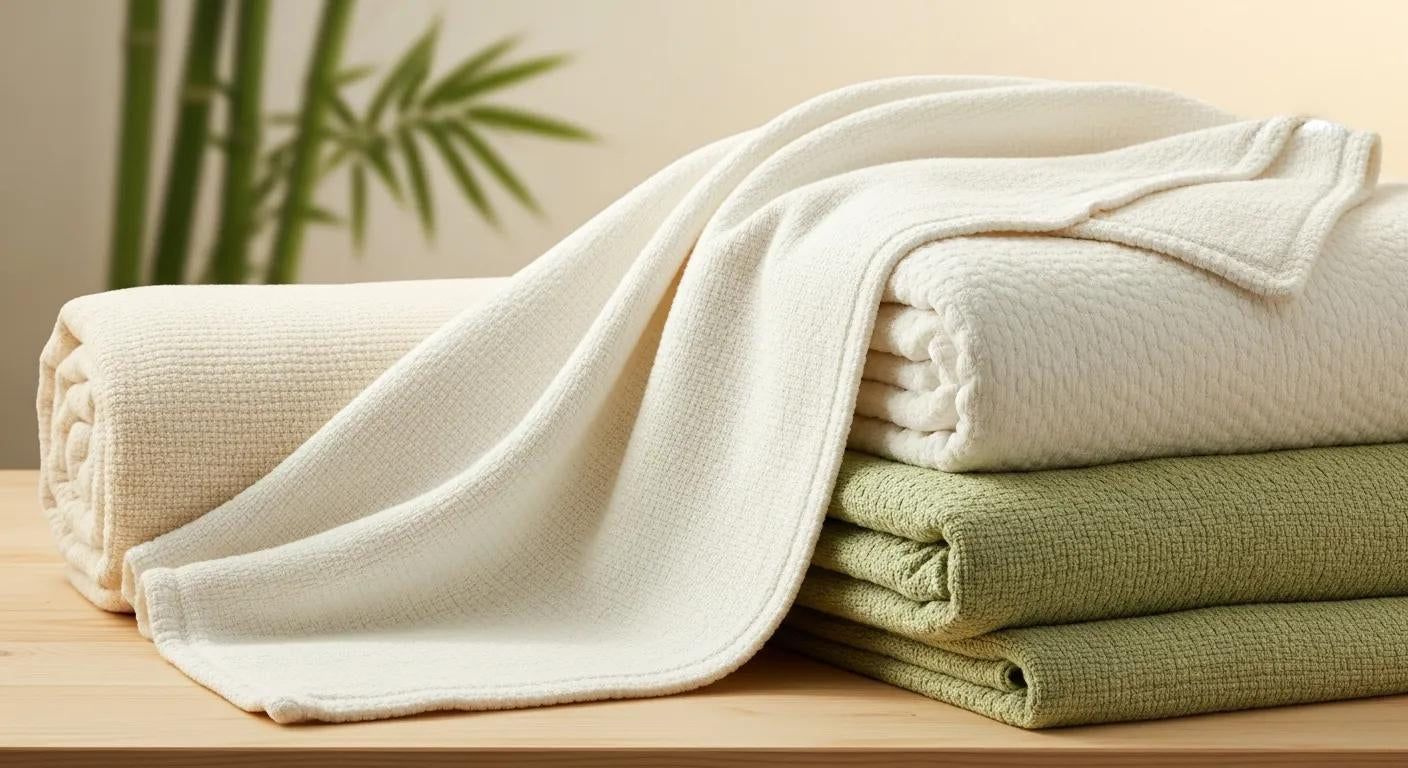
Bamboo blankets — sleep in comfort
Bamboo blankets, made from bamboo viscose, blend natural breathability with moisture-wicking to help you sleep cooler and reduce exposure to common allergens. This guide outlines how temperature-regulating bamboo blankets support deeper, less interrupted sleep, why their hypoallergenic and antibacterial traits help sensitive skin, and how to choose the right weight and weave for summer, winter or changeable climates. If you wake from night sweats, itchy skin or blankets that trap heat, bamboo helps by moving moisture away from the body and allowing air to circulate through fine fibre micro-gaps. Keep reading for clear explanations, quick comparison tables, care tips and buying advice so you can match blanket weight and weave to your needs. We’ll also touch on eco credentials and where cooling or extra-soft options fit in the market. This guide will help you discover how bamboo blankets can transform your sleep, from their unique material benefits to how they keep you comfy all year round.
What makes bamboo blankets ideal for sleep?
Bamboo blankets work well for sleep because bamboo viscose fibres form microscopic channels that encourage airflow, wick moisture and disperse heat — all of which create a cooler, less clammy surface. The fibres are fine yet strong, giving a soft, drapey blanket that rests lightly on the skin while moving sweat to the outer surface to evaporate. Practically, that means quicker sleep onset for hot sleepers, fewer awakenings from overheating and a cooler feel without bulky insulation. The short table below summarises these key attributes to help with purchase decisions.
| Feature | Mechanism | Practical value |
|---|---|---|
| Breathability | Micro-gaps between viscose fibres allow steady airflow | Cooler sleep surface with less trapped heat |
| Moisture-wicking | Capillary action draws sweat away from the skin | Fewer night sweats and a drier microclimate |
| Softness | Fine fibre diameter creates a silky hand‑feel | Gentle contact with less friction on the skin |
This snapshot shows how bamboo blankets meet common sleep needs and leads into details on texture and temperature control.
Unmatched softness and a luxurious feel
Bamboo viscose delivers a smooth, silky surface that many people find softer than standard cotton — closer to silk or high-grade modal. The fine fibres reduce surface friction, helping to prevent irritation and supporting comfort for sensitive or restless sleepers. Softness matters beyond feel: a gentle, non-abrasive cover can cut down on tossing and turning. That tactile advantage is a major reason buyers choose bamboo when comfort is the priority, and it links directly to the next section on temperature, where feel and thermal performance meet.
Superior temperature regulation for year-round use
Bamboo blankets regulate temperature with a breathable weave plus moisture transport: air flows through fibre micro‑gaps while capillary wicking pulls sweat away so it can evaporate from the blanket surface. This combo cools in warm weather yet still works when layered in cooler months without trapping dampness next to the body. Hot sleepers, combination sleepers and people in temperate climates benefit most from this adaptable performance. Understanding airflow plus evaporation explains why bamboo is often recommended for year‑round comfort and helps you choose the right weight and weave.
- Breathable comfort: Fabric allows airflow to disperse heat.
- Moisture control: Capillary action moves perspiration away from the skin.
- Gentle contact: Silky hand‑feel reduces irritation and soothes sleep.
Together, these benefits improve sleep comfort and lead naturally into hypoallergenic performance.
How do bamboo blankets support hypoallergenic sleep?
Bamboo blankets can support hypoallergenic sleep because they manage moisture and tend to resist microbial growth, reducing conditions that encourage allergens and skin irritation. The fabric’s antimicrobial tendencies limit bacterial and fungal build-up on the surface, helping the sleep environment stay fresher between washes. Drier microclimates inside the bedding are less hospitable to dust mites, which depend on humidity and skin flakes. Practical washing routines and care habits strengthen these benefits — we outline simple steps below for allergy-prone sleepers.
- Antibacterial surface: Bamboo-derived fibres often limit bacterial growth on bedding.
- Less dust mite support: Moisture-wicking lowers the humidity dust mites need.
- Maintenance routine: Regular washing keeps allergen levels down.
Summary: Bamboo’s combined antimicrobial tendency and moisture control can reduce allergen exposure and improve sleep for people with sensitivities. Next, we look more closely at how those antimicrobial effects and dust‑mite resistance work.
Naturally hypoallergenic and antibacterial characteristics
Bamboo viscose naturally resists bacterial growth thanks to its smooth fibre surface and how it's processed. Knitted into blankets, this creates a surface that’s less favourable to bacteria and mould than some heavy synthetics. That helps limit odour and microbe accumulation that can irritate sensitive skin, supporting a cleaner sleep surface over time. For people with dermatitis or reactive skin, a lower bacterial load and a soft finish can reduce nighttime irritation. To preserve these benefits, follow the care label and avoid harsh bleaches that can damage the fibre and alter the hand feel.
Dust mites and allergy relief with bamboo bedding
Bamboo blankets discourage dust mite habitation by keeping the sleep microclimate drier and less inviting for mites, which flourish in warm, humid environments fed by trapped sweat and skin flakes. Washing at recommended temperatures removes accumulated allergens and keeps the blanket’s wicking channels working well. For most people, washing every two to four weeks (depending on sensitivity and climate) and airing or rotating bedding regularly will limit allergen build‑up. These simple habits help allergy-prone sleepers notice real improvements in nasal and skin symptoms and guide the choice of blanket weight and weave for seasonal needs.
- Wash regularly: Cleaning removes allergens and restores wicking.
- Air and rotate: Sunlight and airflow reduce humidity and refresh fibres.
- Pick lighter weaves: They dry faster and trap less moisture, helping control mites.
Following these steps preserves hypoallergenic performance and leads to seasonal and moisture-management considerations.
Are bamboo blankets suitable for year-round comfort?
Short answer: yes. Bamboo blankets suit year‑round use because breathability helps you stay cool in summer, while the fibre structure supports lighter layering for warmth in winter. Bamboo’s moisture‑wicking keeps the microclimate stable, preventing clamminess in heat and avoiding dampness when layered in cold weather. Your blanket’s weight (GSM) and weave density determine seasonal performance, so choose a lightweight weave for hot months and a mid‑weight or layered system for cooler periods. Below are practical selection tips and an explanation of moisture transport to guide season‑based choices.
- Lightweight (summer): Low‑GSM blankets maximise airflow and quick evaporation.
- Mid‑weight (transitional): Balanced warmth with effective wicking on variable nights.
- Layering (winter): Use a bamboo blanket with a thicker quilt or doona for insulation without losing breathability.
Summary: Match blanket weight and layering to the season to stay comfortable year‑round without overheating — bamboo’s moisture transport makes this straightforward.
Cooling in summer, warmth in winter
Cooling happens when moisture evaporates quickly and air moves across fine bamboo viscose fibres, lowering surface temperature and perceived heat. In winter, those same fibres trap a thin layer of still air when layered or paired with an insulating doona, delivering warmth without the damp feeling of heavy synthetics. Selecting the right GSM and knit density lets you use bamboo’s dual properties effectively rather than relying on a single heavy cover — a useful approach for households with mixed temperature preferences or broad seasonal swings.
Moisture‑wicking for dry, comfortable nights
Moisture‑wicking works by capillary action within fibres and between yarns, carrying perspiration away from the skin to the blanket’s outer surface where it can evaporate. That reduces night sweats and the clammy sensations that fragment sleep, especially in humid climates or during hot flashes. The result is a drier microclimate at the skin, better thermoregulation and more consistent sleep cycles. In humid environments, focus on faster‑drying weaves and designs with efficient evaporation channels to maximise overnight dryness and comfort.
These practical season and moisture tips lead into our environmental notes on sustainable bedding choices.
Why bamboo blankets are an eco-friendly choice
Bamboo is often seen as a more sustainable fibre because it grows quickly, usually needs fewer pesticides and less water than conventional cotton, and is biodegradable if processed and disposed of responsibly. Those cultivation and end‑of‑life advantages lower resource use and lifecycle impact compared with many synthetics. Choosing a durable, easy‑care bamboo blanket extends product life and reduces yearly environmental cost because you replace items less often. Below are the main environmental benefits, followed by a short table that summarises sourcing and lifecycle points.
- Rapid renewal: Bamboo regrows quickly, supporting sustainable harvest cycles.
- Lower inputs: Typically requires less pesticide and water than many conventional crops.
- Biodegradability: Natural fibres break down more readily than synthetic microplastics.
Summary: Bamboo’s environmental profile, combined with product longevity, makes bamboo blankets a strong choice for eco‑minded buyers. The table below clarifies how sourcing and durability affect lifecycle impact.
| Sustainability factor | What it means | Practical impact |
|---|---|---|
| Growth rate | Fast‑growing, renewable raw material | Lower pressure on land use |
| Chemical inputs | Often lower pesticide/herbicide needs | Reduced chemical runoff |
| Longevity | Durable weave and fibre strength | Fewer replacements and lower lifecycle footprint |
These sustainability attributes link directly to product care and durability advice and support more conscious purchasing decisions.
Sustainable sourcing and environmental benefits
Responsible sourcing means choosing bamboo from plantations that prioritise regeneration and minimal chemical use, cutting downstream impacts on soil and water. While certifications are great, the real environmental win comes from bamboo's rapid regrowth and typically lower agricultural needs compared to other crops. Picking blankets made from ethically sourced bamboo viscose and keeping them longer through proper care reduces the overall footprint. Knowing where and how fibres are sourced helps when comparing brands and product lines.
Easy care, durability and long‑lasting comfort
Many bamboo blankets can be machine-washed on gentle cycles at moderate temperatures, making them easier to care for than some delicate specialty fibres. Longevity matters: durable fabric and a stable hand‑feel mean fewer replacements over time and less waste. To preserve fibre quality, follow the manufacturer’s care label, avoid high heat in the dryer where possible and use mild detergents; these steps keep the blanket soft and functional and align longevity with eco outcomes. Good care preserves both comfort and sustainability.
- Wash gently: Use moderate temperatures to protect fibres.
- Avoid harsh bleach: Strong chemicals can degrade viscose and finishes.
- Air dry when possible: Cuts thermal stress and saves energy.
These habits connect everyday use with longer product life and segue into practical fabric comparisons.
Bamboo blankets vs other fabrics: cotton and microfibre comparison
Compared directly, bamboo often outperforms cotton and microfibre for moisture‑wicking and temperature regulation while matching or exceeding softness; durability and environmental impact depend on processing and fibre source. The table below summarises relative performance across key attributes so you can decide which fabric fits your priorities — cooling, hypoallergenic needs, sustainability or easy care. After the table, we offer practical recommendations for different sleepers.
Comparison of fabrics across key attributes:
| Fabric | Temperature control | Moisture‑wicking | Durability | Softness |
|---|---|---|---|---|
| Bamboo viscose | Higher | Higher | Moderate to high | Higher |
| Cotton (conventional) | Moderate | Moderate | Moderate | Moderate |
| Microfibre (synthetic) | Lower | Lower | High | Variable (can feel smooth) |
This comparison highlights trade‑offs: bamboo offers stronger thermoregulation and moisture management for hot or allergy‑prone sleepers, while microfibre can be durable but generally compromises breathability and sustainability. Below are targeted recommendations.
- Hot sleepers: Prefer bamboo viscose for superior cooling and wicking.
- Allergy sufferers: Choose bamboo for its antimicrobial tendencies and drier microclimate.
- Budget or durability focus: Microfibre may offer rugged durability, but with trade‑offs in breathability and environmental impact.
Summary: Bamboo blankets are a balanced choice for comfort, hygiene and environmental concerns, particularly when cooling and hypoallergenic performance matter most.
Softness, durability and comfort compared with cotton
Against conventional cotton, bamboo viscose often feels smoother and silkier thanks to finer fibres and a more uniform surface. Durability depends on weave and care: high‑quality cotton can last, but well‑made bamboo blankets offer a comparable lifespan with a softer hand. If tactile comfort and sensitive‑skin compatibility are priorities, bamboo is frequently recommended because it reduces friction and irritation. Check weave and GSM to balance softness and longevity when comparing specific products.
Temperature control and moisture management vs cotton and microfibre
Bamboo viscose usually outperforms both cotton and microfibre for temperature regulation because of its combined airflow and wicking action; cotton can absorb moisture and feel damp, while microfibre may trap heat. In humid climates or for hot sleepers, bamboo’s moisture transport and evaporation help preserve dryness and reduce sleep disruptions. Final recommendation: hot sleepers, night‑sweaters and allergy‑prone people should prioritise bamboo viscose blankets for their thermal and hygiene advantages.
Before we finish: many eco‑focused bedding brands offer bamboo mattress toppers, quilts/doonas, cooling blankets, pillows and sheets. Many brands focus on ethically sourced bamboo, superior softness, advanced temperature regulation, natural hypoallergenic and antibacterial features, durability, and easy care. Look for flexible options and a commitment to customer satisfaction.
Frequently asked questions
1. How do I care for my bamboo blanket to ensure its longevity?
Wash your bamboo blanket in cold or lukewarm water on a gentle cycle and use a mild detergent. Avoid bleach and strong chemicals that can weaken fibres. Air drying is best, but if you use a dryer, choose a low‑heat setting to reduce shrinkage and wear. Washing every two to four weeks will help keep allergens down and preserve moisture‑wicking performance. Following these steps keeps your blanket soft and extends its life.
2. Can bamboo blankets help with night sweats?
Yes. Bamboo blankets wick sweat away from the skin and allow airflow so moisture can evaporate, which helps you stay cooler through the night. That combination makes bamboo a strong option for people who experience night sweats or run hot while sleeping.
3. Are bamboo blankets suitable for sensitive skin?
Absolutely. Bamboo viscose has a smooth, soft surface that reduces friction and irritation, making it a good choice for sensitive skin or conditions like eczema. Its tendency to resist bacterial build‑up can also help maintain a cleaner sleep surface. Regular washing keeps these benefits working over time.
4. How do bamboo blankets compare to synthetic options?
Bamboo generally beats many synthetics on breathability, moisture‑wicking and temperature regulation. Synthetics like microfibre can be tough and long‑lasting, but they often trap heat and moisture. Bamboo’s natural fibres offer better airflow and are biodegradable in the right conditions, making them the more sustainable choice for many buyers.
5. What should I consider when choosing a bamboo blanket for different seasons?
Look at weight (GSM) and weave density. Lightweight bamboo blankets are best for summer because they maximise airflow and evaporation. Mid‑weight options suit spring and autumn. In winter, layer a bamboo blanket with a thicker duvet for insulation while keeping breathability. Matching GSM and layering to your climate will give the best year‑round comfort.
6. Are there any eco‑friendly certifications to look for when buying bamboo blankets?
Yes, you can look for certifications like OEKO‑TEX Standard 100, which ensures textiles are free from harmful substances. The FSC (Forest Stewardship Council) certification indicates responsibly managed bamboo sources. These can help you make an informed, eco‑friendly choice.
7. Can bamboo blankets be used in combination with other bedding materials?
Definitely. Bamboo blankets work well with other bedding — pair one with a thicker duvet for winter warmth, or match bamboo sheets and a bamboo blanket for a cohesive, breathable bedding system. That versatility makes bamboo useful across seasons and sleep preferences.