





Bamboo Weighted Blankets: Comfort & Eco Benefits
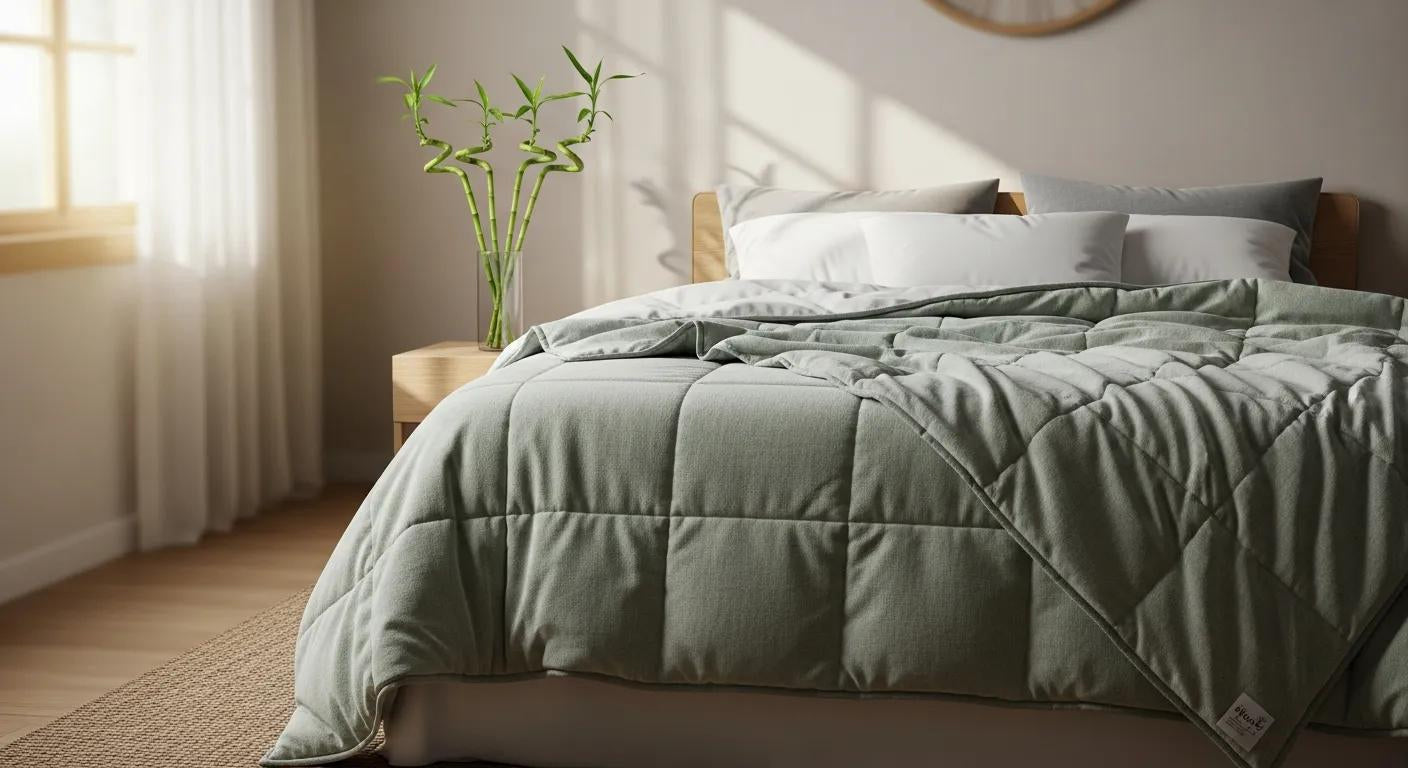
Bamboo-weighted blankets combine the calming pressure of weighted bedding with the natural performance of bamboo fibres. They deliver a soft, breathable sleep surface, often better temperature control and—when responsibly sourced—a smaller environmental footprint than many synthetics. This guide explains how bamboo creates a silk-like feel and improved airflow, why its moisture-wicking and thermoregulating properties cut down on overheating, and what sustainability really means once cultivation and processing are considered. If you’re choosing a hypoallergenic cover or want relief from night sweats, the fibre type and construction can be confusing. We break down the science and give straightforward buying tips for Australian shoppers. You’ll find clear explanations of benefits, cooling mechanisms, environmental comparisons, climate-specific buying advice and how bamboo can help with allergy relief and sleep quality. Helpful search terms like bamboo weighted blanket, bamboo blanket benefits, cooling weighted blanket bamboo and sustainable weighted blanket are included so you can find the right options.
What Are the Key Benefits of Bamboo Weighted Blankets?
Bamboo-weighted blankets offer five main advantages that make them a compelling alternative to conventional covers: a silky hand-feel, naturally hypoallergenic characteristics, strong breathability and thermoregulation, durable construction with simple care, and a lower environmental impact when sourced responsibly. These benefits arise from bamboo’s fibre structure and how the fabric is made—factors that affect comfort and performance for different sleepers. Below is a short list of these benefits with one-line explanations to help you quickly prioritise what matters when choosing a weighted blanket.
Bamboo-weighted blankets offer these core benefits:
- Softness and luxurious hand-feel: Bamboo fibres produce a smooth, drapey fabric that often feels cooler and silkier than many cotton covers.
- Hypoallergenic properties: Moisture-wicking, smooth fibres reduce the warm, damp microclimate where dust mites and irritants thrive.
- Breathability and thermoregulation: An open fibre structure and effective moisture transfer help disperse heat while you sleep.
- Durability and ease of care: Well-stitched panels and quality finishes extend usable life and are straightforward to launder.
- Environmental advantages: Bamboo is a fast-growing, renewable resource that typically needs fewer pesticides than conventional cotton when responsibly farmed.
These points set the scene for choosing a product. Many quality retailers offer bamboo-weighted blankets that combine these traits into finished products. Next, we explain how bamboo achieves its cooling effect.
How Does Bamboo Enhance Comfort and Softness in Weighted Blankets?
Bamboo fibres are long and smooth; when processed into yarn (often as viscose/rayon), they create a soft, silky surface with excellent drape under an even weight. That smooth microstructure reduces skin friction, giving a cooling, soothing feel that works well with the gentle pressure of a weighted blanket. Compared with cotton, bamboo covers often feel smoother; compared with polyester, they’re less clingy—many sleepers describe this as better comfort. To keep that silky hand-feel, follow gentle wash settings, avoid high-heat tumble drying and handle the fabric as recommended to prevent pilling and preserve softness.
That soft, low-friction surface also affects skin sensitivity and allergen exposure, which is important for anyone with reactive skin or allergies.
Why Is Bamboo Hypoallergenic and Ideal for Sensitive Skin?
Bamboo is gentle on skin because its smooth fibres reduce abrasion compared with coarser yarns, and the fabric’s moisture-wicking discourages the damp micro-environment that supports dust mites and fungal growth. In short, bamboo moves sweat away from skin and promotes evaporation, lowering humidity next to the body and making the bedding less welcoming to common allergens.
For people with eczema or generally sensitive skin, the combination of a silky surface and reduced retained moisture can mean less itching and fewer nighttime irritations.
Regular washing and using removable covers further reduce allergen buildup, reinforcing bamboo’s practical suitability for sensitive sleepers.
Next, we look at how those same properties help with temperature control and cooling—an important consideration for many who choose weighted blankets.
How Does Bamboo Provide Cooling Properties in Weighted Blankets?
Bamboo cools through a mix of breathable fibre structure, moisture-wicking action and fabric constructions that encourage airflow and evaporation. At a fibre level, bamboo-derived viscose usually has capillary-like properties that draw moisture from skin and spread it across the fabric surface to speed evaporation. Fabric choices—such as percale-style weaves or lighter sateen finishes—further aid air circulation and the dispersal of body heat. Together, these elements reduce the sensation of overheating under a weighted blanket while keeping the comforting pressure you want.
To make these mechanisms clear, the table below shows how particular elements of bamboo blankets contribute to cooling and comfort.
| Component | Attribute | Cooling Mechanism |
|---|---|---|
| Bamboo fibre | Breathability | Allows air movement through the fabric, reducing trapped heat |
| Bamboo fibre | Moisture-wicking | Moves sweat away from skin to the fabric surface for faster evaporation |
| Weave/Finish | Open weave or sateen finish | Balances drape and airflow to assist heat dispersion |
These features make bamboo a strong option for sleepers who overheat. The next section explains how to spot breathable constructions when you’re shopping.
What Makes Bamboo Weighted Blankets Breathable and Temperature-Regulating?
Breathability depends on both the natural porosity of bamboo-derived fibres and the blanket’s weave density. Looser weaves and lighter finishes allow better airflow and faster moisture evaporation. Bamboo viscose can be spun into yarns that drape like cotton but preserve larger inter-fibre gaps, which help air circulate even under weight. When shopping, look for phrases like “breathable weave,” “natural fibre cover”, or descriptions of open-stitch constructions. Blends with other natural fibres or a lightweight lining can also tune airflow and feel for different climates.
Understanding these construction choices sets realistic expectations for nightly temperature control and helps assess whether bamboo will address night sweats in practice.
Can Bamboo Weighted Blankets Help Reduce Night Sweats?
Many sleepers find that bamboo-weighted blankets reduce night sweats because the moisture-wicking fibres and breathable construction lower surface humidity and improve evaporative cooling. If your night sweats are mainly caused by overheating, switching to a breathable bamboo cover and a lighter weight can lessen clamminess and reduce awakenings. Remember, night sweats can also be caused by medical conditions, medications or hormonal changes—if that’s the case, bedding alone may not be enough, and you should seek medical advice.
Useful tips: choose a lighter weight, use a removable breathable cover and pair the blanket with breathable sheets to maximise cooling.
Why Is Bamboo Considered an Eco-Friendly Material for Weighted Blankets?
Bamboo is considered eco-friendly because it’s a fast-growing grass that can regenerate quickly without replanting and often requires fewer pesticides and less irrigation than conventional cotton. That growth profile lowers some cultivation impacts. But processing—turning raw bamboo into viscose or rayon—can add environmental cost unless chemical recovery and closed-loop systems are used, so sustainability needs to be assessed across cultivation and manufacturing. End-of-life matters too: natural fibres are more likely to biodegrade, but blended covers or synthetic treatments will affect disposal and recyclability. Overall, bamboo’s rapid renewability and generally low-input agriculture give it an advantage when fibre processing is handled responsibly, and sourcing is transparent.
To make this comparison tangible, the table below summarises key environmental attributes of bamboo, cotton and polyester at a high level.
| Fibre Type | Cultivation/Inputs | End-of-Life | Sustainability Notes |
|---|---|---|---|
| Bamboo | Fast growth, low pesticide need (when responsibly farmed) | Potentially biodegradable if not heavily processed | Renewable resource with low land-use intensity |
| Cotton | High water and pesticide inputs (conventional) | Biodegradable, but long-term soil impacts are possible | Organic cotton improves its footprint if certified |
| Polyester | Derived from fossil fuels, high energy input | Not biodegradable, recyclable via specialised channels | Durable but large carbon footprint |
This comparison shows bamboo’s sustainability strengths are clearest when fibre processing uses closed-loop or low-impact methods. That brings us to what consumers should check to make a genuinely sustainable choice.
How Does Bamboo Cultivation Impact the Environment Compared to Other Materials?
Bamboo cultivation often needs fewer chemicals and less irrigation than conventional cotton, and its rapid growth supports high biomass per hectare—helping sequester carbon more quickly over short cycles. These traits reduce pressure on arable land and can lower agrochemical use, although practices vary by region, and certification remains important. By contrast, synthetic fibres like polyester come from petrochemicals and generally carry higher embodied energy and greenhouse emissions. It’s important to weigh bamboo’s positive cultivation profile against transparency in processing, because the viscose/rayon conversion stage can increase impacts if chemical recovery is not implemented.
What Makes Bamboo Weighted Blankets a Sustainable Choice?
Bamboo-weighted blankets are a sustainable choice when you prioritise responsibly sourced bamboo covers, low-impact processing, durable construction and clear care guidance that extends usable life. Look for transparent material breakdowns (100% bamboo cover or a high-percentage bamboo blend), explanations of fibre processing, and solid stitching or box-panel construction that keeps the fill from shifting.
Choosing products built to last is key—lengthening a textile’s useful life has a big effect on its overall environmental footprint.
Combine those product-level criteria with end-of-life options—repairability, recyclable parts or compostable covers—to form a fuller sustainability picture for a weighted blanket.
Which Bamboo Weighted Blankets Are the Best Choices in Australia?
Picking the best bamboo-weighted blanket in Australia means matching cover composition, fill type, weight options and care instructions to your sleep needs and local climate.
High-quality choices usually have a bamboo-derived cover (100% bamboo viscose or a high-percentage bamboo blend), evenly distributed glass beads or microbeads in stitched panels, and a removable cover for washing. Australian climates range from humid coasts to dry inland areas, so breathable constructions and lighter-weight options suit warmer regions, while denser fills may be better in cooler zones. The compact comparison table below helps you weigh the important product attributes when choosing between options.
| Feature | What to Check | Typical Value/Range |
|---|---|---|
| Cover material | Bamboo viscose or bamboo-blend | 100% bamboo viscose or 70–90% bamboo blends preferred |
| Fill type | Glass bead/microbead | Evenly distributed microbeads in stitched panels |
| Weight options | Per-user preference | Common options: 4–9 kg (choose ~10% of body weight as guideline) |
| Care | Removable cover and machine-washable | Look for clear wash/dry instructions to preserve fibres |
| Price-range | Indicative affordability | Mid to premium ranges, depending on materials and construction |
What Features Define the Best Bamboo Weighted Blanket in Australia?
The best bamboo weighted blankets in Australia combine a high-percentage bamboo cover, secure internal stitching to stop fill migration, a choice of weight options to suit different bodies, and a removable cover for easy washing. A 100% bamboo viscose cover delivers maximum silkiness and cooling, while bamboo-blend covers can balance price and durability. Quality fills—glass microbeads inside a tight box stitching—keep pressure even and prevent shifting. Clear care instructions that allow machine washing of the outer cover and spot-cleaning of the inner insert will help the blanket last and keep both comfort and sustainability intact.
These product traits form a practical purchasing checklist and guide the questions to ask at the point of sale.
Where Can You Buy High-Quality Bamboo Weighted Blankets in Australia?
Quality bamboo-weighted blankets are available from specialist eco-bedding retailers, sustainable homeware brands and premium bedding stores that prioritise natural fibres and transparent sourcing.
When buying, ask for a clear material breakdown, available weight ranges, stitching details and full care instructions. Check return or exchange policies in case the selected weight doesn’t suit you.
Prefer retailers that explain their fibre processing or share sustainability credentials to ensure you’re getting a genuinely eco-friendly product. Browsing curated collections and reading product descriptions and care guidance before purchase reduces the chance of surprises on delivery.
With that buying guidance in mind, the next section looks at health and allergy benefits in more detail.
How Do Bamboo Weighted Blankets Support Allergy Relief and Health?
Bamboo-weighted blankets support allergy relief and general sleep health mainly by keeping the sleep surface drier and less hospitable to dust mites, while offering a smooth fabric that reduces skin irritation. Bamboo’s moisture-wicking lowers the humidity microclimate where dust mites thrive, and the smoother fibre surface discourages particle adherence and friction-related irritation. Regular cleaning, removable washable covers and complementary mattress and pillow encasements strengthen these health benefits. Below are the main mechanisms and practical steps linking bamboo bedding choices to better sleep for allergy sufferers.
Key allergy and health support features include:
- Moisture control: Bamboo draws perspiration away from the skin, reducing humidity that attracts dust mites.
- Smooth fibre surface: Less friction and fewer attachment points for particles reduce skin irritation.
- Ease of cleaning: Removable covers and machine-washable components make it simple to remove allergens regularly.
These measures complement other allergy strategies and lead to why bamboo fibres discourage allergen build-up.
Why Are Bamboo Fibres Naturally Resistant to Dust Mites and Allergens?
Bamboo fibres create a less favourable environment for dust mites by managing moisture and presenting a smooth surface that limits particle buildup and adherence. Dust mites need humidity to thrive; bamboo’s wicking and evaporative properties reduce surface humidity compared with non-breathable synthetic covers. The smoother fibre also sheds particles more effectively during washing and reduces mechanical irritation that can aggravate allergic responses. For the best long-term results, combine bamboo bedding with regular laundering, protective encasements and bedroom humidity control.
Can Bamboo Weighted Blankets Improve Sleep Quality for Allergy Sufferers?
Yes—bamboo-weighted blankets can improve sleep for many allergy sufferers by reducing night awakenings related to itch, congestion or discomfort. The calming pressure from a weighted blanket plus a hypoallergenic bamboo cover often reduces tossing and improves perceived sleep continuity, especially for those with mild-to-moderate environmental allergies. People with severe allergic conditions or sleep issues caused by medical factors should consult a healthcare professional, since bedding changes are one part of a broader management plan.
Complementary measures—mattress encasements, HEPA filtration and regular washing—maximise the sleep benefits of bamboo bedding.
For specific product details or custom options, many suppliers offer comprehensive information to help you find the perfect blanket for your health needs. This health-focused guidance aims to support your confident product selection.
Frequently Asked Questions
What is the best way to care for bamboo weighted blankets?
To keep a bamboo weighted blanket looking and feeling its best: machine wash the removable cover on a gentle cycle with cold water, avoid bleach and fabric softeners, and tumble dry on low or air dry to prevent shrinkage and protect the fibres. Follow the manufacturer’s care instructions for the inner insert—spot clean or wash as recommended. Regular, gentle cleaning keeps the blanket hygienic and extends its life.
Are bamboo weighted blankets suitable for all seasons?
Bamboo weighted blankets are versatile and suit many seasons thanks to their breathability and moisture-wicking. In warm months, the cooling effect helps prevent overheating; in cooler months, the added weight provides comforting warmth without excessive heat retention. For very hot climates, choose a lighter-weight and breathable weave; for colder seasons, a denser fill can be more suitable.
How do I choose the right weight for a bamboo weighted blanket?
A common guideline is to choose a blanket that’s about 10% of your body weight—for example, around 7 kg for someone who weighs 70 kg. This provides effective, even pressure for most people. Personal preference matters, though, so if possible, try different weights or check retailer return policies if you’re unsure.
Can bamboo weighted blankets help with anxiety and stress relief?
Yes. The gentle, even pressure of a weighted blanket produces a calming effect known as deep touch pressure, which many people find helps reduce anxiety and promotes relaxation. Paired with a soft bamboo cover, a weighted blanket can make it easier to fall asleep and stay asleep, which many users report as reduced restlessness and improved overall well-being.
What should I look for when buying a bamboo weighted blanket?
Look for a high percentage of bamboo in the cover—100% bamboo viscose for maximum softness, or a high-percentage blend for a balance of performance and durability. Check that the fill is quality glass microbeads or similar, that panels are securely stitched to prevent migration, and that the cover is removable for washing. Also review care instructions, weight options and warranty or return policies to make sure the product meets your needs.
Are there any potential downsides to using bamboo weighted blankets?
Bamboo weighted blankets offer many benefits, but a few considerations apply: some people may find the blanket’s weight restrictive if they’re not used to it; bamboo fabrics can be sensitive to high heat, so following care instructions is important; and higher-quality bamboo options can cost more up front. For many buyers, the comfort, breathability and sustainability benefits outweigh these downsides.