



Why choose sustainable bamboo mattress toppers for eco-friendly sleep in Australia?
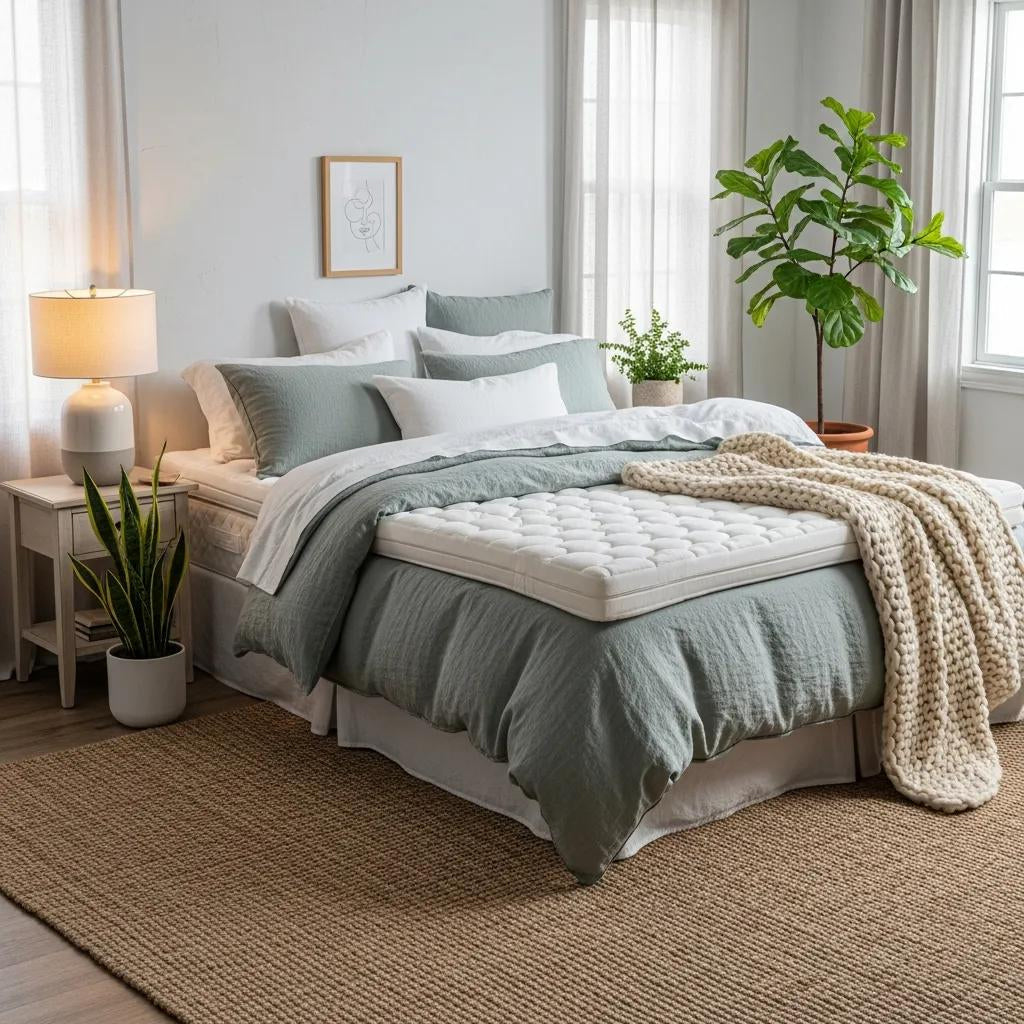
Bamboo mattress toppers pair a bamboo-derived cover with a supportive fill layer to boost comfort, breathability and eco-credentials. The cover is usually made from bamboo viscose or a similar regenerated fibre, while the core adds pressure relief and durability. Choosing a sustainably made bamboo topper links better sleep with a smaller environmental footprint—bamboo typically needs less water and fewer pesticides than many conventional fibres, and its fibres naturally wick moisture and resist microbes, which can help sensitive sleepers. Below, we explain why bamboo is a sustainable choice, how it helps people with allergies or asthma, how it regulates temperature across seasons, and what to look for and how to care for a topper when buying in Australia. We also outline how an Australian brand like EcoToppers presents bamboo toppers with fit, product choices and customer support that make responsible buying straightforward.
What makes bamboo mattress toppers a sustainable choice?

Bamboo toppers are attractive from an environmental point of view because bamboo grows fast, regenerates without replanting and generally uses less water and fewer pesticides than conventional cotton. Its high yield and quick cycles help reduce pressure on forests and lower the carbon intensity of raw materials over time. Many bamboo-derived fibres are also more readily biodegradable than petroleum-based synthetics, which helps reduce long-term landfill impact when products are disposed of responsibly. For Australians who care about lifecycle effects as well as comfort, bamboo bedding is a sensible option. Below is a quick list of the key sustainability points and a short comparison with cotton and common synthetics.
Bamboo toppers deliver three clear sustainability benefits:
- Rapid renewability: Bamboo regrows quickly, allowing frequent harvests without replanting.
- Lower agricultural inputs: Bamboo often requires less irrigation and fewer chemical pesticides than conventional cotton.
- Biodegradability: Bamboo-derived fibres tend to break down faster than many synthetic textiles when disposed of under the right conditions.
Those advantages lead naturally to a side-by-side view of environmental trade-offs.
Materials used in mattresses and bedding differ in resource use and end-of-life impacts. The table below compares bamboo with cotton and typical synthetic alternatives.
| Material | Characteristic | Comparative Environmental Value |
|---|---|---|
| Bamboo | Growth & renewability | Fast growth, frequent harvests and high yield per hectare; minimal replanting |
| Cotton | Water & pesticides | Conventional cotton often needs large water inputs and regular pesticide use. |
| Synthetic (polyester) | End-of-life & emissions | Made from fossil fuel, slow to degrade, and a source of microplastic pollution |
This comparison shows how bamboo's renewability and lower input needs can reduce environmental impact compared with conventional cotton and synthetics, helping buyers choose materials with better lifecycle metrics.
How does bamboo's rapid growth support environmental sustainability?
Bamboo matures much faster than many trees—often within three to five years—so it can be harvested more frequently without clear-cutting forests. That rapid growth allows bamboo to sequester carbon while regenerating, providing a renewable feedstock for bamboo viscose used in mattress toppers. Fast regrowth also means less soil disturbance and continuous ground cover, which can help reduce erosion and support biodiversity in many cultivation systems. These growth traits explain why bamboo is widely seen as a renewable raw material for eco-conscious bedding and why buyers looking for biodegradable bamboo bedding in Australia often prefer bamboo-based products.
These growth benefits lead to questions about end-of-life behaviour, which we cover next under biodegradability and disposal.
Why is bamboo biodegradable and more eco-friendly than some other materials?
Bamboo-derived fibres such as bamboo viscose are made of cellulose and, under suitable composting or biodegradation conditions, generally break down faster than synthetic polyester and other petroleum-derived textiles. The speed of biodegradation depends on processing and local waste systems, but cellulose-based textiles tend to return to organic matter more readily than synthetics, reducing long-term landfill persistence. Compared with conventional cotton, bamboo can be more favourable when considering water and pesticide use across the lifecycle—though processing methods (for example, conventional viscose versus closed-loop lyocell) also influence the overall footprint. Looking at both the raw material and the processing steps helps buyers pick genuinely sustainable bamboo mattress toppers rather than products that shift impacts from one area to another.
Questions about biodegradability naturally lead to how bamboo affects indoor health and air quality, the next major topic.
How do bamboo mattress toppers help allergy and asthma sufferers in Australia?

Bamboo mattress toppers can help people with allergies and asthma by improving moisture control, offering natural antibacterial tendencies and using breathable covers that reduce conditions favoured by allergens. The fibres’ moisture-wicking action lowers humidity at the sleep surface, which makes the environment less hospitable to dust mites and mould. At the same time, bamboo-derived fabrics often show natural antimicrobial performance that can limit microbial load on the cover. Together, these features reduce common triggers for sensitive sleepers—especially useful in humid or changeable Australian climates. Regular care—airing, using protectors and following washing guidance—keeps these benefits working well, which we cover below.
Key practical benefits for allergy and asthma sufferers include:
- Reduced allergen build-up: Lower surface moisture means fewer dust mites and mould spores.
- Lower bacterial levels: Natural antimicrobial tendencies help limit microbial growth on covers.
- Easier upkeep: Breathable covers dry faster after cleaning, which lowers mildew risk.
Next, we look closer at the fibre-level traits that drive hypoallergenic and antibacterial performance.
What makes bamboo mattress toppers naturally hypoallergenic and antibacterial?
Bamboo-derived fibres are cellulose-based and typically don’t include animal proteins or lanolin that can irritate some people. Some bamboo fibres also contain natural compounds that reduce bacterial survival on the surface. The combination of low moisture retention and a smooth fibre surface discourages allergen adherence, while inherent antimicrobial properties can help limit bacterial growth without relying on synthetic treatments. For Australians seeking a hypoallergenic bamboo mattress topper, these material qualities translate into a sleep surface less likely to provoke reactions—provided the product is clearly labelled and made without unnecessary irritant additives.
This fibre-level view leads into how structural and moisture-management features prevent dust mites, mould and mildew.
How do bamboo fibres resist dust mites, mould and mildew?
Bamboo fibres resist dust mites, mould and mildew by wicking moisture away from the skin and allowing it to evaporate through the fabric’s porosity, which reduces local humidity below thresholds these organisms need to thrive. Capillary action in the fibres moves moisture to the outer surface, where it dries more quickly, creating a drier microclimate that limits food and moisture sources for dust mites and fungi. Regular care—washing removable covers when allowed, using protectors and rotating the topper—keeps these structural benefits working and preserves hypoallergenic performance over time. Managing room and mattress humidity alongside the topper further reduces allergen recurrence.
Lowering moisture exposure ties directly into how bamboo toppers manage temperature, which we cover next.
How do bamboo mattress toppers regulate temperature for better sleep?
Bamboo mattress toppers control temperature by combining breathable covers, moisture-wicking fibres and a structured fill that together enable evaporative cooling and provide passive insulation when needed. The microstructure of bamboo-derived fibres creates pathways for air movement and vapour transfer, while the fill layer moderates heat transfer and pressure distribution—this mix keeps you cooler on warm nights and helps retain a comfortable layer of warmth in cooler weather when used with suitable bedding. For Australia’s varied climates, effective thermoregulation helps maintain uninterrupted sleep and fewer nighttime wakings. The table below summarises fibre features and their practical outcomes before we explore micro-gaps and seasonal tips.
| Feature | Attribute | Mechanism / Outcome |
|---|---|---|
| Micro-gaps / micro-holes | Fibre porosity | Encourages airflow and vapour movement for evaporative cooling |
| Moisture-wicking | Hydrophilic cellulose | Draws sweat away from the skin to the outer layer for faster evaporation |
| Breathable cover | Low thermal resistance | Supports heat dissipation and quicker drying |
This table shows how fibre structure translates into real-world temperature and moisture benefits to support comfortable sleep year-round.
What role do bamboo's micro-gaps and micro-holes play in breathability?
Bamboo fibres have micro-gaps and tiny channels that create capillary pathways for moisture to travel from the skin to the fabric surface, where it can evaporate. That improved vapour transport increases perceived coolness in warm conditions and speeds drying after washing, reducing trapped heat. The outcome is a breathable sleep surface that avoids the heavy, sweaty feeling common with low-porosity synthetics—one reason bamboo toppers are recommended for people wanting better temperature regulation.
Next, we explain how these mechanisms work across seasons to keep you cool in summer and warm in winter.
How do bamboo toppers keep you cool in summer and warm in winter?
In summer, bamboo toppers promote evaporative cooling—sweat and moisture move into the fibres and evaporate, drawing heat away from the body. In winter, the toppers fill traps with a thin layer of warm air and reduce heat loss when combined with insulating bedding. Choosing the right thickness—light 5cm options for a surface lift, or 10cm Plush for deeper cushioning and added warmth—lets you match thermoregulation to your local climate and sleep preferences. Simple layering tips—breathable linen sheets in summer and a duvet in winter—further improve year-round comfort. These practical strategies link material science with everyday sleep habits for better thermal control.
With materials and comfort explained, we turn to brand choices and how suppliers implement these features.
Why is EcoToppers a trusted Australian brand for sustainable bamboo mattress toppers?
EcoToppers is an Australian company focused on eco-friendly bedding—bamboo mattress toppers, protectors, quilts and pillows designed for comfort and sustainability. Their bamboo topper range comes in several styles—White, Print and Charcoal—and two thicknesses (5cm and 10cm Plush) to suit different comfort needs. Fit features include a 50cm deep fitted stretch skirt to suit most mattress setups. EcoToppers highlights sustainability, orthopaedic support and health benefits as core selling points, and they aim to provide a satisfying customer experience with convenient delivery and support, making responsible buying straightforward for Australians.
Key EcoToppers customer propositions include:
- Product variants: White, Print and Charcoal styles to match bedroom décor.
- Thickness options: 5cm for light comfort or 10cm Plush for deeper cushioning and support.
- Fit and support: A 50cm deep fitted stretch skirt helps secure the topper on most mattresses.
These product and service features shape purchasing choices and lead to sourcing and quality assurances below.
How does EcoToppers ensure ethical sourcing and quality in bamboo products?
EcoToppers signals ethical sourcing and quality through clear product specifications and quality checks that prioritise sustainable materials and consumer-friendly design, such as orthopaedic support and practical fit features. Consistent thickness options and transparent fabric descriptions help customers understand what they’re buying, but we always recommend checking certification claims on product pages if sustainability is a priority. Clear dimensions, fabric composition and support details make it easier to match a topper to your mattress and sleep needs while keeping manufacturing transparency front of mind. These details also prepare customers for post-purchase support and any support programs mentioned on the site.
What support does EcoToppers offer to customers with specific needs and Australian customers?
EcoToppers aims to provide practical customer support, including assistance for customers with specific needs and a focus on customer satisfaction, convenient delivery, and efficient dispatch. These services simplify buying for customers who need specific assistance and provide a straightforward way to try products at home. Knowing dispatch times and shipping coverage is useful for planning deliveries and potential returns—customers seeking specific support should follow the relevant instructions when purchasing. Overall, these customer services complement the product features and make buying easier for Australians.
What should you look for when buying a sustainable bamboo mattress topper online in Australia?
When shopping online for a sustainable bamboo mattress topper in Australia, prioritise clear material descriptions, verifiable certifications where available, the right thickness and fit (check the 50cm deep fitted skirt if you have a tall mattress), and clear customer support information regarding satisfaction and delivery. Knowing whether a product uses "bamboo viscose" versus lyocell or another regenerated cellulose fibre helps assess processing impacts, while certifications such as OEKO-TEX or recognised organic labels indicate lower chemical exposure. Consider functional specs—5cm for surface comfort, 10cm Plush for deeper cushioning—and match support features to your mattress and sleep position. The checklist and verification table below turn these criteria into simple checks when evaluating product pages.
Essential buying checklist:
- Material clarity: Confirm the cover is bamboo viscose or another specified cellulose fibre and check fill composition.
- Thickness & fit: Choose 5cm for a light comfort lift or 10cm Plush for deeper cushioning; verify the 50cm skirt for deep mattresses.
- Customer assurances: Look for clear information on customer satisfaction, delivery, and any specific support programs if needed.
The verification table below shows how to confirm each specification on a product page or by contacting the seller.
| Specification | Attribute to Check | How to Verify |
|---|---|---|
| Material composition | Bamboo viscose, fill type | Read product composition labels and fabric descriptions |
| Certifications | OEKO-TEX / recognised organic labels | Look for certification logos and certificate numbers on product pages |
| Fit & dimensions | Thickness, skirt depth | Check product dimensions and fitted skirt depth on the spec sheet |
| Customer assurances | Customer satisfaction, delivery, support | Confirm details on customer satisfaction, delivery options, and any specific support in policy or FAQ. |
Using this verification approach helps turn sustainability claims into concrete checks and reduces uncertainty when buying online.
Which certifications and material compositions indicate genuine sustainability?
Certifications such as OEKO-TEX show reduced harmful substances in textiles, while recognised organic labels address farming and fibre processing practices. No single label guarantees perfect sustainability, but clear material descriptions plus credible certifications strengthen environmental claims. Material labels also distinguish bamboo viscose (a regenerated cellulose) from lyocell or other closed-loop processes—lyocell processed in a closed-loop system usually has lower solvent impact than conventional viscose. Buyers should look for explicit certification claims, check certificate identifiers when available, and consider lifecycle factors—water use, processing methods and end-of-life—when assessing a topper’s overall sustainability.
Certification checks naturally lead into practical care steps that preserve performance and extend product life.
How can you care for your bamboo mattress topper to maximise longevity?
To keep a bamboo mattress topper performing well, air it regularly, use a breathable protector or fitted sheet, follow washing instructions for removable covers and rotate the topper periodically to even out wear. If the cover is machine-washable, use gentle cycles and low-heat drying or air-dry to protect fibres and avoid shrinkage—high heat can damage fibre integrity. Store the topper in a dry, ventilated place if not in use, and repair small fabric snags promptly to prevent further damage. These simple steps prolong the topper’s useful life and preserve its hypoallergenic and thermoregulatory benefits.
Three quick care tips:
- Air regularly: Briefly expose the topper to sunlight and fresh air to reduce moisture and odours.
- Protect: Use a breathable mattress protector under the fitted sheet to prevent soiling.
- Rotate: Turn and rotate the topper every 1–3 months to even out compression and wear.
These easy care practices help maintain comfort, health benefits and long-term value.
Frequently asked questions
What are the health benefits of using a bamboo mattress topper?
Bamboo mattress toppers can improve sleep hygiene, especially for people with allergies or asthma. Bamboo’s moisture-wicking ability lowers surface humidity, which discourages dust mites and mould. Many bamboo-derived fibres also show natural antibacterial qualities that reduce microbial build-up on the cover. Together, these traits can mean cleaner sleeping conditions, fewer allergic reactions and better sleep quality for sensitive sleepers.
How do I know if a bamboo mattress topper is truly sustainable?
Look for transparent material descriptions and recognised certifications like OEKO-TEX or trusted organic labels. Check whether the product lists bamboo viscose, lyocell or another cellulose fibre and whether the brand explains processing and sourcing. Reputable sellers provide clear information on product pages; if in doubt, ask for more details about manufacturing practices.
Can bamboo mattress toppers help with temperature regulation?
Yes. Bamboo fibres are breathable and wick moisture, supporting airflow and evaporative cooling in warm weather. In cooler conditions, the topper’s fill traps a thin layer of air to provide extra insulation when layered with other bedding. This makes bamboo toppers adaptable across seasons and suitable for a variety of climates.
What should I consider when choosing the thickness of a bamboo mattress topper?
Think about your comfort preference and mattress type. A 5cm topper is great for a light comfort boost and surface softening, while a 10cm Plush offers deeper cushioning and more pressure relief—useful if your mattress is firmer or you prefer a plusher feel. Sleeping position also matters: side sleepers may prefer thicker toppers for pressure relief, while back sleepers might choose thinner options for firmer support.
How can I maintain my bamboo mattress topper for longevity?
Regular care keeps a topper working well. Air it occasionally, use a breathable protector, follow washing instructions for removable covers and rotate the topper every few months to distribute wear. Gentle washing and low-heat drying (or air-drying) protect the fibres and extend the topper’s life.
Are there any specific washing instructions for bamboo mattress toppers?
Care varies by manufacturer, so always follow the product’s label. Generally, use a gentle machine cycle with cold water for removable covers, avoid bleach and harsh detergents, and prefer air-drying or a low-heat dryer setting to protect fibre integrity. Wash covers separately when the care label advises.