





Why Choose Hypoallergenic Bamboo Mattress Toppers for Better Sleep in Australia?
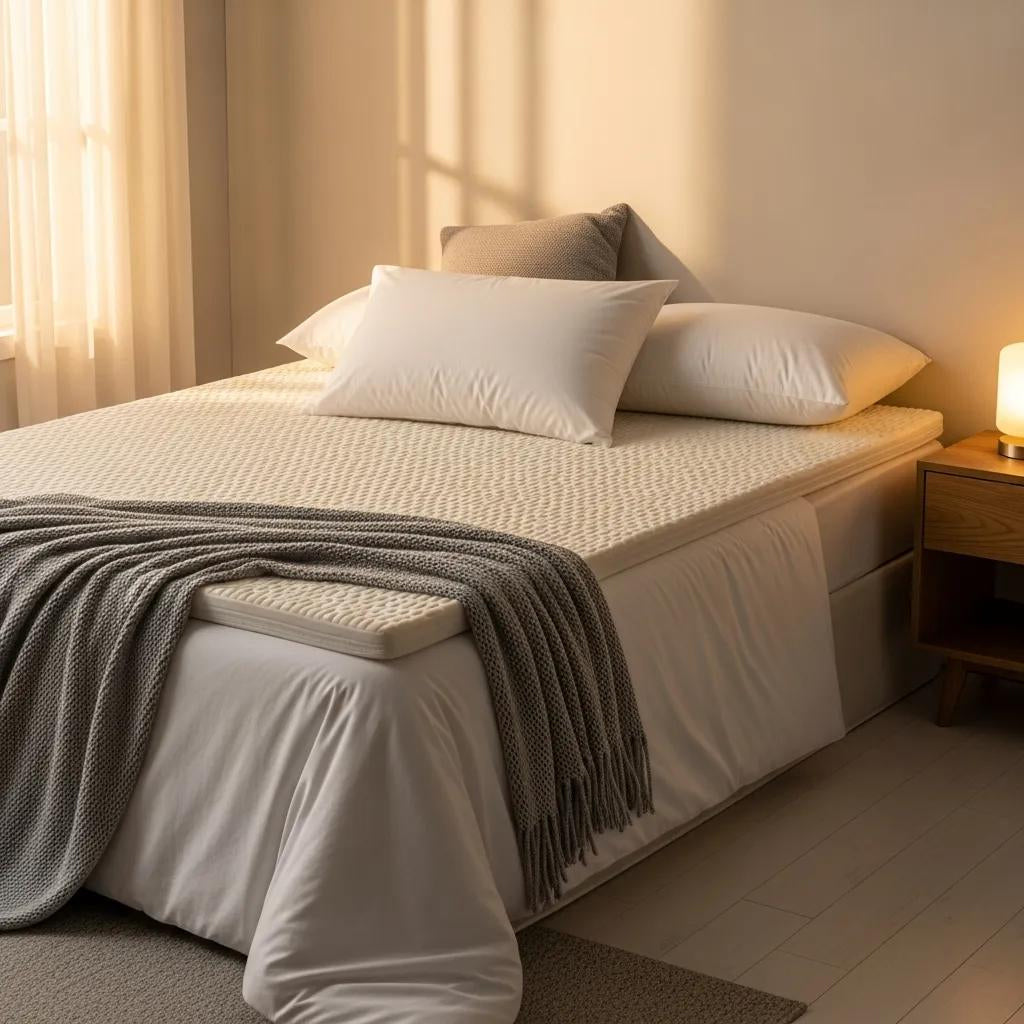
Bamboo mattress toppers are slim, supportive layers you place over your mattress to boost comfort, keep you cooler and cut down on common allergens. Bamboo’s natural fibre structure and antimicrobial qualities make it a popular choice for Australians who want a cleaner, fresher sleep surface. This article walks you through how bamboo works at a fibre and microbiological level, why it helps people with allergies or asthma, how it manages heat and moisture, and why it’s a greener bedding option. We also cover orthopaedic support, simple care steps and the EcoToppers™ Bamboo Mattress Topper range — available in Bamboo White, Bamboo Print and Bamboo Charcoal, in 5cm and 10cm options from Single to Super King. Read on for clear, practical advice to help you choose the right bamboo topper for better sleep.
What Are the Hypoallergenic Benefits of Bamboo Mattress Toppers?
A hypoallergenic bamboo topper reduces exposure to common triggers by combining bamboo’s natural chemistry with a breathable construction that discourages dust mites, bacteria and mould. Bamboo contains compounds often called “bamboo kun” that help give the fibre antimicrobial properties, and the topper’s cover and quilting reduce dust build-up and make cleaning easier. For people with allergies or sensitive skin, this means a lower allergen load, fewer odours and a sleeping surface that’s less welcoming to microbes. Below, we compare common agents and the effects you can expect from bamboo bedding.
When paired with good mattress hygiene, bamboo fibre’s natural properties can help reduce respiratory irritation and skin discomfort, giving you a more peaceful night's sleep. Below, we summarise how key agents interact with bamboo and the practical benefits that follow.
| Agent | Mechanism | Resulting benefit |
|---|---|---|
| Bamboo Kun (natural bio-agent in bamboo) | Helps inhibit bacterial and fungal growth on fibre surfaces | Lower bacterial counts and slower mould development on the cover |
| Dust mites (house dust) | Prefer warm, humid, dusty environments | A drier surface when bamboo wicks moisture away, making it less hospitable |
| Common bacteria (skin/environmental) | Multiply on damp, warm fabrics | Reduced colony growth thanks to moisture control and antimicrobial surface |
In short, bamboo’s natural chemistry plus effective moisture management reduce allergens and microbes on bedding, giving you a cleaner place to sleep.
Bamboo mattress toppers deliver clear hypoallergenic benefits:
- Lower allergen levels on the sleep surface through moisture control and antimicrobial fibres.
- Fewer smells and less bacterial growth because bamboo dries quickly and discourages microbial proliferation.
- Reduced dust mite numbers as a result of a drier, less hospitable fabric environment.
Combined, these advantages help create a healthier sleep space. Next, we explain how bamboo kun acts against dust mites and microbes.
How Does Bamboo Kun Repel Allergens Like Dust Mites and Bacteria?

Bamboo kun is the name given to naturally occurring antibacterial and antifungal compounds in bamboo that can remain after processing and help reduce surface microbial growth. Material studies show bamboo-derived fibres can slow bacterial replication and inhibit fungal spores in controlled tests, which often translates to lower microbial counts on bedding compared with untreated materials. Practically, bamboo kun slows how quickly bacteria and mould establish on a topper cover, while the fabric’s moisture-wicking stops the sustained dampness that dust mites need to thrive. This isn’t a replacement for regular washing or a protector, but it does reduce baseline allergen pressure in your bedroom.
Understanding how bamboo kun helps limit microbes shows why our toppers are a great choice for people with allergies or asthma.
Why Are Bamboo Mattress Toppers Ideal for Allergy and Asthma Sufferers?
Bamboo toppers help people with allergies and asthma by reducing exposure to triggers that can disturb breathing at night: dust mite droppings, mould spores and bacterial by-products. Bamboo’s moisture-wicking and quick-dry behaviour lowers surface humidity, which slows dust mite growth and mould — two common triggers for allergic rhinitis and nocturnal asthma. Improvements are usually gradual and cumulative, so pairing a bamboo topper with a washable mattress protector and regular vacuuming gives the best result. For those with eczema or sensitive skin, bamboo’s soft, breathable surface is often gentler than coarser synthetics, helping you sleep more comfortably.
Next, we look at how bamboo’s structure helps keep you cool on warm nights.
How Do Bamboo Mattress Toppers Regulate Temperature for Comfortable Sleep?
Bamboo toppers manage temperature through breathable fibre micro-structure and effective moisture-wicking. Micro-gaps in bamboo yarns create channels for airflow and allow sweat to move away from the skin so it can evaporate. That reduces heat build-up on the mattress surface and cuts episodes of clamminess and overheating, which helps you stay asleep. The table below breaks down key fibre properties and the sleep-temperature effects they deliver.
| Fibre property | Physical attribute | Resulting sleep-temperature effect |
|---|---|---|
| Bamboo fibre micro-gaps | Increased porosity and capillary action | Better airflow and faster moisture transport |
| Moisture-wicking | Rapid absorption from the skin | Evaporative cooling while you sleep |
| Thermal conductivity | Moderate heat transfer | Less surface heat retention overnight |
That’s how bamboo’s make-up translates into a cooler, more comfortable sleep surface. Now we’ll explain the role of micro-gaps in more detail.
What Role Do Bamboo Fibre Micro-Gaps Play in Breathability and Moisture-Wicking?
Micro-gaps are tiny channels formed during yarn spinning and finishing that increase surface area and help move moisture quickly away from skin to the fabric exterior. Compared with denser fibres like polyester or thick cotton weaves, bamboo’s micro-gap structure allows more air exchange inside the topper cover, speeding dry times after sweating and boosting convective cooling. In practice, this makes the mattress surface feel cooler and less sticky, reducing night sweats and sleep disturbances. Good construction — quilting, stitch density and fill — keeps those micro-gaps working under weight and movement.
Better moisture-wicking and breathability also help hot sleepers keep sleep stages stable, which we cover next.
How Does Temperature Regulation Improve Sleep Quality for Hot Sleepers?
Temperature directly affects how quickly you fall asleep and how well you stay asleep: a cooler skin temperature helps you nod off faster and supports REM and deep sleep by keeping core temperature steady. For hot sleepers, a bamboo topper reduces the warm microclimate and moves moisture away from the skin, cutting interruptions caused by overheating and night sweats. Sleep research links improved thermal comfort with fewer awakenings and longer restorative sleep periods, so materials that stabilise the sleep surface can make a noticeable difference. Pair a bamboo topper with breathable sheets and a lighter summer doona for the best results.
With temperature and allergen control explained, eco-conscious readers will want to know why bamboo is a greener choice.
Why Is Bamboo Bedding the Eco-Friendly Choice for Conscious Australians?
Bamboo is widely seen as a sustainable textile source because most fibre varieties grow fast, usually need less water than cotton and can be harvested without replanting the root system, which helps protect soil. These growth traits and bamboo’s biodegradability at end-of-life give it lifecycle advantages over many synthetic fibres. Ethical sourcing and responsible processing make a big difference, too — when brands use organic bamboo and transparent supply chains, the environmental case is stronger. Below, we outline how bamboo compares with other textiles and what to look for when choosing products.
These material benefits highlight why organic bamboo is a smart choice for your home and the planet.
How Is Organic Bamboo a Renewable and Biodegradable Resource?
Organic bamboo renews quickly and generally needs less irrigation and fewer pesticides than conventional cotton. With responsible processing, bamboo fibres become soft fabrics with a lower overall environmental footprint. At the end of life, untreated bamboo textiles are biodegradable and can break down faster than many synthetics under the right composting conditions. For Australian buyers, choosing organic bamboo lowers agricultural impacts and supports circularity if products are disposed of correctly. Processing methods vary, so look for clear sourcing and production details to confirm the full environmental story.
What Ethical Sourcing Practices Does EcoToppers Follow?
EcoToppers presents its bamboo toppers as made from sustainable, biodegradable, organic bamboo and highlights ethical sourcing as part of the product story. We believe in responsible material selection and manufacturing that preserves bamboo’s benefits while reducing environmental harm. We're committed to ethical sourcing and transparent supply chains, so you can feel good about your choice.
How Do Bamboo Mattress Toppers Provide Orthopaedic Support and Enhance Comfort?
Bamboo toppers add an orthopaedic-friendly surface layer that redistributes pressure, helps spinal alignment and complements your existing mattress support. The mix of supportive fill and a breathable bamboo cover delivers gentle contouring to relieve pressure at the shoulders and hips while still supporting the lower back. Thickness and density decide how much contouring versus surface plushness you get, so pick the right thickness to balance support and comfort. The list below summarises how toppers help spinal health and pressure relief.
Key orthopaedic mechanisms in bamboo toppers:
- Pressure redistribution through conforming foam or fibre cores that spread the load more evenly.
- Contour-permitting surfaces that fill gaps around shoulders and hips to keep the spine neutral.
- Surface comfort that reduces tossing and turning by easing concentrated pressure points.
These points inform practical advice on choosing thickness and density for your sleep needs, which we outline next.
In What Ways Do Bamboo Toppers Promote Spinal Alignment and Pressure Point Relief?
A topper with the right balance of firmness and contour supports the spine’s natural curve while letting softer areas sink slightly, easing pressure at the shoulder and hip for side sleepers and offering lumbar support for back sleepers. A 5cm topper gives surface comfort and modest contouring for light pressure relief, while a 10cm topper provides deeper contour and stronger orthopaedic support for those who need more cushioning. If you have chronic back pain, consider a thicker, denser topper and speak with a clinician for personalised guidance. Combined with a breathable bamboo cover, these toppers keep skin comfortable and temperature regulated through the night.
What Makes EcoToppers Bamboo Mattress Toppers Plush and Comfortable?
EcoToppers achieves plushness by pairing a soft bamboo-derived cover with a contoured fill and targeted quilting that keeps loft and resilience under weight. Our range — Bamboo White, Bamboo Print and Bamboo Charcoal — comes in 5cm and 10cm options so you can pick the level of plush versus support that suits you. Quilting and stitch patterns keep the fill even, preventing lumps and ensuring night-after-night comfort, while the breathable cover gives a cool, smooth feel. The construction balances immediate softness with enough support to help spinal alignment — a blend of luxury and function.
How Should You Care for and Maintain Your Bamboo Mattress Topper?
Good care extends a topper’s life and keeps its hypoallergenic and cooling properties working: air it regularly, spot-clean spills, use a washable protector, vacuum occasionally and follow the manufacturer’s care instructions. Materials vary, so always check product-specific guidance. Many toppers benefit from rotating every few months to even out wear, and prompt stain treatment with mild detergent and air-drying in the shade will protect the fibres. Proper care reduces dust, keeps quilting intact and helps the topper retain comfort and support. Follow the steps below for easy maintenance.
Maintenance steps for bamboo toppers:
- Air the topper regularly by standing it on its edge in a well-ventilated space for a few hours.
- Use a washable mattress protector to block stains and cut down on laundering.
- Spot-clean spills quickly with a mild detergent and cold water, then air-dry completely.
- Rotate the topper every 2–3 months to even out compression and wear.
- Vacuum the surface occasionally with a soft brush attachment to remove dust.
Following these steps keeps your topper performing longer. The table below summarises care, washability and expected lifespan factors.
| Care aspect | Recommendation | Practical note |
|---|---|---|
| Machine washability | Check the product label — many covers are removable and washable | Remove the cover before washing; use a gentle cycle and cool water |
| Spot-cleaning | Use mild detergent, cold water and air-dry | Avoid tumble drying, which can damage the fill |
| Rotation and airing | Rotate every 2–3 months; air regularly | Helps even out wear and reduces odour |
| Expected lifespan | 3–7 years depending on thickness, use and and care | Heavy use or higher body weight can shorten lifespan |
Is the Bamboo Mattress Topper Machine Washable and Easy to Clean?
It depends on the construction. Many toppers have removable covers you can machine wash on a gentle, cool cycle; the core usually needs spot-cleaning or professional care to avoid damage. If your topper has a removable cover, wash it separately with a mild detergent and air-dry or use a low-heat setting if the label allows — never tumble-dry foam or delicate fills. For non-removable covers, treat stains quickly and avoid soaking the internal layers to prevent mildew. Regular vacuuming, a mattress protector and fast spill response make cleaning easier and help your topper last.
What Is the Expected Lifespan of a Bamboo Mattress Topper?
Most bamboo toppers last about three to seven years, depending on thickness, how often they’re used, body weight and care. Thicker toppers on sturdy foundations tend to last longer than thin toppers under heavy use. Replace a topper when it has a persistent odour after cleaning, visible thinning or lumping, or when it no longer relieves pressure, and you feel more discomfort at night. Regular maintenance — rotation, airing, protector use and gentle cleaning — extends life and preserves support. Watch these signs so you replace the topper when performance truly drops.
What Are the Options and Support Available When Choosing an EcoToppers Bamboo Mattress Topper?
EcoToppers offers a focused range of bamboo toppers to suit common sleep needs: three styles (Bamboo White, Bamboo Print, Bamboo Charcoal) in 5cm and 10cm thicknesses and sizes from Single to Super King. This lets you match firmness, contouring and look to your preferences. We also support your purchase with customer-friendly policies, convenient delivery options across Australia, and NDIS invoices available on request. The table below maps styles and thicknesses to typical use-cases and lists key support features that come with purchase.
| Style / Model | Thickness / Size options | Best for |
|---|---|---|
| Bamboo White | 5cm, 10cm; Single → Super King | Every day comfort, allergy sufferers, a cooler feel |
| Bamboo Print | 5cm, 10cm; Single → Super King | Stylish option with the same functional benefits |
| Bamboo Charcoal | 5cm, 10cm; Single → Super King | Extra odour control and deeper contouring (10cm) |
Purchasing & support notes:
- We want you to be happy with your choice, so we offer support to ensure you find the perfect fit for your home.
- Benefit from convenient delivery options across Australia.
- Need an NDIS invoice? We can provide invoices on request to assist eligible buyers.
These features make it easy to trial a topper at home — match 5cm or 10cm to your mattress and comfort goals when choosing.
Which Sizes, Thicknesses, and Styles of Bamboo Mattress Toppers Are Available?
EcoToppers offers three styles — Bamboo White, Bamboo Print and Bamboo Charcoal — in both 5cm and 10cm thicknesses and standard Australian sizes from Single to Super King. Choose 5cm for modest plushness and improved breathability without adding much height; choose 10cm for deeper contouring and stronger pressure relief. Style lets you match bedroom décor without losing performance. Make sure the size matches your mattress to avoid overhang and ensure a good fit.
How Does NDIS Support Work for Bamboo Mattress Toppers?
EcoToppers can provide NDIS invoices on request, so customers who need documentation for plan managers or reimbursement can get proper paperwork. We don’t make eligibility claims — please confirm with your NDIS planner whether a mattress topper is covered under your funding. Typically, you request an invoice at purchase and provide any participant or plan manager details needed for the seller to generate the correct paperwork. Contact your plan manager or the NDIS to confirm coverage before assuming support. Requesting an invoice from us and checking your plan rules helps keep the process smooth.
This guide has covered how bamboo mattress toppers work, their benefits, care tips and buying considerations, so you can decide whether a hypoallergenic, temperature-regulating bamboo topper is right for improving your sleep.
Frequently Asked Questions
What are the key differences between bamboo mattress toppers and traditional mattress toppers?
Bamboo toppers stand out for their material properties: natural fibres that offer hypoallergenic, antimicrobial and moisture-wicking benefits, which suit allergy sufferers and hot sleepers. Traditional toppers may use synthetic fills that trap heat and moisture, causing discomfort. Bamboo is also more environmentally friendly in many cases, since it’s a fast-growing, renewable resource that typically needs less water and pesticides than conventional cotton.
Can bamboo mattress toppers help with back pain?
Yes — bamboo toppers can ease back pain by providing extra contour and pressure relief. They conform to your body’s curves to redistribute pressure and support spinal alignment. The right thickness and density matter: thicker toppers usually give more cushioning and support, which can help people with chronic back pain. If you’re unsure, try a thicker option or seek tailored advice from a clinician.
How do I know if a bamboo mattress topper is right for me?
Consider your sleep habits, allergies and current mattress condition. If you have sensitivities, bamboo’s hypoallergenic features can improve your sleep environment. If you sleep hot or need extra support for spinal alignment, a bamboo topper could be a good match. Trying different thicknesses and styles helps you find the best fit.
Are there any specific care instructions for maintaining a bamboo mattress topper?
Maintain your topper by airing it regularly, spot-cleaning spills quickly with mild detergent and cold water, and using a washable protector. Many toppers have removable covers that are machine washable on a gentle cycle. Rotate the topper every few months to even out wear. These steps help preserve the topper’s hypoallergenic and cooling qualities.
What should I look for when purchasing a bamboo mattress topper?
Look at thickness, density and style. A 10cm topper gives more cushioning and support, while a 5cm topper offers lighter plushness. Check for a breathable cover, antimicrobial properties and clear sourcing information or certifications for organic or sustainable materials. Review care instructions and any product support information to make an informed choice.
How do bamboo mattress toppers compare in value to other types of toppers?
While initial costs can vary, bamboo toppers offer excellent value due to their unique benefits. They provide hypoallergenic, cooling, and sustainable advantages that can make them a worthwhile long-term investment in your comfort and well-being, often comparable to other high-quality options like memory foam or latex.