



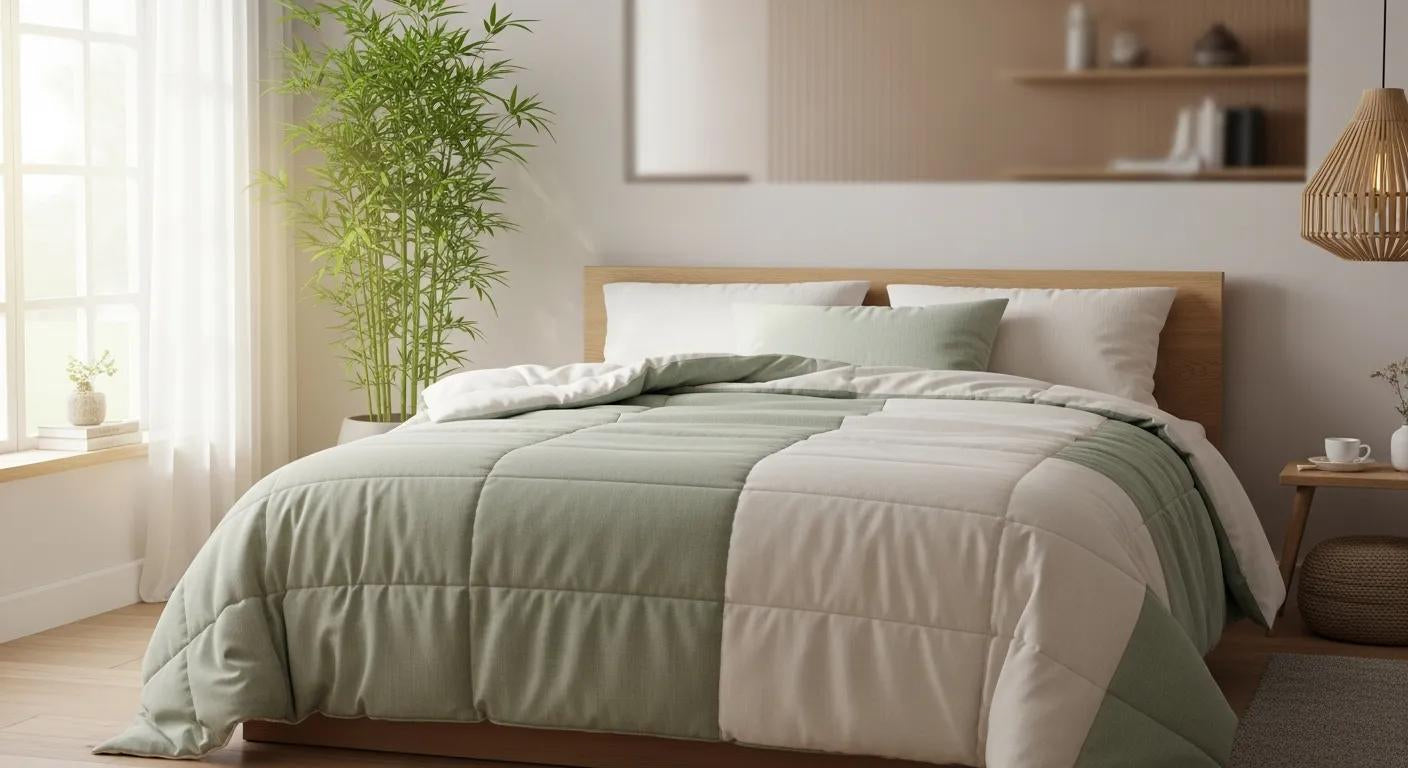
Sleep better with bamboo quilts — breathable, hypoallergenic comfort.
A hypoallergenic bamboo quilt is a bed covering made from bamboo-derived fibres that naturally resist common triggers such as dust mites and mould, while also wicking moisture and helping to regulate temperature. For allergy-prone sleepers and those with sensitive skin, these properties can mean calmer nights and fewer awakenings. Bamboo fibres have a smooth, breathable structure that helps limit allergen build-up and reduces skin irritation. In this article, you’ll learn how bamboo’s anti-allergy traits work, how it compares with cotton, down and synthetic fills for sensitive skin, the sustainability aspects of bamboo bedding, and practical advice on choosing and caring for a bamboo quilt so it stays hygienic and lasts longer. We also cover tog choices and simple care steps, plus how it helps with antibacterial action and moisture control, so you can make an informed purchase. After a brief note about EcoToppers as a supplier of premium eco-friendly bamboo bedding, we'll dive into how bamboo works, comparisons, sustainability and selection guidance.
EcoToppers supplies premium bamboo quilts and related eco-friendly bedding, including options like our Bamboo Quilt Doona and an Organic 100% Bamboo Quilt. Our experience with these products helps us share the practical benefits discussed here. If you’re managing fit-outs or looking to buy in bulk, EcoToppers can provide product details and samples for commercial enquiries – connecting the benefits of bamboo bedding with your sourcing needs. With that in mind, the next section explains the primary sleep advantages of hypoallergenic bamboo quilts.
How do hypoallergenic bamboo quilts improve your sleep?
Hypoallergenic bamboo quilts help you sleep better, mainly by reducing exposure to allergens and by creating a stable microclimate that keeps skin drier and body temperature steadier. Bamboo’s fibre structure — smooth, breathable and moisture-wicking — makes bedding less attractive to dust mites and microbes, while its natural breathability and thermal conductance support uninterrupted sleep. Here's a quick look at the main attributes and the real benefits sleepers can expect.
The table below summarises how a bamboo quilt's features lead to better sleep and hygiene.
| Attribute | Mechanism | Sleep Benefit |
|---|---|---|
| Bamboo fibre cover | Smooth, breathable microstructure | Fewer dust-mite habitats; gentler against skin |
| Moisture-wicking fill | Rapid moisture transfer from skin | Drier sleeping surface; reduced night sweats |
| Temperature regulation | Good thermal conductance and airflow | More stable body temperature; fewer awakenings |
| Antibacterial tendency | Natural bamboo compounds plus dryness | Lower mould/microbial risk; easier breathing at night |
This mapping shows how specific features of bamboo quilts translate into tangible outcomes for people with allergies or sensitive skin. Next, we take a closer look at dust-mite resistance and practical temperature management.
Dust mite resistance and allergy relief
Bamboo fibres resist dust-mite colonisation because their smooth surface and quick moisture transfer reduce the damp micro-environments mites prefer, lowering allergen levels on bedding. Dust mites thrive in warm, humid, rough surfaces. Bamboo’s ability to wick moisture and keep the surface drier helps interrupt those conditions and limit mite proliferation. For people with rhinitis, eczema or asthma triggers, that lower exposure often means fewer sneezes, less congestion and calmer skin overnight. Pairing a bamboo quilt with regular washing and, where appropriate, encasement amplifies these benefits — we cover practical care steps in the care section.
Moving from allergen control, the next subsection explains how bamboo quilts manage temperature and moisture to support continuous sleep.
Temperature regulation and moisture management
Bamboo quilts manage heat and humidity through a breathable weave, and moisture-wicking fills that move sweat away from skin and allow airflow across the bedding surface. The fibre micro-gaps act like tiny channels for vapour and air, so body heat dissipates more evenly, and sleepers experience fewer disruptive temperature swings. This natural cooling suits hot sleepers and anyone prone to night sweats; keeping the surface drier also reduces mould and dust-mite attraction. Choosing the right tog rating (lighter for summer, medium for all-seasons) helps match thermal performance to your climate and personal heat profile — our buying guide later expands on this.
Having covered allergen and temperature control, we now compare bamboo quilts with common alternatives for sensitive skin.
Bamboo quilts vs duvets and other materials: which is best for sensitive skin?
Bamboo quilts often provide better hypoallergenic performance than traditional down and many synthetic fills because bamboo’s moisture control and smooth fibres limit allergen build-up while offering a soft, comfortable feel. The table below compares key materials across hypoallergenic rating, temperature performance, care and sustainability to help you decide.
The comparison below helps shoppers and specifiers weigh trade-offs quickly.
| Material | Hypoallergenic Rating | Temperature Performance | Care | Sustainability |
|---|---|---|---|---|
| Bamboo (viscose/rayon or mechanically processed) | High (natural resistance) | Good moisture-wicking; natural cooling | Often machine-washable; follow label | Rapidly renewable; processing impacts vary |
| Cotton | Moderate | Breathable but can retain moisture when damp | Easy to wash; may take longer to dry | Widely grown; water and pesticide impacts differ |
| Down | Low unless treated | Excellent insulation; may be warm | Needs specialist cleaning; allergen risk if untreated | Animal-derived; long-lasting with care |
| Synthetic fills | Variable (some treated as hypoallergenic) | Can trap heat or be engineered for breathability | Usually machine-washable; possible pilling | Petroleum-based; recycling options are limited |
This table highlights that for sensitive skin and allergy concerns, bamboo often balances practical care with stronger moisture control than cotton and fewer inherent allergen issues than untreated down. The sections that follow break down hypoallergenic traits by material and cover tactile comfort and chemical safety.
Hypoallergenic properties by material
Bamboo generally scores highly for hypoallergenic performance because its fibres wick moisture and create a less favourable habitat for dust mites and mould, reducing allergen exposure. Cotton breathes well but can hold moisture against the skin in humid conditions, which can encourage mites without careful upkeep. Down gives excellent warmth but can carry allergen risk unless thoroughly cleaned or treated; many sensitive sleepers avoid it for that reason. Synthetic fills vary — some are engineered to be hypoallergenic but may not match bamboo’s natural moisture control — so it's good to consider the material's natural properties and how it's made.
With allergen tendencies compared, we now look at comfort and chemical-safety considerations that matter for sensitive skin.
Comfort and skin-safety considerations
Comfort for sensitive skin depends on how it feels and any chemical exposure from processing. Bamboo’s silky texture reduces friction, which helps people with eczema or easily irritated skin sleep with fewer rashes or chafing episodes. Chemical safety depends on how it's processed and finished; organic or low-impact processing and trusted certifications like OEKO-TEX can lower the risk of residual irritants. When trying a product, it's a good idea to test a small skin patch, read care labels for harsh finishes, and run a short wash cycle before long-term use to remove any manufacturing residues.
With material comparisons complete, the article now evaluates bamboo’s sustainability credentials and lifecycle.
Is a bamboo quilt a sustainable choice?
Yes — a bamboo quilt can be a sustainable choice when the bamboo is responsibly sourced, and processing methods minimise environmental impact. Bamboo grows quickly and can sequester carbon, but sustainability depends on how the plant becomes fibre. Important considerations include bamboo’s rapid renewability and typically low pesticide need, the difference between mechanically processed fibre and chemically processed viscose, and how biodegradable natural-fibre quilts are compared with blended or synthetic alternatives. Here are the main points for buyers interested in sustainable bedding.
Consider these sustainability facts when evaluating quilt options:
- Bamboo is a fast-growing grass with high yield, offering a renewable raw material when harvested responsibly.
- Processing methods vary: mechanically processed bamboo keeps more natural fibre traits, while chemically processed viscose can involve heavier chemical and energy inputs.
- Natural-fibre quilts are generally more biodegradable at end-of-life than those with synthetic blends, but durability and longevity also support sustainability by reducing replacements.
Below is a short pros and cons list to balance sustainability considerations for practical procurement.
- Pros: Rapid renewability, potential for lower pesticide use, biodegradable when unblended.
- Cons: Some viscose processing can be resource- and chemical-intensive; how transparent suppliers are about their supply chain can vary.
- Action: Choose suppliers who can provide information on their sourcing and processing to ensure sustainability claims are meaningful.
EcoToppers sources bamboo fabrics and bedding with attention to eco-friendly credentials and supports eco-conscious commercial projects such as hotels, student accommodation and fit-outs by supplying premium bamboo quilts and product details on request. For project managers and procurement teams seeking sustainable bedding suppliers, EcoToppers can provide product information and samples to help confirm comfort and compliance. With sustainability and supply capacity covered, the final section explains how to choose and care for a hypoallergenic bamboo quilt.
How to choose and care for hypoallergenic bamboo quilts
Choosing the right bamboo quilt means looking at fill type, tog rating, cover weave and certifications — and following proper care to preserve hypoallergenic performance and extend its life. The checklist table below shows what to look for and why each item matters so you can compare products confidently.
Use this decision table to prioritise product specs for purchases and trade enquiries.
| Feature | What to look for | Why it matters |
|---|---|---|
| Cover material | 100% bamboo cover or certified organic bamboo label | Preserves the surface benefits and tactile comfort |
| Fill type | Lightweight bamboo-derived fill or clearly labelled bamboo blend | Determines Tog and moisture handling |
| Tog rating | Clear seasonal guidance or explicit tog value | Matches thermal needs to the climate and the sleeper |
| Certifications | OEKO-TEX or documented low-impact processing | Reduces chemical exposure and supports skin safety |
| Care instructions | Machine-washable guidance and drying notes | Simplifies maintenance and prolongs hygiene |
This checklist helps shoppers and specifiers translate product specs into real-world performance and procurement questions. The next subsections provide guidance and essential care steps to keep hypoallergenic benefits intact.
Key features to look for and tog guidance
When selecting a bamboo quilt, prioritise an organic or clearly labelled bamboo cover, a fill weight that suits your seasonality, and a visible tog rating to match thermal preferences. For hot sleepers or warm climates, choose a lightweight or summer tog; for temperate areas, an all-season tog is a good balance; for cold climates, opt for a higher tog or layer quilts. If a product is sold as a “Bamboo Quilt Doona” or “Organic 100% Bamboo Quilt,” ask for product information to confirm the details for commercial fit-outs.
With selection covered, the next subsection outlines care routines that preserve hypoallergenic performance and longevity.
Care and longevity tips
Good care preserves moisture control and reduces allergen build-up: follow the label for washing, use warm rather than hot water if recommended, and dry thoroughly to avoid damp conditions that encourage mites and mould. Regular airing and periodic washing (how often depends on use and local humidity) keep the quilt fresher between deep cleans. Store quilts in a cool, dry place inside breathable covers rather than sealed plastic to prevent trapped moisture; check seams and fill distribution annually for wear or clumping — these are signs it’s time to replace the quilt. These steps extend its useful life and support both hygiene and sustainability goals.
Practical buying guidance and maintenance complete the consumer content; suppliers experienced in trade can help with bulk product details and project references. For commercial enquiries or bulk purchases of bamboo quilts for hospitality or accommodation projects, EcoToppers can supply product information and past-project details on request to support your purchasing decisions and fit-out requirements.
- Ask for product information: Request tog, fill composition and care instructions to confirm suitability for your environment.
- Request samples: Trial samples help verify tactile comfort and skin response before a larger purchase.
- Ask about certifications: Enquire about processing and fibre origin to confirm sustainability and chemical safety.
These procurement steps help both individual buyers and trade purchasers secure the right bamboo quilt for their needs. The final content element below summarises replacement signs and routine actions.
- Signs to replace: Persistent clumping, reduced loft, fabric thinning, or lingering odours after washing indicate it’s time to replace a quilt.
- Routine actions: Air weekly where possible, wash according to the label, and rotate between covers to reduce wear.
This completes our practical guidance on selecting and caring for hypoallergenic bamboo quilts and connects buyer needs with supplier capabilities.
Frequently Asked Questions
What are the benefits of using bamboo quilts for allergy sufferers?
Bamboo quilts help allergy sufferers by creating a drier, less hospitable surface for dust mites and mould. The smooth bamboo fibres and moisture-wicking properties reduce allergen build-up, so many people notice fewer sneezes, less congestion and calmer skin at night. In short, bamboo quilts can make sleeping more comfortable for those with sensitivities.
How do I properly care for my bamboo quilt?
Follow the care label, but as a general rule, wash according to the instructions (usually warm water), dry thoroughly and air regularly. Avoid storing quilts in sealed plastic; use breathable covers and keep them in a cool, dry place. Regular airing and periodic washing prevent moisture retention, mould and dust-mite build-up.
Can bamboo quilts be used in all seasons?
Yes — bamboo quilts can work year-round depending on tog rating and fill weight. Choose a lightweight or summer tog for hot sleepers and warm climates, an all-season tog for balanced use, and a higher tog or layering for colder conditions. Check product details to match the quilt to your climate and preferences.
Are bamboo quilts environmentally friendly?
Bamboo quilts can be environmentally friendly when the bamboo is responsibly sourced and the processing is low-impact. Bamboo grows quickly and often needs fewer pesticides, but chemically processed viscose can have a larger environmental footprint. Look for transparent sourcing and certifications to help verify sustainability claims.
What certifications should I look for when buying a bamboo quilt?
Look for OEKO-TEX and similar trusted certifications that test for harmful substances, plus information on processing and fibre origin. Certifications and supplier transparency help ensure the quilt is safe for sensitive skin and is produced with a lower environmental impact.
How does the comfort of bamboo quilts compare to other materials?
Bamboo quilts are often perceived as more comfortable for sensitive skin because the fibres are silky and reduce friction, while their moisture-management keeps the sleeping surface drier. Cotton breathes well but can stay damp in humid conditions, and down offers warmth but can pose allergen risks. Bamboo offers a helpful combination of comfort and hypoallergenic performance.